
Tungnath Temple: Trek Distance, History, Route, Nearest Railway Station, Nearest Airport, Timings & Complete Travel Guide
Tungnath Temple Travel Guide
Tungnath Temple Travel Guide is one of the most searched topics among travelers planning a Himalayan trip in Uttarakhand. This Tungnath Temple Travel Guide covers trek distance, history, route information, nearest railway station, nearest airport, opening timings, weather conditions, and important travel tips. Located in the beautiful Garhwal Himalayas, Tungnath attracts trekkers, photographers, nature lovers, and devotees from across India.
Unlike many mountain destinations, Tungnath combines adventure, history, natural beauty, and a rewarding trekking experience. The route passes through scenic meadows, forests, and panoramic Himalayan viewpoints. As a result, visitors enjoy both the journey and the destination.
Many travelers visiting Uttarakhand add Tungnath to their itinerary because the trek is short, beginner-friendly, and offers incredible mountain scenery. Furthermore, the nearby Chandrashila summit adds even more excitement to the journey.
For visitors planning a trip from Ayodhya, Varanasi, or Lucknow, Ayodhya Cab Services often shares travel-related content and destination guides to help travelers explore popular locations across North India.
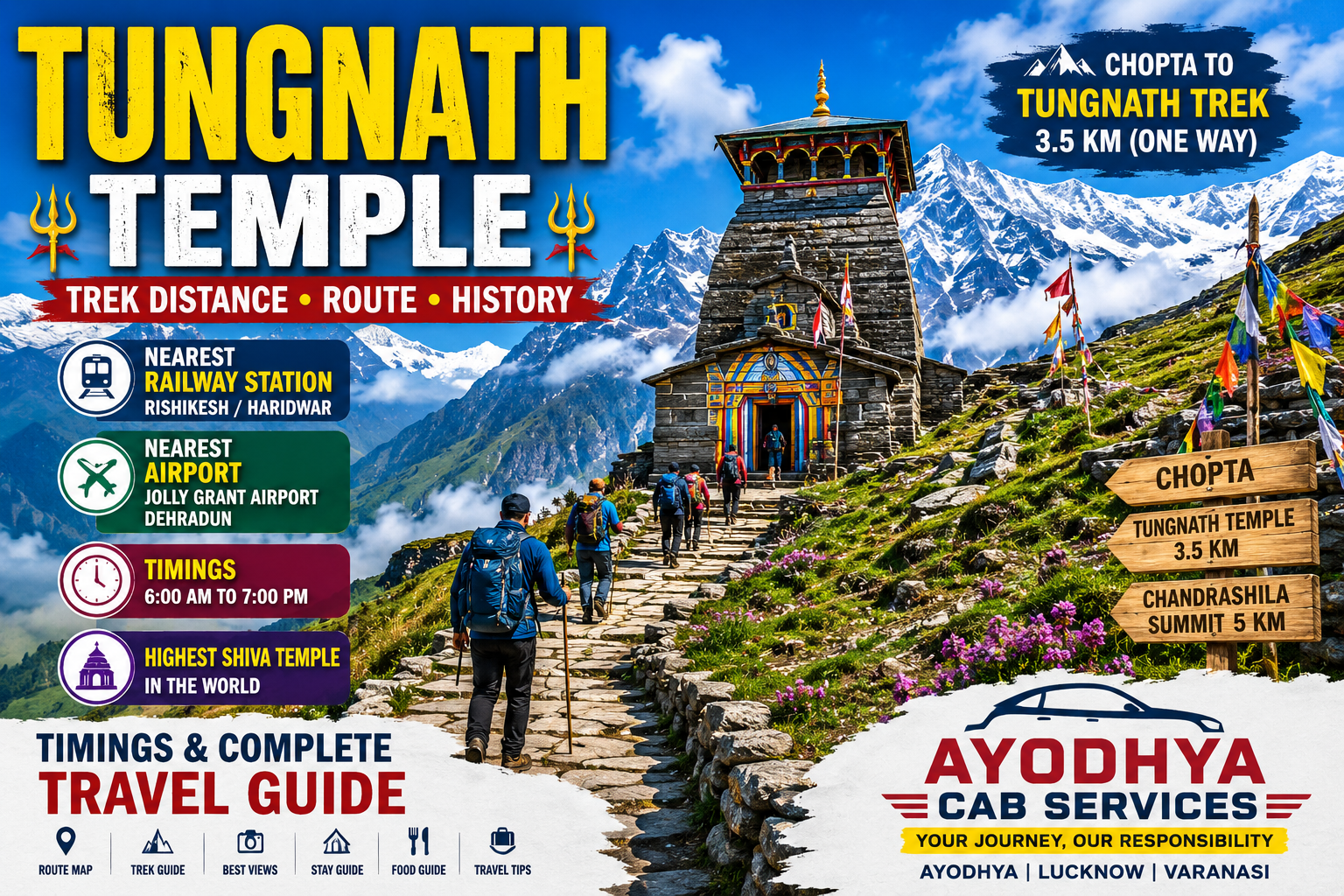
Tungnath Temple Travel Guide covering trek distance, route, history, timings, nearest railway station, nearest airport, and Chopta trek information.
Why Tungnath Temple Is Famous Across India
Tungnath is known for its high-altitude location and breathtaking surroundings. Situated at approximately 3,680 meters above sea level, it is widely recognized as the highest Shiva temple in the world.
However, Tungnath is not only famous because of its elevation. Travelers visit this destination for several reasons. Some come to experience the mountain landscapes. Others enjoy the trekking route. Many visitors are interested in the history and cultural significance associated with the region.
The area surrounding Tungnath remains beautiful throughout much of the year. During summer, green meadows and pleasant weather attract trekkers. In winter, snowfall transforms the landscape into a white mountain paradise.
Additionally, photographers frequently choose Tungnath because the route provides outstanding views of Himalayan peaks. Sunrise and sunset photography opportunities are especially popular among visitors.
These factors collectively contribute to the destination’s growing popularity among domestic and international travelers.
Tungnath Temple Trek Distance Guide
One of the most common questions travelers ask involves the trekking distance. Fortunately, the trek is relatively short compared with many other Himalayan routes.
The journey begins from Chopta, often referred to as the “Mini Switzerland of Uttarakhand.” From Chopta, the trek to Tungnath covers approximately 3.5 to 4 kilometers.
Although the distance appears short, the gradual elevation gain means travelers should walk at a comfortable pace. Most visitors complete the trek within two to four hours depending on fitness levels, weather conditions, and the number of stops taken along the route.
The trail is well-defined and suitable for beginners. Families, solo travelers, and first-time trekkers often complete the route successfully. Along the way, visitors encounter mountain views, open grasslands, and peaceful surroundings.
Because the trek remains accessible for a wide range of travelers, it continues attracting growing numbers of visitors every year.
Chopta to Tungnath Trek Route
The Chopta to Tungnath route is considered one of the most scenic short treks in India. The journey begins from the Chopta market area and follows a paved pathway leading toward Tungnath.
As travelers move higher, the scenery changes continuously. Dense forests gradually give way to open mountain slopes. During spring and summer, colorful flowers add beauty to the route.
Several resting points are available along the trail. Therefore, travelers can comfortably pause and enjoy the surroundings before continuing.
One of the most enjoyable aspects of this route is the uninterrupted mountain panorama. Clear weather conditions often reveal famous Himalayan peaks in the distance.
Many visitors also continue beyond Tungnath toward Chandrashila summit. This additional trek rewards travelers with even more spectacular views.
Tungnath Temple History and Ancient Significance
The history of Tungnath extends back many centuries. Local traditions connect the temple with ancient legends and regional cultural heritage.
Historical records suggest that the temple has been an important pilgrimage destination for generations. The architecture reflects traditional Himalayan stone construction methods designed to withstand challenging weather conditions.
Over time, Tungnath became an important stop for travelers exploring the mountain regions of Uttarakhand. The temple’s remote location contributed to its unique atmosphere and enduring popularity.
Even today, visitors appreciate the blend of history, architecture, mountain scenery, and trekking adventure that makes Tungnath different from many other destinations.
The preservation of traditional architectural features has helped maintain the historical character of the site despite growing tourism.
Tungnath Temple Travel Guide for First-Time Visitors
First-time visitors often wonder whether the trek is difficult. Fortunately, most travelers find the route manageable with basic preparation.
Comfortable walking shoes, warm clothing, water, and light snacks are usually sufficient for the journey. Weather conditions can change quickly in mountain areas, so carrying an additional layer of clothing is recommended.
Early morning departures often provide the best experience. Temperatures remain comfortable, crowds are smaller, and visibility tends to be better.
Visitors should also allow enough time to enjoy the route rather than rushing toward the destination. The journey itself is one of the highlights of the experience.
Tungnath Temple Nearest Railway Station
One of the most searched travel queries is about the nearest railway station to Tungnath. Since there is no railway station near the temple itself, travelers must combine rail and road transportation to reach the trekking base.
The nearest railway station is Rishikesh Railway Station, located approximately 210–220 kilometers from Chopta. However, many visitors prefer using Haridwar Junction because it offers better train connectivity from major Indian cities including Delhi, Lucknow, Varanasi, Ayodhya, Prayagraj, Jaipur, Mumbai, and Kolkata.
After arriving at Haridwar or Rishikesh, travelers continue by road toward Rudraprayag, Ukhimath, and finally Chopta. The road journey offers beautiful mountain views and passes through several scenic towns.
Many first-time visitors choose Haridwar because transportation options are more frequent. Shared taxis, buses, and private vehicles regularly operate on this route. Consequently, reaching Chopta becomes relatively straightforward even for travelers unfamiliar with Uttarakhand.
Because railway connectivity plays an important role in travel planning, understanding the nearest station options can help visitors organize a smoother and more comfortable journey.
Tungnath Temple Nearest Airport
Air travelers often search for the nearest airport before planning a Himalayan trip. The closest airport to Tungnath is Jolly Grant Airport, Dehradun.
Located approximately 220–230 kilometers from Chopta, Jolly Grant Airport serves as the primary gateway for visitors arriving by air. Flights connect Dehradun with Delhi, Mumbai, Bengaluru, Hyderabad, Lucknow, and several other major cities.
After landing at the airport, travelers typically continue by road through Rishikesh, Devprayag, Rudraprayag, and Ukhimath before reaching Chopta. The drive itself becomes an important part of the overall travel experience because of the changing landscapes and mountain scenery.
Many travelers prefer flying because it reduces overall travel time significantly. This option is especially convenient for visitors coming from distant regions of India.
Because weather conditions can occasionally affect mountain travel, checking forecasts before departure remains important. Proper planning ensures a smoother and more enjoyable trip.
Best Time to Visit Tungnath Temple
Choosing the right season can greatly influence the travel experience. Fortunately, Tungnath offers different attractions throughout the year.
Summer, which generally extends from April to June, remains one of the most popular periods. Pleasant temperatures and clear mountain views attract large numbers of trekkers. The trail becomes vibrant with greenery, making photography particularly enjoyable.
Monsoon months bring lush landscapes but also increased rainfall. Although the scenery becomes spectacular, slippery trails and changing weather conditions require extra caution.
Autumn offers excellent visibility and comfortable trekking conditions. Many experienced travelers consider this one of the best seasons because the skies often remain clear.
Winter transforms the entire region into a snowy wonderland. Snow-covered trails create a completely different atmosphere. However, visitors should prepare for colder temperatures and possible route restrictions.
Each season provides unique experiences, allowing travelers to choose according to their preferences.
Tungnath Temple Timings and Opening Months
Travelers frequently search for temple timings before planning their journey. Because of its high-altitude location, Tungnath generally remains accessible during specific months of the year.
The temple typically opens around April or May and remains accessible until October or November. Exact opening and closing dates may vary slightly each year depending on weather conditions and local traditions.
During the operating season, visitors usually arrive during daylight hours. Most travelers prefer morning visits because weather conditions tend to be more stable and trekking becomes easier.
Early departures also allow visitors to enjoy the route with fewer crowds. In addition, morning mountain views often provide excellent opportunities for photography.
Before finalizing travel plans, checking the latest seasonal updates is always recommended to avoid unexpected closures.
Tungnath Temple Route Map and Travel Planning Guide
Proper route planning helps travelers maximize their experience while reducing unnecessary confusion. The most common route begins from Haridwar, Rishikesh, or Dehradun.
The journey generally follows this path:
Haridwar → Rishikesh → Devprayag → Srinagar → Rudraprayag → Ukhimath → Chopta → Tungnath
This route remains popular because road conditions are relatively good and essential travel facilities are available along the way.
Travelers often stop overnight in Rudraprayag, Ukhimath, or Chopta before beginning the trek. This approach reduces fatigue and allows more time to enjoy the surrounding scenery.
Mountain roads offer impressive views throughout the journey. Therefore, many visitors consider the road trip itself one of the highlights of the overall experience.
Proper planning allows travelers to enjoy both the destination and the route leading to it.
Chandrashila Trek From Tungnath
Many visitors continue beyond Tungnath toward Chandrashila, one of the most famous viewpoints in Uttarakhand. The additional trek covers approximately 1.5 kilometers beyond the temple.
Although the climb becomes steeper, the reward is extraordinary. Chandrashila offers panoramic views of some of the most impressive Himalayan peaks visible in the region.
Clear weather often reveals mountain ranges stretching across the horizon. Sunrise treks remain especially popular because the changing colors create unforgettable scenery.
The route attracts photographers, trekkers, adventure enthusiasts, and nature lovers from across India. Many visitors consider Chandrashila the highlight of the entire journey.
Because the additional distance is relatively short, travelers who are physically comfortable often choose to extend their trek beyond Tungnath.
Tungnath Temple Travel Guide for Families and Beginners
One reason Tungnath continues attracting visitors is its accessibility. Unlike many challenging Himalayan treks, this route remains suitable for families and first-time trekkers.
The trail is clearly defined and relatively short. As a result, travelers with moderate fitness levels generally complete the trek comfortably.
Families often appreciate the combination of mountain scenery, manageable distance, and peaceful surroundings. Children, young adults, and older travelers frequently enjoy the experience together.
Preparation remains important. Comfortable footwear, warm clothing, water, and basic travel essentials contribute significantly to overall comfort.
Many first-time trekkers discover that Tungnath provides an excellent introduction to Himalayan trekking without requiring extensive mountaineering experience.
Tungnath Temple Trek Distance Guide
One of the most searched questions among travelers is related to the exact trekking distance. The Tungnath Temple Travel Guide would be incomplete without explaining the route in detail.
The trek starts from Chopta, a beautiful hill destination located in Uttarakhand. From Chopta, the distance to Tungnath is approximately 3.5 to 4 kilometers. Although the route is short, travelers should not underestimate the gradual elevation gain.
Fortunately, the trail remains well-maintained throughout most of the trekking season. Stone pathways, resting points, and clear directions make navigation easy even for beginners. As visitors climb higher, the surrounding landscape becomes increasingly impressive.
Many travelers complete the trek within two to four hours depending on pace and weather conditions. Some visitors stop frequently for photography because the Himalayan views remain spectacular throughout the route.
Another advantage of this trek is accessibility. Unlike difficult mountain expeditions, the Tungnath route allows people with average fitness levels to enjoy a rewarding Himalayan experience.
Because of its manageable distance and breathtaking scenery, the trek continues attracting thousands of visitors every year.
Highest Shiva Temple in the World
Tungnath enjoys worldwide recognition because it is widely regarded as the highest Shiva temple on Earth. Located at approximately 3,680 meters above sea level, the temple sits among the stunning peaks of the Garhwal Himalayas.
This unique position contributes significantly to its popularity. Visitors are not only attracted by the historical importance of the site but also by the incredible natural surroundings.
The journey itself becomes memorable because travelers gradually ascend through forests, meadows, and mountain landscapes before reaching the destination. As elevation increases, panoramic Himalayan views become more dramatic.
Many tourists are surprised by the peaceful atmosphere surrounding the temple. Despite growing visitor numbers, the location still maintains a sense of tranquility that is difficult to find elsewhere.
For travelers researching the world’s highest Shiva temple, Tungnath consistently ranks among the most recommended destinations in India.
Chopta Tungnath Trek Distance and Route Information
The Chopta to Tungnath route remains one of Uttarakhand’s most famous short treks. Travelers frequently choose this journey because it combines accessibility with remarkable mountain scenery.
The trek begins directly from Chopta and follows a clearly marked pathway leading toward Tungnath. The total distance remains around 4 kilometers, making it suitable for families and first-time trekkers.
Unlike longer Himalayan routes, this trek does not require extensive preparation. However, comfortable shoes, warm clothing, and sufficient hydration are strongly recommended.
Throughout the journey, visitors enjoy changing landscapes. Forest sections gradually open into wide mountain views. During spring and summer, colorful vegetation adds beauty to the surroundings.
Because the route is relatively short yet visually impressive, it has become one of the most photographed trekking trails in North India.
Tungnath Temple Weather Guide Throughout the Year
Weather conditions play an important role in travel planning. Therefore, understanding seasonal changes helps visitors prepare effectively.
Summer temperatures generally remain comfortable and pleasant. Clear skies often provide excellent visibility, making this period highly popular among trekkers and photographers.
Monsoon months bring lush greenery and dramatic mountain scenery. However, rainfall can occasionally affect trekking conditions. Visitors should monitor weather forecasts before traveling during this season.
Autumn offers stable weather and impressive visibility. Many experienced travelers consider this period ideal because mountain views are often at their best.
Winter creates an entirely different experience. Snowfall transforms the landscape and attracts visitors seeking a winter trekking adventure. Cold temperatures require proper clothing and preparation.
Because conditions change significantly throughout the year, selecting the right season depends on personal preferences and travel goals.
Tungnath Temple Trek Difficulty Level
Many travelers wonder whether the trek is difficult. Fortunately, the route is generally considered beginner-friendly.
The distance remains relatively short compared with other Himalayan treks. However, the elevation gain means visitors should maintain a comfortable pace throughout the journey.
Most healthy individuals can complete the trek successfully without advanced trekking experience. Families, students, solo travelers, and senior visitors often enjoy the route.
Physical preparation remains beneficial. Regular walking, basic fitness activities, and proper hydration can make the experience more enjoyable.
The trail condition also contributes to accessibility. Clear pathways and gradual sections help reduce difficulty compared with steeper mountain routes.
As a result, Tungnath continues attracting both experienced trekkers and newcomers exploring Himalayan trekking for the first time.
Tungnath Temple Travel Budget Guide
Travel budgets vary depending on transportation preferences, accommodation choices, and trip duration. Fortunately, visitors can plan both economical and premium experiences.
Budget travelers often choose shared transportation and simple accommodations. This approach significantly reduces overall expenses while still allowing visitors to enjoy the destination.
Mid-range travelers generally prefer comfortable hotels and private transportation options. These choices provide additional convenience without excessive costs.
Luxury travelers can select premium accommodations, private vehicles, and customized itineraries. Although expenses increase, the overall experience becomes more personalized.
Food costs remain reasonable throughout much of the region. Local restaurants offer a variety of meal options suitable for different budgets.
Proper planning allows travelers to manage expenses effectively while maximizing the overall travel experience.
Tungnath Temple Travel Guide for Photography Lovers
Photography enthusiasts frequently consider Tungnath one of the most rewarding mountain destinations in India. The route provides opportunities to capture landscapes, forests, mountain peaks, and dramatic weather conditions.
Morning hours often produce the best lighting. Sunrise creates stunning colors across the Himalayan skyline, making it a favorite time for photographers.
During clear weather, distant mountain ranges become visible and create impressive compositions. Seasonal variations further enhance photographic opportunities.
Spring introduces vibrant greenery, while autumn provides exceptional visibility. Winter adds snow-covered scenery that transforms the landscape completely.
Many photographers combine Tungnath with Chandrashila because the summit offers some of the region’s most spectacular viewpoints.
Consequently, the destination remains highly popular among content creators, travel bloggers, and professional photographers.
Why Tungnath Temple Is Trending Among Travelers
Travel trends continue changing as more people seek meaningful outdoor experiences. Tungnath has benefited from this shift because it combines trekking, history, mountain scenery, and cultural significance.
Social media has also contributed to growing popularity. Stunning photographs and travel videos frequently inspire new visitors to explore the destination.
Furthermore, the relatively short trek makes the location accessible to a wider audience compared with more demanding Himalayan routes.
Visitors appreciate the combination of adventure and comfort. The route provides a genuine mountain experience without requiring extensive trekking expertise.
As travel interest continues increasing, Tungnath is expected to remain one of Uttarakhand’s most searched destinations for years to come.
Tungnath Temple Travel Guide: How to Reach Tungnath Temple Easily
A complete Tungnath Temple Travel Guide should always begin with transportation planning. Fortunately, reaching Tungnath is relatively simple compared with many Himalayan destinations.
Most travelers first reach Haridwar, Rishikesh, or Dehradun. From there, the journey continues through Devprayag, Srinagar, Rudraprayag, Ukhimath, and finally Chopta. Since Chopta serves as the trekking base, almost every visitor follows this route.
Road conditions remain fairly good during the main travel season. Furthermore, travelers can choose buses, shared taxis, or private vehicles depending on their budget and preferences.
The Tungnath Temple Travel Guide often recommends beginning the road trip early in the morning. This allows visitors to enjoy mountain views while avoiding late-evening travel on hilly roads.
Because transportation options continue improving, the destination has become much more accessible than it was a decade ago. As a result, both experienced trekkers and casual travelers now include Tungnath in their Uttarakhand itineraries.
Delhi to Tungnath Temple Travel Guide
Many visitors begin their journey from Delhi. Therefore, a Tungnath Temple Travel Guide should include detailed information for travelers coming from the capital city.
The distance between Delhi and Chopta is approximately 450–500 kilometers depending on the route chosen. Most travelers either drive directly or use train and flight combinations.
A common route follows Delhi → Haridwar → Rishikesh → Rudraprayag → Ukhimath → Chopta. This journey allows travelers to experience both plains and mountain landscapes.
Many visitors prefer breaking the trip into two days because the mountain roads require careful driving. Consequently, overnight stays in Haridwar, Rishikesh, or Rudraprayag remain popular.
The Tungnath Temple Travel Guide also recommends checking weather conditions before departure, especially during monsoon and winter seasons. Proper planning significantly improves the travel experience.
For travelers looking for a balanced combination of accessibility and natural beauty, the Delhi-to-Tungnath route remains one of North India’s most rewarding road journeys.
Haridwar to Tungnath Temple Route Guide
Haridwar serves as one of the most important gateways for travelers heading toward the Himalayas. Therefore, many visitors begin their Tungnath journey from here.
The road from Haridwar passes through Rishikesh, Devprayag, Srinagar, Rudraprayag, and Ukhimath before reaching Chopta. Along the way, travelers encounter mountain rivers, valleys, and scenic viewpoints.
One reason the route remains popular is the availability of transportation options. Shared taxis, buses, and private vehicles operate regularly throughout the region.
The Tungnath Temple Travel Guide often highlights Haridwar because of its strong railway connectivity. Visitors from different parts of India can easily reach Haridwar before continuing into the mountains.
Moreover, the gradual transition from plains to Himalayan terrain makes the journey itself an enjoyable experience rather than simply a means of transportation.
Rishikesh to Chopta Travel Guide
Rishikesh acts as another major starting point for travelers exploring Uttarakhand. The distance between Rishikesh and Chopta is approximately 200 kilometers.
Although the road distance appears moderate, mountain travel requires additional time. Consequently, travelers should plan a full day for the journey.
The route passes through some of Uttarakhand’s most scenic regions. Rivers, forests, valleys, and mountain landscapes provide constant visual interest.
Many travelers choose to stop at viewpoints and small towns along the way. This approach transforms the road journey into an important part of the overall travel experience.
A Tungnath Temple Travel Guide often recommends spending a night in Chopta before beginning the trek. This allows visitors to start early the next morning and enjoy the route under favorable weather conditions.
Tungnath Temple Route Map Guide
Understanding the route in advance helps travelers avoid confusion and manage their schedules effectively.
The most commonly followed route is:
Delhi → Haridwar → Rishikesh → Devprayag → Srinagar → Rudraprayag → Ukhimath → Chopta → Tungnath
Travelers coming from Lucknow, Ayodhya, Varanasi, or Prayagraj generally join this route after reaching Haridwar or Rishikesh.
The Tungnath Temple Travel Guide recommends downloading offline maps because mobile connectivity may become limited in certain mountain sections.
Road signs remain available throughout most of the journey. However, having navigation support provides additional confidence for first-time visitors.
By understanding the route beforehand, travelers can allocate time more efficiently and enjoy a smoother experience.
Tungnath Temple Travel Guide for Weekend Travelers
One reason Tungnath has become increasingly popular is its suitability for weekend trips. Travelers with limited vacation time can still enjoy a rewarding Himalayan experience.
A typical weekend itinerary involves reaching Chopta on the first day, completing the trek on the second day, and returning afterward.
Because the trek distance remains relatively short, visitors can experience mountain scenery without requiring extended leave from work or studies.
The Tungnath Temple Travel Guide often recommends advance accommodation bookings during peak seasons. Demand can increase significantly, especially during summer and autumn.
Weekend travelers appreciate the destination because it offers trekking, photography, mountain views, and relaxation within a relatively short timeframe.
Best Himalayan Views Near Tungnath Temple
One of the strongest reasons for Tungnath’s popularity is the extraordinary scenery. The region provides panoramic Himalayan views that attract photographers and nature enthusiasts from across India.
Clear weather conditions often reveal impressive peaks stretching across the horizon. Sunrise and sunset periods create particularly dramatic lighting conditions.
Many travelers spend additional time simply enjoying the landscapes. Unlike crowded urban destinations, the mountain environment encourages a slower and more immersive travel experience.
The Tungnath Temple Travel Guide frequently highlights the surrounding viewpoints because they contribute significantly to the destination’s appeal.
For visitors interested in photography, trekking, and mountain exploration, the scenery alone makes the journey worthwhile.
Why Tungnath Temple Travel Guide Searches Are Increasing
Search interest related to the Tungnath Temple Travel Guide has increased significantly in recent years. Several factors explain this trend.
First, social media platforms have introduced the destination to larger audiences. Travel videos, photography content, and trekking experiences frequently inspire new visitors.
Second, road infrastructure improvements have made access easier. Travelers who previously considered the region difficult to reach now find it more approachable.
Third, the growing popularity of short Himalayan treks has increased demand for destinations suitable for beginners. Tungnath fits this requirement perfectly.
As more travelers seek outdoor experiences, mountain destinations continue gaining popularity. Consequently, search volume related to the Tungnath Temple Travel Guide is likely to keep growing in the coming years.
Tungnath Temple Travel Guide: Travel Budget for Every Type of Traveler
One reason this destination continues attracting visitors is that it suits almost every budget. A well-planned Tungnath Temple Travel Guide can help travelers manage expenses without sacrificing the overall experience.
Budget travelers often choose shared transportation and simple guesthouses. This approach significantly reduces accommodation and travel costs while still providing access to all major attractions.
Mid-range travelers generally prefer comfortable hotels in Chopta or nearby towns. These accommodations provide additional convenience and better facilities while remaining affordable.
Luxury travelers may choose premium resorts, private transportation, and customized itineraries. Although costs increase, the journey becomes more personalized and comfortable.
Food expenses are usually reasonable throughout the region. Local restaurants offer traditional meals, snacks, and beverages suitable for different budgets.
The Tungnath Temple Travel Guide recommends planning transportation, accommodation, and food expenses in advance. Proper budgeting helps visitors focus on enjoying the journey instead of worrying about costs during the trip.
Best Hotels and Accommodation Near Chopta
Accommodation plays an important role in the overall travel experience. Fortunately, Chopta offers options suitable for different travel styles and budgets.
Many travelers prefer staying close to the trekking base because it allows an early start the following morning. Guesthouses, camps, cottages, and small mountain lodges remain popular choices.
The Tungnath Temple Travel Guide often recommends booking accommodation early during peak travel seasons. Summer and autumn months typically experience increased demand due to favorable weather conditions.
Mountain-view rooms remain especially popular among visitors. Waking up to Himalayan scenery adds a memorable element to the trip.
Several accommodations also provide local food, travel assistance, and trekking information. These services can be particularly helpful for first-time visitors.
Choosing accommodation according to personal preferences and budget helps create a more comfortable and enjoyable experience.
Food Guide for Travelers Visiting Tungnath
Food is an essential part of every travel experience. Fortunately, visitors can find a variety of meal options along the route to Tungnath.
Restaurants and roadside eateries offer traditional North Indian meals, local specialties, tea, coffee, and snacks. Travelers often enjoy simple mountain cuisine after completing the trek.
The Tungnath Temple Travel Guide encourages visitors to stay hydrated throughout the journey. Mountain weather and physical activity can increase hydration requirements.
Many travelers prefer carrying light snacks during the trek. Energy bars, fruits, and water bottles can help maintain comfort while walking.
Additionally, local food experiences often become memorable highlights of the trip. Trying regional dishes allows visitors to connect more deeply with the destination.
Food options may be limited compared with major cities. Therefore, maintaining realistic expectations helps improve the overall travel experience.
Tungnath Temple Travel Guide for Family Vacations
Families increasingly choose Tungnath because the trek remains manageable and the destination offers natural beauty suitable for all age groups.
Unlike demanding mountain expeditions, the route allows families to enjoy trekking without extensive preparation. Children, adults, and older travelers often complete the journey successfully.
The Tungnath Temple Travel Guide recommends starting early in the day when traveling with family members. Cooler temperatures and better visibility contribute to a more comfortable experience.
Families also appreciate the peaceful atmosphere surrounding Chopta and Tungnath. The region offers opportunities to disconnect from busy urban environments and spend quality time together.
Parents should ensure children wear comfortable footwear and carry sufficient water. Simple preparation significantly improves comfort throughout the trek.
Because the route combines accessibility with Himalayan scenery, it remains one of Uttarakhand’s most family-friendly trekking destinations.
Winter Travel Guide for Tungnath Visitors
Winter transforms Tungnath into a completely different destination. Snow-covered landscapes create breathtaking scenery that attracts adventure enthusiasts and photographers.
The Tungnath Temple Travel Guide often highlights winter because many travelers specifically seek snowy mountain experiences. White trails, frozen surroundings, and dramatic Himalayan views create unforgettable memories.
However, winter travel requires additional preparation. Warm clothing, proper footwear, and weather monitoring become essential during colder months.
Snowfall can affect accessibility and trekking conditions. Therefore, travelers should check local updates before departure.
Despite these challenges, winter remains a favorite season among experienced mountain travelers. The combination of snow and Himalayan scenery creates a unique atmosphere unavailable during other times of the year.
Visitors who enjoy winter landscapes often consider this season one of the most rewarding periods to explore the region.
Tungnath Temple Travel Guide for Solo Travelers
Solo travel continues gaining popularity throughout India. Consequently, many individuals search for destinations that combine safety, adventure, and natural beauty.
Tungnath fits these requirements well. The route remains popular, clearly marked, and frequently visited during the main travel season. These factors help solo travelers feel more confident.
The Tungnath Temple Travel Guide recommends informing friends or family about travel plans before beginning the trek. Basic precautions contribute to a safer experience.
Many solo travelers appreciate the peaceful atmosphere and opportunities for self-reflection available in mountain environments. The journey encourages visitors to slow down and enjoy the surroundings.
Photography, trekking, and exploring local culture often become particularly meaningful experiences for solo travelers.
Because the destination remains accessible while still providing a genuine Himalayan adventure, it continues attracting independent explorers.
Why Nature Lovers Choose Tungnath Again and Again
Nature enthusiasts frequently return to Tungnath because the region offers much more than a simple trekking route.
Changing seasons create different experiences throughout the year. Spring introduces greenery and flowers. Summer provides pleasant temperatures. Autumn offers exceptional visibility. Winter brings snow-covered landscapes.
The Tungnath Temple Travel Guide consistently highlights natural beauty as one of the destination’s strongest attractions. Visitors often spend as much time enjoying the surroundings as they do completing the trek itself.
Mountain views, forests, wildlife, and open meadows create a diverse natural environment that appeals to photographers, hikers, and outdoor enthusiasts.
Because each visit feels slightly different depending on season and weather, many travelers choose to return multiple times.
Most Instagrammable Places Near Tungnath Temple
Social media has played an important role in increasing awareness of Tungnath. Stunning photographs shared online frequently inspire future visitors.
Several locations along the route provide exceptional photography opportunities. Mountain viewpoints, forest sections, open meadows, and the Chandrashila summit remain particularly popular.
The Tungnath Temple Travel Guide recommends carrying a camera or smartphone with sufficient battery life because photography opportunities appear throughout the journey.
Early morning and late afternoon lighting often produce the most visually appealing images. Consequently, many photographers plan their schedules around these times.
Travelers interested in content creation, blogging, or photography will find countless opportunities to capture memorable moments.
Frequently Asked Questions About Tungnath Temple
What Is the Best Time to Visit Tungnath Temple?
The best period generally falls between April and June and again from September to November. During these months, weather conditions remain pleasant and trekking becomes more comfortable. Clear skies also improve visibility, allowing travelers to enjoy Himalayan views.
What Is the Trek Distance to Tungnath Temple?
The trek begins from Chopta and covers approximately 3.5 to 4 kilometers. Most visitors complete the journey within two to four hours depending on fitness levels and weather conditions.
Which Is the Nearest Railway Station to Tungnath?
Rishikesh Railway Station is considered the nearest railway station. However, many travelers use Haridwar Junction because of its better train connectivity with major Indian cities.
Which Is the Nearest Airport to Tungnath?
Jolly Grant Airport in Dehradun is the nearest airport. After landing, visitors continue by road toward Chopta before beginning the trek.
Is Tungnath Suitable for Beginners?
Yes. The route remains one of the most beginner-friendly Himalayan treks. Clear pathways, manageable distance, and beautiful scenery make it suitable for first-time trekkers.
Can Families Visit Tungnath?
Families frequently visit Tungnath because the trek is relatively short and accessible. Proper preparation helps ensure a comfortable experience for all age groups.
Tungnath Temple Travel Guide for Adventure Seekers
Adventure travelers often search for destinations that combine trekking, mountain scenery, and rewarding viewpoints. Tungnath successfully delivers all three experiences.
Unlike longer expeditions requiring extensive planning, this journey allows travelers to experience Himalayan trekking within a relatively short timeframe. The route offers changing landscapes, fresh mountain air, and panoramic views that remain memorable long after the trip ends.
The Tungnath Temple Travel Guide frequently appears in adventure travel searches because it appeals to both experienced trekkers and newcomers. Visitors can enjoy physical activity while remaining connected to essential facilities available in nearby towns.
Furthermore, the nearby Chandrashila summit provides an additional challenge for travelers seeking even more spectacular mountain scenery.
Adventure enthusiasts often describe this route as one of Uttarakhand’s most rewarding short treks.
Tungnath Temple Travel Guide for Nature Photography
Photography remains one of the biggest reasons people visit Tungnath. Every section of the journey provides opportunities to capture forests, mountain peaks, valleys, clouds, and seasonal landscapes.
The Tungnath Temple Travel Guide recommends carrying extra batteries because cold weather can affect electronic devices. Early morning light often creates ideal photography conditions.
Landscape photographers frequently prefer autumn because visibility tends to be excellent. Meanwhile, winter attracts photographers interested in snowy mountain scenes.
Because weather conditions change quickly, every visit can produce unique photographic opportunities. This unpredictability keeps photographers returning year after year.
Travelers interested in creating content for blogs, social media, or personal collections often find Tungnath exceptionally rewarding.
Why Tungnath Temple Travel Guide Searches Continue Growing
Search interest related to the Tungnath Temple Travel Guide has increased dramatically over recent years. Social media, travel videos, and photography content have introduced the destination to wider audiences.
Travel trends also play a role. More people now seek experiences rather than simply visiting crowded tourist locations. Mountain destinations provide opportunities for exploration, photography, and outdoor recreation.
Additionally, the route remains accessible compared with many Himalayan treks. Visitors can experience stunning scenery without committing to lengthy expeditions.
Improved roads and better travel information have further increased interest. As a result, Tungnath now attracts visitors from across India and beyond.
Industry experts expect demand for Himalayan travel experiences to continue growing, which will likely increase search interest even further.
Final Thoughts
A complete Tungnath Temple Travel Guide helps travelers understand every aspect of the journey before departure. From trek distance and route planning to weather conditions and accommodation options, preparation contributes significantly to a successful trip.
The destination remains one of Uttarakhand’s most impressive mountain experiences because it combines natural beauty, accessibility, photography opportunities, and adventure. Travelers appreciate the manageable trekking distance, stunning Himalayan scenery, and peaceful atmosphere.
Whether someone is planning a family vacation, a solo adventure, a photography expedition, or a weekend getaway, Tungnath offers experiences suitable for different travel styles.
As interest in mountain tourism continues growing, the Tungnath Temple Travel Guide will remain an essential resource for visitors researching one of India’s most remarkable Himalayan destinations.
Why Ayodhya Cab Services Is a Trusted Choice for Travelers
When travelers look for a reliable cab service in Ayodhya, they often want comfortable vehicles, professional drivers, transparent pricing, and dependable support. Ayodhya Cab Services has built a strong reputation by focusing on these qualities and helping travelers enjoy hassle-free journeys.
Many visitors arriving in Ayodhya need transportation for local sightseeing, airport transfers, railway station pickups, family trips, business travel, and outstation journeys. Because of this demand, choosing a trusted cab provider becomes important for a smooth travel experience.
Top Cab Service in Ayodhya for Local and Outstation Travel
Ayodhya Cab Services is recognized by many travelers as one of the preferred cab providers in Ayodhya because of its focus on customer satisfaction, punctuality, and well-maintained vehicles.
Whether travelers are planning a local city tour, a trip to Lucknow, Varanasi, Prayagraj, Gorakhpur, or a long-distance journey, having a professional driver and comfortable vehicle can make a significant difference.
The company focuses on:
- Clean and comfortable vehicles
- Experienced drivers
- Transparent pricing
- On-time pickups
- Safe travel experience
- Flexible travel plans
These factors help create a positive experience for visitors and repeat customers.
Ayodhya to Anywhere in India Travel Options
One reason many travelers choose Ayodhya Cab Services is the flexibility to plan long-distance journeys from Ayodhya to destinations across India.
Instead of changing multiple buses or trains, travelers can enjoy a direct road trip experience with personalized schedules and convenient stops along the way.
Popular routes often include:
- Ayodhya to Lucknow
- Ayodhya to Varanasi
- Ayodhya to Prayagraj
- Ayodhya to Gorakhpur
- Ayodhya to Delhi
- Ayodhya to Agra
- Ayodhya to Jaipur
- Ayodhya to Kathmandu (via border routes)
- Ayodhya to Uttarakhand destinations
This flexibility makes road travel more convenient for families, groups, and tourists.
Why Travelers Choose Ayodhya Cab Services
Travelers frequently mention comfort, reliability, and professional service as reasons for choosing Ayodhya Cab Services. The focus remains on making travel simple and stress-free.
From short city rides to long road trips, the goal is to provide a comfortable experience while helping visitors explore destinations at their own pace.
Ayodhya Cab Services – One of the Leading Cab Services in Ayodhya
Through consistent service quality, customer-focused travel solutions, and dependable transportation options, Ayodhya Cab Services has become a well-known name among travelers visiting Ayodhya and nearby regions.For travelers searching for a trusted cab provider in Ayodhya, comfortable outstation travel, and convenient road trip options, Ayodhya Cab Services continues to be one of the preferred choices for local and long-distance journeys

