
Five Panch Kedar Temples Associated with Lord Shiva: Complete Travel Guide, History, Route Map & Nearby Railway Stations
If you are searching for a detailed Panch Kedar Temples Guide, this article covers everything you need to know before planning your journey. From temple history and mountain routes to trekking information and nearby railway stations, this guide explains every important aspect of the Panch Kedar pilgrimage circuit in Uttarakhand. The Panch Kedar temples are among the most visited Himalayan pilgrimage destinations, attracting travelers, trekkers, photographers, and spiritual seekers from across India every year.
Nestled deep within the Garhwal Himalayas, these five ancient temples are spread across breathtaking valleys, dense forests, alpine meadows, and high-altitude mountain trails. Unlike many popular tourist destinations, Panch Kedar offers a combination of history, culture, mythology, adventure, and natural beauty. Consequently, visitors experience much more than a traditional pilgrimage. They discover hidden villages, panoramic Himalayan views, and centuries-old traditions that continue to thrive in remote mountain communities.
Many travelers search for terms such as Panch Kedar Yatra Guide, Panch Kedar Route Map, Panch Kedar Trek Guide, Best Time to Visit Panch Kedar, and Nearby Railway Station for Panch Kedar Temples before planning their trip. Therefore, this article brings all that information together in one place. Whether you are visiting for the first time or returning to explore the Himalayas again, understanding the history and travel logistics can make the journey smoother and more enjoyable.
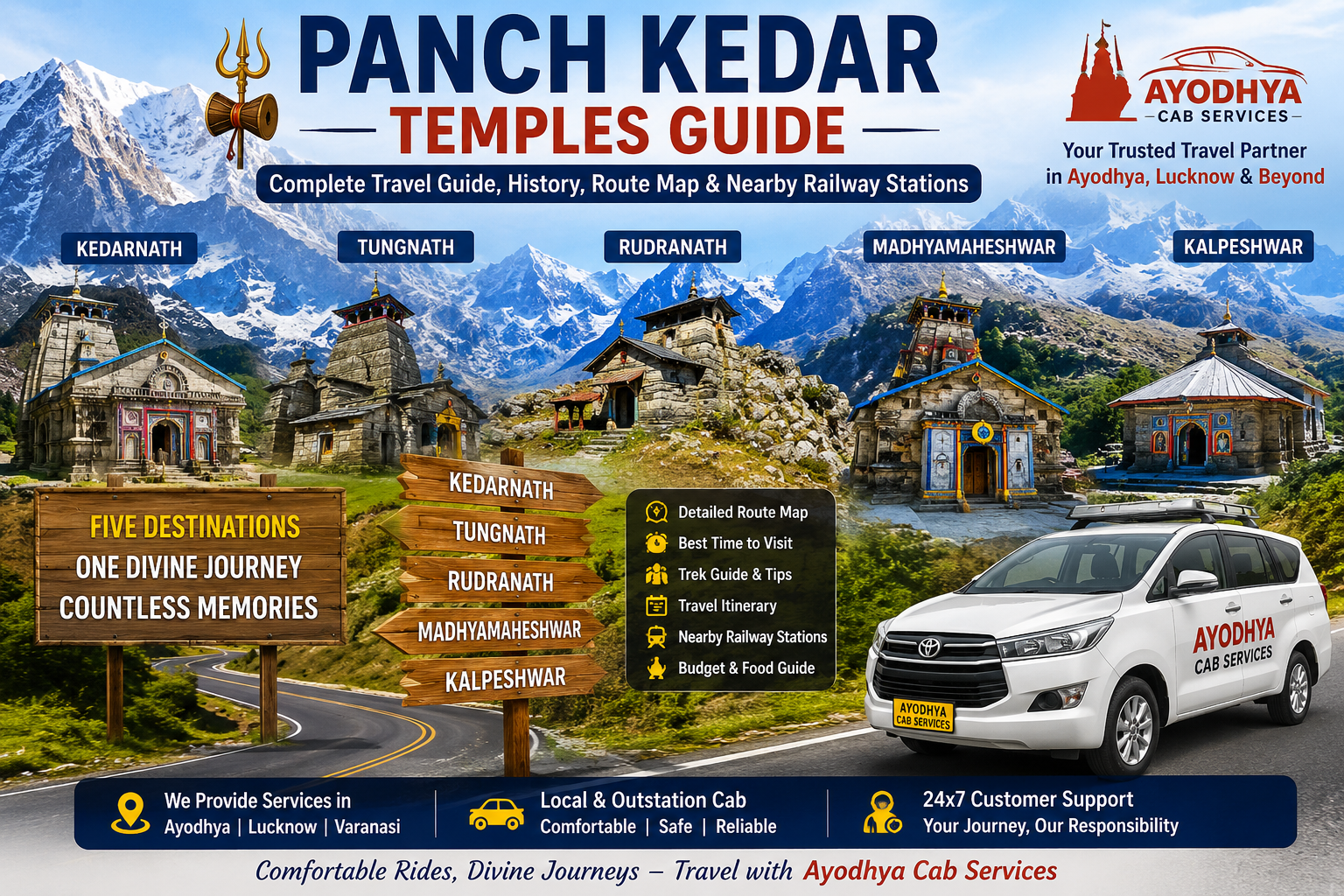
Panch Kedar Temples Guide covering Kedarnath, Tungnath, Rudranath, Madhyamaheshwar and Kalpeshwar, including travel routes, history, trekking details and nearby railway stations
Panch Kedar Temples Guide and the Fascinating History Behind These Himalayan Shrines
The story of Panch Kedar begins thousands of years ago and remains one of the most discussed legends associated with the Garhwal region. According to traditional accounts, the origins of these temples can be traced to the period after the Mahabharata war. Seeking peace and forgiveness, the Pandavas travelled through the Himalayas in search of Lord Shiva. However, Shiva did not wish to meet them immediately and chose to avoid them by taking a different form.
As the story continues, Shiva appeared in the form of a bull and moved through the mountains. Eventually, different parts of the bull’s body are believed to have appeared at separate locations across the Himalayas. Over time, temples were established at each of these places. These locations later became known collectively as Panch Kedar.
What makes these temples unique is not only their historical significance but also their geographical setting. Unlike temples situated in crowded cities, the Panch Kedar sites are surrounded by untouched mountain landscapes. Consequently, every destination offers a completely different experience. Some temples require challenging treks through steep mountain paths, while others are relatively easier to reach.
Travelers often compare the Panch Kedar route with other famous Himalayan pilgrimage circuits. However, many experienced trekkers believe Panch Kedar offers a more immersive mountain experience because visitors pass through remote villages, forests, rivers, and alpine regions that remain largely unaffected by commercial tourism.
Today, the Panch Kedar circuit continues attracting visitors who want to explore Uttarakhand’s cultural heritage while enjoying some of the most beautiful Himalayan scenery in India.
Panch Kedar Yatra Guide: Understanding the Five Temples and Their Locations
The Panch Kedar journey includes five different temples located across the Garhwal Himalayas. Each destination has its own identity, landscape, and travel experience. Together, they create one of the most remarkable mountain circuits in northern India.
Kedarnath is perhaps the most widely known among the five locations. Situated at an altitude of more than 3,500 meters, it attracts millions of visitors every year. The surrounding snow-covered peaks create a dramatic setting that leaves a lasting impression on travelers.
Tungnath, another important destination, is known for being one of the highest temples in the world. The trek leading to Tungnath passes through beautiful meadows and offers stunning panoramic views of the Himalayan range. As a result, it is also popular among trekking enthusiasts and photographers.
Rudranath presents a completely different experience. Dense forests, remote trails, and peaceful surroundings make this destination especially appealing for travelers seeking solitude. Similarly, Madhyamaheshwar offers breathtaking views of Chaukhamba Peak and surrounding mountain ranges.
The final temple, Kalpeshwar, is unique because it remains accessible throughout the year. Unlike some of the higher-altitude locations that close during winter, Kalpeshwar continues welcoming visitors even during colder months.
Together, these destinations form one of India’s most fascinating pilgrimage and trekking routes. Moreover, each temple contributes a unique chapter to the larger story of Panch Kedar. Understanding these locations before beginning the journey helps travelers plan their itinerary more effectively while appreciating the historical and cultural importance of each site.
Panch Kedar Route Map Guide: The Complete Travel Circuit Explained
Understanding the route is one of the most important parts of planning a Panch Kedar journey. Many first-time visitors assume the temples are located close to one another. In reality, each destination is situated in a different part of the Garhwal Himalayas. Therefore, proper planning can save both time and effort.
Most travelers begin their journey from Haridwar, Rishikesh, Dehradun, or nearby cities in Uttarakhand. From there, the route generally moves toward Kedarnath before continuing to the remaining temples. However, some experienced trekkers adjust the order depending on weather conditions, road accessibility, and available travel time.
The traditional Panch Kedar route usually follows this sequence:
Kedarnath → Madhyamaheshwar → Tungnath → Rudranath → Kalpeshwar
This route allows travelers to gradually explore different elevations and landscapes throughout the journey. Moreover, each destination presents unique scenery. One day you may be walking through alpine meadows, while the next day you may be crossing dense forests or mountain valleys.
Road connectivity has improved significantly during recent years. Nevertheless, trekking remains an essential part of the Panch Kedar experience. Some stretches require moderate physical fitness, while others demand greater endurance. Consequently, visitors should prepare accordingly before beginning the journey.
The complete circuit may take anywhere from ten to twenty days depending on the travel style. Some visitors prefer a relaxed pace with overnight stays in mountain villages. Others attempt a faster itinerary to cover all five locations within a shorter period.
Regardless of the schedule, the route itself becomes one of the highlights of the journey. Every section offers changing landscapes, fresh mountain air, and unforgettable Himalayan views.
Nearest Railway Station for Panch Kedar Temples and Travel Connectivity
One of the most common questions travelers ask is about the nearest railway stations for the Panch Kedar circuit. Since these temples are located in remote mountain regions, there are no railway stations directly connected to them. However, several major stations provide convenient access to the starting points.
For most travelers, Haridwar Railway Station serves as the primary gateway to the Panch Kedar region. It has excellent connectivity with major cities including Delhi, Mumbai, Kolkata, Lucknow, Varanasi, Jaipur, and Ahmedabad. Consequently, many visitors prefer arriving here before continuing by road.
Rishikesh Railway Station is another useful option, especially for travelers planning to begin their mountain journey immediately after arrival. While smaller than Haridwar, it still provides access to important routes leading toward the Garhwal Himalayas.
Dehradun Railway Station also remains a popular choice. Since Dehradun has both rail and air connectivity, many visitors combine train and flight options depending on their travel preferences.
After reaching one of these railway stations, travelers continue by road toward various base locations. From there, trekking routes begin for different temples.
Approximate railway access points include:
Kedarnath – Haridwar or Rishikesh Railway Station
Madhyamaheshwar – Haridwar Railway Station
Tungnath – Haridwar or Rishikesh Railway Station
Rudranath – Haridwar Railway Station
Kalpeshwar – Rishikesh Railway Station
Although the final stages involve road travel and trekking, railway connectivity makes the journey relatively accessible for visitors from different parts of India.
How to Reach Panch Kedar Temples from Major Indian Cities
Reaching the Panch Kedar region has become easier compared to previous decades. Better roads, improved transportation networks, and growing tourism infrastructure have simplified travel for visitors from across the country.
Travelers arriving from Delhi often begin by taking a train, bus, or flight to Dehradun, Haridwar, or Rishikesh. From these locations, road transportation connects visitors to various mountain towns that serve as base points for the temples.
Visitors from Mumbai, Bengaluru, Chennai, Hyderabad, Kolkata, Pune, Ahmedabad, and other major cities generally travel by train or flight to Uttarakhand before continuing their journey by road.
One important aspect of the trip involves understanding travel times. Mountain roads can significantly increase travel duration compared to plain areas. Therefore, travelers should avoid overly ambitious schedules and allow sufficient time for weather-related delays.
The journey itself often becomes part of the experience. Winding roads pass through river valleys, hillside towns, pine forests, and scenic mountain landscapes. Consequently, many travelers consider the road trip as memorable as the temple visits themselves.
For those seeking flexibility, private vehicles offer greater convenience. Meanwhile, shared taxis and public transportation provide budget-friendly alternatives. Regardless of the chosen mode, planning transportation in advance helps ensure a smoother experience.
Best Time to Visit Panch Kedar Temples for Comfortable Travel
Timing plays a major role in determining the quality of the Panch Kedar experience. Since the temples are located at different elevations within the Himalayas, weather conditions can vary dramatically throughout the year.
The most popular season typically begins during late spring and continues through summer. During this period, temperatures remain comfortable and mountain trails become more accessible. Consequently, a large number of travelers choose these months for their pilgrimage.
Post-monsoon months are also highly recommended. The landscapes become exceptionally green, visibility often improves, and mountain views appear particularly stunning. Therefore, many experienced trekkers consider this one of the most rewarding periods for exploration.
Monsoon travel requires additional caution. Heavy rainfall can affect road conditions and trekking routes. As a result, travelers should monitor weather forecasts carefully before departure.
Winter presents a completely different experience. Several high-altitude locations receive significant snowfall, making access difficult. However, Kalpeshwar remains accessible throughout much of the year, attracting visitors even during colder months.
Selecting the right season depends on personal preferences. Some travelers prioritize pleasant weather, while others seek fewer crowds or unique seasonal landscapes. Regardless of timing, proper preparation remains essential for a safe and enjoyable journey.
Panch Kedar Trek Guide: Difficulty Level, Preparation and Essential Travel Tips
The trekking component distinguishes Panch Kedar from many other pilgrimage circuits. While road connectivity has improved considerably, reaching several temples still requires walking through mountainous terrain. Therefore, basic physical preparation can greatly improve the overall experience.
The difficulty level varies between locations. Certain routes involve relatively moderate walks suitable for beginners. Others demand greater stamina because of steep ascents and longer trekking distances. Consequently, travelers should assess their fitness levels honestly before planning the journey.
Preparing several weeks in advance can make a noticeable difference. Regular walking, stair climbing, and light cardiovascular exercises help build endurance. Additionally, proper footwear is extremely important. Comfortable trekking shoes reduce fatigue and improve stability on uneven surfaces.
Weather conditions can change quickly in the Himalayas. Therefore, travelers should carry layered clothing rather than relying on a single heavy jacket. This approach provides flexibility as temperatures fluctuate throughout the day.
Hydration is equally important. Many visitors underestimate the effects of altitude and physical activity. Drinking sufficient water helps maintain energy levels during long trekking days.
Another useful tip involves traveling at a steady pace. Rushing through mountain trails often leads to exhaustion. Instead, taking regular breaks allows travelers to enjoy the scenery while conserving energy.
Ultimately, the trek is not simply a means of reaching the temples. It forms an important part of the overall experience. Mountain landscapes, remote villages, forest trails, and panoramic viewpoints create memories that remain long after the journey ends.
Kedarnath Temple Guide: The Most Famous Destination in the Panch Kedar Temples Uttarakhand Circuit
Among all five temples, Kedarnath receives the highest number of visitors every year. Located at an altitude of approximately 3,583 meters above sea level, it stands against a dramatic backdrop of snow-covered Himalayan peaks. Because of its accessibility and popularity, many travelers first learn about Panch Kedar through Kedarnath.
The journey to Kedarnath begins from Gaurikund. From there, visitors follow a mountain route that passes through scenic valleys, waterfalls, and breathtaking viewpoints. Although the trek can be physically demanding, the surrounding landscape keeps travelers motivated throughout the journey.
Historically, Kedarnath has been an important destination for centuries. Ancient stone architecture, mountain surroundings, and cultural traditions contribute to its unique atmosphere. Furthermore, the temple remains one of the most photographed locations in the Indian Himalayas.
Travelers planning a Panch Kedar itinerary often spend additional time exploring nearby areas. Locations such as Sonprayag, Triyuginarayan, and Guptkashi attract visitors who want to experience more of the region’s natural and cultural heritage.
Weather conditions can change rapidly in Kedarnath. Therefore, visitors should carry suitable clothing and monitor forecasts before departure. During clear weather, the surrounding mountain scenery creates some of the most memorable views found anywhere in Uttarakhand.
For many travelers, Kedarnath becomes more than a destination. Instead, it serves as the starting point for a deeper exploration of the entire Panch Kedar route.
Tungnath Temple History and Travel Guide for First-Time Visitors
Tungnath occupies a special position within the Panch Kedar circuit because it is considered one of the highest temples in the world. Situated at an elevation of more than 3,600 meters, it attracts pilgrims, trekkers, photographers, and adventure enthusiasts throughout the travel season.
The route to Tungnath begins from Chopta, a destination often referred to as the “Mini Switzerland of Uttarakhand.” The trek itself is relatively short compared to some other Panch Kedar routes. Consequently, it has become popular among visitors seeking a rewarding Himalayan experience without undertaking an extremely long trek.
One of the most attractive features of Tungnath is the surrounding scenery. Dense forests, open meadows, and panoramic mountain views accompany travelers throughout the route. As the elevation increases, breathtaking views of peaks such as Nanda Devi, Chaukhamba, and Kedarnath become visible on clear days.
The history of Tungnath adds another layer of interest. Local traditions, ancient architecture, and longstanding cultural practices continue to shape the visitor experience. Unlike many modern tourist destinations, the area retains a strong connection to its historical roots.
Many visitors continue beyond the temple to Chandrashila Summit. This additional trek rewards travelers with some of the finest panoramic views in the region. Consequently, Tungnath has become one of the most visited locations within the Panch Kedar circuit.
The combination of accessibility, mountain scenery, and cultural significance makes Tungnath an essential stop for anyone planning a comprehensive Panch Kedar travel guide experience.
Rudranath Temple Trek Guide: A Remote Himalayan Experience
Rudranath offers a completely different atmosphere compared to Kedarnath and Tungnath. While the other destinations attract large numbers of visitors, Rudranath remains relatively remote. Therefore, it appeals particularly to travelers seeking solitude and a deeper connection with nature.
The trek to Rudranath passes through dense forests, mountain ridges, and expansive alpine meadows. Along the way, travelers encounter some of the most untouched landscapes in Uttarakhand. Consequently, many trekking enthusiasts consider this route one of the highlights of the Panch Kedar journey.
Unlike more commercialized destinations, Rudranath provides an experience that feels raw and authentic. Small mountain settlements, traditional lifestyles, and pristine surroundings create an atmosphere that is increasingly difficult to find in modern travel destinations.
The journey requires good physical fitness because several sections involve long walking distances and steep mountain trails. However, the effort is rewarded with extraordinary scenery. During clear weather, travelers enjoy spectacular views of surrounding Himalayan peaks and valleys.
Photography enthusiasts often rank Rudranath among the most beautiful locations in the Garhwal region. Mist-covered meadows, colorful wildflowers, and dramatic landscapes provide endless opportunities for memorable photographs.
Visitors who include Rudranath in their Panch Kedar itinerary often describe it as one of the most peaceful destinations they have experienced. Its remote location and natural beauty leave a lasting impression on those willing to undertake the trek.
Madhyamaheshwar Temple Travel Guide and Himalayan Valley Experience
Madhyamaheshwar is famous not only for its historical significance but also for its extraordinary mountain setting. Located within a beautiful valley surrounded by towering peaks, the destination offers one of the most picturesque environments in the Panch Kedar circuit.
The trek begins from Ransi village and gradually ascends through forests, streams, and traditional mountain settlements. Along the route, travelers experience a side of Uttarakhand that remains largely untouched by mass tourism. Consequently, the journey feels more personal and immersive.
One of the most remarkable features of Madhyamaheshwar is the view of Chaukhamba Peak. During sunrise and sunset, changing light conditions transform the mountain landscape into a spectacular natural display. Therefore, many photographers and nature enthusiasts spend additional time here to capture these moments.
The temple area itself remains relatively peaceful compared to larger pilgrimage destinations. Visitors often appreciate the calm surroundings and slower pace of life found in the valley. Moreover, interactions with local communities provide insight into traditional mountain culture.
The route is considered moderately challenging. Therefore, travelers should prepare adequately before beginning the trek. Proper footwear, weather-appropriate clothing, and sufficient hydration can significantly improve the overall experience.
For those seeking a balance between trekking adventure and natural beauty, Madhyamaheshwar stands out as one of the most rewarding locations within the Panch Kedar route map.
Kalpeshwar Temple Guide: The Only Panch Kedar Temple Open Throughout the Year
Kalpeshwar occupies a unique position among the five temples because it remains accessible throughout much of the year. While heavy snowfall affects several higher-altitude destinations during winter, Kalpeshwar continues welcoming visitors even during colder months.
Located in the Urgam Valley, the journey to Kalpeshwar combines road travel with a relatively short walk. Consequently, it is often considered one of the easiest Panch Kedar destinations to reach. This accessibility makes it popular among travelers who want to experience the circuit without undertaking lengthy treks.
The surrounding valley is known for its natural beauty. Terraced fields, traditional villages, mountain streams, and forested hills create a peaceful environment that differs from the rugged landscapes found at higher elevations.
Kalpeshwar also appeals to travelers interested in offbeat destinations. Since visitor numbers remain lower compared to some other Himalayan attractions, the area retains a quiet and authentic atmosphere. Therefore, visitors can enjoy a more relaxed travel experience.
The route through Urgam Valley provides numerous opportunities to explore local culture and rural mountain life. Many travelers choose to spend additional time in nearby villages rather than rushing through the destination.
For those planning a Panch Kedar Temples Guide itinerary, Kalpeshwar serves as an excellent conclusion to the journey. Its accessibility, scenic surroundings, and year-round availability make it a valuable addition to any Uttarakhand travel plan.
Panch Kedar Temple History: Why These Himalayan Destinations Continue Attracting Travelers
The enduring popularity of Panch Kedar extends beyond religion or tourism. These destinations combine history, culture, adventure, architecture, and natural beauty in a way few travel circuits can match. Consequently, they continue attracting visitors from different backgrounds and age groups.
Some travelers come for the mountain scenery. Others arrive because of the trekking opportunities. Many are interested in local culture, while others simply want to explore remote regions of Uttarakhand. Regardless of motivation, visitors often discover that Panch Kedar offers much more than they initially expected.
Another reason for the circuit’s popularity is its diversity. Each destination feels completely different from the others. One route may feature alpine meadows, while another passes through dense forests or traditional villages. Therefore, the journey remains interesting from beginning to end.
The historical legacy of these temples continues influencing travel patterns today. Generations of visitors have followed similar mountain routes, creating a tradition that remains strong despite modern changes.
As tourism grows across India, Panch Kedar continues standing out as one of the country’s most remarkable Himalayan travel experiences. The combination of history, trekking, culture, and mountain landscapes ensures that interest in these destinations remains strong year after year.
Panch Kedar Travel Guide for Families Planning a Comfortable Himalayan Journey
Many people assume that Panch Kedar is suitable only for experienced trekkers. However, families also complete portions of the journey every year with proper planning. The key is understanding the route, selecting the right travel season, and allowing enough time between destinations.
Families traveling with children or elderly members should avoid rushing through the itinerary. Instead, a relaxed schedule makes the experience far more enjoyable. Several locations along the route offer beautiful scenery, peaceful surroundings, and comfortable accommodation options. Therefore, travelers can spend additional days exploring nearby villages and mountain landscapes.
Weather conditions play an important role in family travel. Summer and post-monsoon months usually provide better road accessibility and more stable trekking conditions. Consequently, these seasons remain popular among family groups.
Another factor involves physical preparation. Although not every temple requires an extremely difficult trek, some sections involve walking at higher altitudes. Therefore, gradual acclimatization helps reduce fatigue and improves overall comfort.
Families often discover that the journey creates opportunities to disconnect from busy city life. Mobile networks may be limited in certain areas, while mountain scenery encourages a slower pace of travel. As a result, visitors often return with memorable experiences and a deeper appreciation for the natural beauty of Uttarakhand.
Panch Kedar Trek Distance and Difficulty Level for First-Time Travelers
One of the most searched topics online is the difficulty level of the Panch Kedar route. This is understandable because each temple requires a different amount of trekking and physical effort.
Kedarnath involves one of the most recognized trekking routes in the region. The journey from Gaurikund covers a significant distance and requires steady endurance. However, improved facilities have made the route more manageable for many visitors.
Tungnath offers a comparatively shorter trek. Consequently, it is often recommended for beginners who want to experience high-altitude Himalayan landscapes without committing to a long expedition.
Rudranath presents a greater challenge. Longer walking distances, changing terrain, and remote surroundings make it one of the more demanding sections of the Panch Kedar circuit. Therefore, travelers should prepare carefully before attempting this route.
Madhyamaheshwar falls somewhere between moderate and challenging depending on weather conditions and individual fitness levels. Meanwhile, Kalpeshwar remains one of the easiest destinations to access.
Fitness preparation does not require professional training. Regular walking, light jogging, and stair climbing for a few weeks before departure can significantly improve trekking performance. Furthermore, carrying only essential items reduces unnecessary strain during long walks.
Understanding trek distances in advance helps travelers choose an itinerary that matches their comfort level and available time.
Best Places Near Panch Kedar Temples Worth Exploring
The Panch Kedar circuit is surrounded by some of Uttarakhand’s most beautiful destinations. Many travelers focus only on the temples and overlook nearby attractions that add considerable value to the journey.
Chopta remains one of the most popular locations near Tungnath. Often called the “Mini Switzerland of Uttarakhand,” it offers stunning meadows, forest trails, and spectacular mountain views. Consequently, many travelers spend extra time here before continuing their journey.
Chandrashila Summit is another favorite destination. Located above Tungnath, it provides panoramic views of major Himalayan peaks. Sunrise from Chandrashila is particularly memorable and attracts photographers from across India.
Deoria Tal also deserves attention. This picturesque lake reflects surrounding mountains on clear days, creating a scene that looks almost unreal. Therefore, it has become a popular stop for nature enthusiasts.
Near Kedarnath, travelers often visit Triyuginarayan and Guptkashi. These locations offer historical significance, mountain scenery, and opportunities to learn more about local culture.
Urgam Valley near Kalpeshwar provides another rewarding experience. Traditional villages, terraced fields, and peaceful surroundings make it ideal for travelers seeking a quieter side of Uttarakhand.
Exploring nearby destinations transforms the Panch Kedar itinerary into a more complete Himalayan travel experience rather than a simple point-to-point journey.
Panch Kedar Tour Planning Guide for a Smooth Travel Experience
A successful Panch Kedar journey begins long before reaching the mountains. Proper planning helps avoid unnecessary stress and allows travelers to focus on enjoying the experience.
The first step involves determining how much time is available. Completing the full Panch Kedar circuit typically requires more than a week. Therefore, travelers should create realistic schedules rather than attempting to cover too much in a short period.
Transportation planning is equally important. Road conditions, weather changes, and mountain traffic can affect travel times significantly. Consequently, building flexibility into the itinerary helps accommodate unexpected delays.
Accommodation reservations should also be considered during peak travel seasons. Popular destinations often experience high demand, particularly during holidays and favorable weather periods. Therefore, booking in advance can prevent last-minute difficulties.
Packing appropriately is another crucial aspect of tour planning. Weather can vary dramatically between different elevations. As a result, layered clothing often proves more useful than carrying a single heavy jacket.
Travel insurance, emergency contacts, and basic medical supplies provide additional peace of mind. Although most journeys proceed smoothly, preparation helps travelers respond effectively if challenges arise.
Thoughtful planning not only improves convenience but also allows visitors to appreciate the journey more fully.
Accommodation Options Near Panch Kedar Temples
Accommodation availability varies across the Panch Kedar circuit. Some locations offer a range of choices, while others provide simpler facilities that reflect the remote nature of the region.
Near popular destinations such as Kedarnath and Chopta, travelers can find guesthouses, lodges, hotels, and seasonal camps. Consequently, visitors often have several options depending on budget and comfort preferences.
Remote destinations such as Rudranath may offer more basic facilities. However, many travelers appreciate these simpler accommodations because they contribute to the authentic mountain experience. Spending a night in a small Himalayan village often becomes one of the most memorable parts of the journey.
Advance booking is recommended during peak travel periods. Visitor numbers increase significantly during favorable weather conditions. Therefore, securing accommodation early can help avoid inconvenience.
Some travelers prefer staying in larger towns before beginning trekking sections. This approach allows additional time for rest, acclimatization, and preparation.
Regardless of the accommodation type, expectations should remain realistic. The focus of the Panch Kedar journey is often the experience itself rather than luxury facilities. Most visitors find the surrounding landscapes and mountain atmosphere far more rewarding than high-end amenities.
Weather in Panch Kedar Region Throughout the Year
Weather conditions influence every aspect of travel in the Himalayas. Therefore, understanding seasonal patterns helps visitors plan more effectively.
Spring brings pleasant temperatures and blooming landscapes. Many travelers consider this period ideal because conditions are generally comfortable for both road travel and trekking.
Summer remains one of the busiest seasons. Clear skies, moderate temperatures, and accessible routes attract visitors from across India. Consequently, accommodation demand often increases during this period.
Monsoon introduces a different environment. Lush greenery covers the mountains, and waterfalls become more impressive. However, rainfall can also affect road conditions and trekking routes. Therefore, additional caution is necessary.
Autumn offers excellent visibility and stable weather conditions. Mountain views often appear particularly sharp after the monsoon season. As a result, many experienced travelers consider autumn one of the best times to visit.
Winter transforms higher elevations with snowfall. While some routes become inaccessible, lower-altitude areas continue attracting visitors seeking peaceful mountain landscapes.
Choosing the right season depends on personal preferences, travel goals, and comfort with changing weather conditions.
Hidden Gems Around Panch Kedar That Most Tourists Miss
Beyond the well-known destinations, the Panch Kedar region contains numerous hidden gems that remain relatively unexplored. These places often provide a quieter and more personal travel experience.
Small mountain villages scattered throughout the Garhwal region offer opportunities to experience local culture and traditional lifestyles. Visitors can observe daily life, interact with residents, and gain a deeper understanding of Himalayan communities.
Several lesser-known viewpoints provide spectacular mountain panoramas without large crowds. Consequently, travelers willing to explore beyond the main routes often discover some of the most rewarding locations.
Forest trails near Chopta and Urgam Valley reveal landscapes that many visitors never see. Birds, wildflowers, and peaceful surroundings create a completely different atmosphere from more crowded destinations.
Seasonal meadows hidden along trekking routes become especially beautiful during certain months. Therefore, taking time to explore beyond standard itineraries often leads to unexpected discoveries.
These hidden locations remind travelers that Panch Kedar is not only about reaching specific destinations. The surrounding landscapes, villages, and natural environments contribute equally to the overall experience.
Many visitors return to the region multiple times because they realize there is far more to explore than can be seen during a single trip.
Panch Kedar Yatra Itinerary for 7 Days, 10 Days and 14 Days
One of the biggest challenges travelers face is deciding how many days they should allocate for the Panch Kedar journey. The answer depends on fitness level, travel style, weather conditions, and how deeply someone wants to explore the region.
A 7-day itinerary is suitable for travelers with limited time. However, this schedule can feel rushed because the route covers significant distances through mountainous terrain. Therefore, careful planning becomes essential.
A 10-day itinerary offers a more balanced experience. Visitors have additional time to rest between treks, explore nearby attractions, and enjoy the scenery without constantly worrying about schedules. Consequently, many experienced travelers recommend this option.
Those seeking a deeper Himalayan experience often choose a 14-day itinerary. This allows time to visit surrounding villages, explore viewpoints, and spend additional nights in scenic locations. As a result, the journey becomes much more immersive.
Regardless of itinerary length, flexibility remains important. Weather changes, road conditions, and personal energy levels can affect travel plans. Therefore, travelers should avoid creating schedules that leave no room for adjustments.
Many visitors discover that the beauty of Panch Kedar lies not only in reaching the temples but also in experiencing the landscapes and communities encountered along the way.
Panch Kedar Travel Budget Guide for Budget and Comfortable Travelers
Budget planning is an important part of any Himalayan journey. Fortunately, Panch Kedar can accommodate a wide range of travel styles. Whether someone prefers economical travel or greater comfort, there are options available.
Transportation usually represents one of the largest expenses. Road travel between destinations, local transportation, and trekking logistics should all be considered when creating a budget. Consequently, travelers who plan ahead often manage costs more effectively.
Accommodation expenses vary depending on location and season. Popular destinations may have higher rates during peak travel months. Therefore, early reservations can sometimes provide better value.
Food costs generally remain reasonable throughout much of the region. Local meals are widely available and often provide a satisfying introduction to mountain cuisine. Moreover, eating locally can help reduce overall travel expenses.
Trekking equipment may create additional costs for first-time visitors. However, investing in quality footwear and weather-appropriate clothing improves comfort and safety. As a result, many travelers consider these purchases worthwhile.
A realistic budget should also include emergency funds. Unexpected weather delays or transportation changes occasionally occur in mountain regions. Therefore, maintaining some financial flexibility is always advisable.
With thoughtful planning, travelers can enjoy a rewarding Panch Kedar experience without overspending.
Food Guide for Panch Kedar Travelers Exploring the Himalayas
Food often becomes an unexpected highlight of mountain travel. Throughout the Panch Kedar region, visitors encounter simple yet satisfying meals prepared using local ingredients and traditional methods.
Most villages and small towns offer familiar North Indian dishes. Travelers can usually find rice, lentils, vegetables, flatbreads, and seasonal specialties. Consequently, food remains accessible even in relatively remote areas.
Local cuisine deserves special attention. Traditional Garhwali dishes provide insight into the culture and lifestyle of the region. Many recipes have been passed down through generations and reflect the agricultural traditions of Himalayan communities.
Hydration is equally important during mountain travel. Higher elevations and physical activity increase the body’s need for water. Therefore, travelers should make hydration a priority throughout the journey.
Heavy meals immediately before trekking are generally not recommended. Instead, lighter foods often provide better energy and comfort during long walking days. As a result, many experienced trekkers prefer simple meals before beginning daily routes.
Visitors frequently mention the hospitality of mountain communities when discussing food experiences. Sharing meals in small villages often creates memorable interactions that become an important part of the overall journey.
Food may not be the primary reason people visit Panch Kedar, but it certainly contributes to the experience.
Essential Packing List for Panch Kedar Trek and Travel
Packing correctly can significantly improve the quality of a Himalayan journey. Weather conditions, terrain, and travel duration all influence what visitors should bring.
Comfortable trekking shoes are perhaps the most important item. Mountain trails often include uneven surfaces, steep sections, and changing conditions. Therefore, proper footwear helps reduce fatigue and improves stability.
Layered clothing is another essential consideration. Temperatures can change dramatically throughout the day. Consequently, wearing multiple lightweight layers often works better than carrying one heavy garment.
Rain protection should also be included regardless of the season. Mountain weather can be unpredictable, and sudden showers are not uncommon. Therefore, waterproof jackets and backpack covers are useful additions.
A small medical kit provides additional peace of mind. Basic supplies for minor injuries, headaches, and common travel issues can prove valuable when exploring remote areas.
Power banks, flashlights, and reusable water bottles are frequently recommended by experienced travelers. These items improve convenience without adding excessive weight.
Packing efficiently is equally important. Carrying unnecessary items can make trekking more difficult. As a result, travelers should focus on essentials rather than overpacking.
A well-prepared backpack allows visitors to concentrate on the experience rather than worrying about missing equipment.
Common Mistakes to Avoid During the Panch Kedar Journey
Even experienced travelers occasionally make mistakes when visiting mountain destinations. Fortunately, many common problems can be avoided through preparation and awareness.
One frequent mistake involves underestimating travel times. Distances that appear short on a map may require significantly longer in mountainous terrain. Therefore, realistic scheduling is essential.
Another issue is inadequate physical preparation. Some travelers assume the treks will be easier than expected. Consequently, they struggle with endurance during longer sections. Simple fitness preparation before departure often prevents this problem.
Weather is another factor that should never be ignored. Mountain conditions can change rapidly. Therefore, checking forecasts regularly and carrying appropriate clothing remains important throughout the trip.
Many first-time visitors also attempt to cover too much in a single day. Instead, allowing time for rest and acclimatization usually results in a more enjoyable experience.
Hydration is frequently overlooked as well. Long treks and higher elevations increase the need for water. Consequently, travelers should make hydration a daily priority.
Learning from these common mistakes helps visitors enjoy a smoother and more rewarding Panch Kedar adventure.
Solo Travel Guide for Panch Kedar Temples
Solo travel continues growing in popularity, and Panch Kedar attracts many independent travelers every year. The combination of natural beauty, cultural experiences, and trekking opportunities makes it particularly appealing for those exploring alone.
Traveling independently provides flexibility. Visitors can adjust schedules, spend more time at favorite locations, and move at their own pace. Consequently, many solo travelers find the experience deeply rewarding.
Preparation becomes even more important when traveling alone. Sharing itinerary details with family or friends, carrying essential supplies, and staying informed about weather conditions can improve safety.
One advantage of the Panch Kedar route is the opportunity to meet fellow travelers. Guesthouses, trekking routes, and mountain villages often create natural opportunities for conversation. As a result, many solo visitors form friendships during their journey.
Photography enthusiasts especially enjoy solo travel because they can spend additional time exploring viewpoints and waiting for ideal lighting conditions. Likewise, nature lovers appreciate the freedom to immerse themselves in the surroundings without distractions.
The experience often encourages self-reflection and personal growth. Many travelers return home feeling refreshed and inspired after spending time in the Himalayas.
Why Panch Kedar Remains One of Uttarakhand’s Most Memorable Travel Experiences
The Panch Kedar circuit continues attracting visitors because it offers much more than a typical mountain trip. History, culture, trekking, landscapes, local traditions, and Himalayan scenery come together to create a truly distinctive experience.
Each destination contributes something different. Kedarnath impresses with its dramatic mountain setting. Tungnath combines accessibility with spectacular views. Rudranath offers remote wilderness. Madhyamaheshwar provides stunning valley scenery, while Kalpeshwar introduces travelers to a quieter side of the Himalayas.
Furthermore, the journey encourages visitors to slow down and appreciate their surroundings. Modern life often moves quickly. In contrast, mountain travel rewards patience and observation.
Many travelers initially arrive because of the temples. However, they often leave with memories of villages, forests, mountain peaks, and unexpected encounters along the route. Consequently, the experience becomes about much more than reaching specific destinations.
Years after completing the journey, visitors frequently remember the landscapes, conversations, and moments of discovery they encountered along the way. That lasting impact is one reason why Panch Kedar remains one of Uttarakhand’s most remarkable travel experiences.
Photography Tips for Capturing the Beauty of Panch Kedar Temples
The Panch Kedar region offers some of the most photogenic landscapes in the Indian Himalayas. Towering peaks, alpine meadows, dense forests, rivers, mountain villages, and dramatic skies create countless opportunities for photography. As a result, many travelers carry cameras even if photography is not their primary hobby.
Early morning often provides the best lighting conditions. During sunrise, mountain peaks gradually change color as sunlight reaches higher elevations. Consequently, photographers can capture unique images that are impossible later in the day.
Weather conditions also influence photography. Clouds frequently move through valleys and across mountain ridges, creating constantly changing scenes. Therefore, patience becomes one of the most valuable skills for landscape photography.
Visitors do not need expensive equipment to capture memorable images. Modern smartphones can produce excellent results when used thoughtfully. Focusing on composition, natural lighting, and interesting perspectives often matters more than camera specifications.
Mountain villages deserve attention as well. Traditional architecture, agricultural terraces, and local lifestyles provide subjects that help tell the complete story of the Panch Kedar journey. Furthermore, these images often become some of the most meaningful memories from the trip.
Photography encourages travelers to slow down and observe details they might otherwise miss. Consequently, many visitors find that carrying a camera enhances their overall experience.
Responsible Travel in the Panch Kedar Region
Tourism continues growing throughout Uttarakhand. While this development benefits local communities, it also creates new challenges. Therefore, responsible travel has become increasingly important.
One of the simplest ways to travel responsibly is by minimizing waste. Plastic bottles, food packaging, and disposable items can create environmental problems in mountain regions. Consequently, many experienced travelers carry reusable alternatives whenever possible.
Respect for local culture is equally important. Mountain communities often maintain traditions that have existed for generations. Therefore, visitors should approach local customs with curiosity and consideration.
Staying on designated trekking routes also helps protect fragile ecosystems. Shortcuts may appear convenient, but they can contribute to soil erosion and environmental damage. As a result, following established trails benefits both travelers and the surrounding landscape.
Supporting local businesses provides another positive contribution. Guesthouses, restaurants, guides, and small shops often depend on tourism for income. Consequently, choosing local services helps strengthen regional economies.
Responsible travel ensures that future generations can enjoy the same natural beauty that attracts visitors today. Small actions taken by individual travelers can collectively make a significant difference.
Frequently Asked Questions About Panch Kedar Temples Guide
Many travelers have similar questions before beginning their journey. Understanding these topics in advance can simplify planning and reduce uncertainty.
How many days are required for Panch Kedar Yatra?
The complete Panch Kedar circuit generally requires between ten and fourteen days. However, the exact duration depends on the chosen itinerary, weather conditions, and personal travel style.
Which Panch Kedar temple is easiest to reach?
Kalpeshwar is often considered the most accessible destination because it requires less trekking compared to several other temples in the circuit.
What is the nearest railway station for Panch Kedar?
Haridwar, Rishikesh, and Dehradun are the primary railway stations used by travelers visiting the Panch Kedar region.
Is Panch Kedar suitable for beginners?
Yes, many first-time trekkers successfully visit Panch Kedar each year. Proper preparation, realistic planning, and suitable fitness levels help ensure a comfortable experience.
Which season is best for Panch Kedar travel?
Late spring, summer, and post-monsoon months are generally considered the most favorable periods because weather conditions are often more stable.
Can families visit Panch Kedar?
Many families complete parts of the journey successfully. Choosing the right itinerary and allowing sufficient travel time can improve comfort for all age groups.
Interesting Facts About Panch Kedar That Many Travelers Do Not Know
Despite its popularity among mountain travelers, Panch Kedar still contains many lesser-known stories and fascinating details.
One interesting fact is that each temple occupies a completely different geographical setting. Consequently, visitors experience changing landscapes throughout the journey. Dense forests, open meadows, river valleys, and high-altitude mountain environments all appear within the same travel circuit.
Another notable feature is the diversity of trekking experiences. Some routes are relatively short and accessible, while others require significant physical effort. Therefore, the circuit appeals to a wide range of travelers.
The region also supports a variety of wildlife and plant species. During certain seasons, mountain slopes become covered with colorful flowers, creating spectacular scenery.
Several villages along the route continue preserving traditional lifestyles. As a result, travelers gain insight into cultural practices that have remained largely unchanged for generations.
These details contribute to the unique character of Panch Kedar and help explain why so many visitors return more than once.
Why Panch Kedar Continues Attracting Travelers From Across India
Travel trends change frequently, yet Panch Kedar remains consistently popular among those exploring Uttarakhand. One reason is the variety of experiences available within a single journey.
Adventure enthusiasts appreciate the trekking opportunities. Nature lovers enjoy the landscapes. Photographers find endless subjects. History enthusiasts value the cultural heritage. Consequently, travelers with different interests can all find something meaningful within the route.
Another reason involves the sense of discovery. Unlike highly commercialized tourist destinations, many sections of Panch Kedar still feel authentic and relatively untouched. Therefore, visitors often experience a stronger connection with the environment.
The changing scenery also contributes to the circuit’s appeal. Every destination offers a different atmosphere, making the journey feel dynamic rather than repetitive.
Most importantly, the region encourages travelers to slow down. Mountain landscapes, remote villages, and long trekking routes naturally shift attention away from daily routines. As a result, many visitors describe the experience as refreshing and memorable.
Conclusion: Panch Kedar Temples Guide for an Unforgettable Himalayan Journey
A complete Panch Kedar Temples Guide is about far more than directions and travel logistics. It is a journey through some of Uttarakhand’s most remarkable mountain landscapes, historic destinations, and cultural traditions. From the towering surroundings of Kedarnath to the peaceful valleys near Kalpeshwar, every destination offers something unique.
Travelers who plan carefully, prepare appropriately, and allow time to appreciate the journey often gain the most rewarding experience. The route combines adventure, history, natural beauty, photography opportunities, local culture, and unforgettable Himalayan scenery.
Whether you are researching the Panch Kedar Route Map, searching for the Nearest Railway Station for Panch Kedar, planning a Panch Kedar Trek Guide, or looking for the Best Time to Visit Panch Kedar, this region offers an experience unlike any other mountain circuit in India.
Long after the journey ends, many travelers continue remembering the mountain trails, scenic valleys, village life, and breathtaking landscapes that make Panch Kedar one of Uttarakhand’s most remarkable destinations.
Why Travelers Choose Ayodhya Cab Services for Comfortable Outstation and Local Travel
Finding reliable transportation is one of the most important parts of any journey. Whether someone is planning a local trip within Ayodhya, a business visit to Lucknow, or a long-distance tour across India, travelers usually look for comfort, safety, punctuality, and transparent pricing. This is where Ayodhya Cab Services has built a strong reputation among travelers looking for dependable travel solutions.
Trusted Cab Service in Ayodhya for Local and Outstation Travel
Ayodhya has become one of India’s fastest-growing pilgrimage and tourism destinations. As visitor numbers continue increasing, the demand for professional transportation services has also grown. Many travelers choose Ayodhya Cab Services because of its focus on customer convenience, experienced drivers, and well-maintained vehicles.
Visitors arriving in Ayodhya often need transportation for temple visits, sightseeing tours, hotel transfers, and nearby destinations. Consequently, having access to a trusted cab provider can make the entire trip more comfortable and stress-free.
Best Cab Service in Ayodhya for Family Trips and Group Travel
Families, solo travelers, and groups frequently search for transportation that combines safety with convenience. Ayodhya Cab Services is often preferred by travelers looking for flexible travel options without the complications associated with public transportation.
Whether someone is planning a short city tour or a longer road trip, professional cab services help eliminate concerns related to route planning, parking, and navigation. As a result, travelers can focus more on enjoying their journey.
Ayodhya to Lucknow Taxi Service for Comfortable Road Travel
One of the most popular routes in Uttar Pradesh is the Ayodhya to Lucknow journey. Business travelers, tourists, and local residents regularly travel between these cities. Therefore, reliable transportation remains essential.
The route offers smooth connectivity and allows travelers to enjoy a comfortable road trip without worrying about changing buses or train schedules. Consequently, many people prefer private cab services for this journey.
Outstation Cab Service from Ayodhya to Major Indian Cities
Many visitors who arrive in Ayodhya continue their journey to other destinations across India. Popular routes often include Varanasi, Prayagraj, Lucknow, Gorakhpur, Delhi, Agra, Jaipur, Haridwar, Rishikesh, and other major tourist cities.
For such trips, travelers often search for:
- Ayodhya to Varanasi Cab Service
- Ayodhya to Prayagraj Taxi
- Ayodhya to Delhi Outstation Cab
- Ayodhya to Jaipur Taxi Service
- Ayodhya to Haridwar Cab Booking
- Long Distance Cab Service from Ayodhya
These long-tail keywords attract travelers actively looking for transportation options and can help improve search visibility.
Why Ayodhya Cab Services Stands Out
Instead of simply offering transportation, Ayodhya Cab Services focuses on creating a comfortable travel experience. Professional drivers, clean vehicles, route familiarity, and customer support contribute to traveler satisfaction.
Many visitors prefer services that provide flexibility because travel plans can change unexpectedly. Therefore, reliability often becomes one of the most important factors when choosing a cab provider
Ayodhya Cab Services is one of the trusted cab service providers in Ayodhya, offering comfortable local and outstation travel solutions for tourists, families, business travelers, and pilgrims.

