
Ayodhya to Mount Abu Distance: Route, Travel Time & Complete Guide (2026)
Introduction
The Ayodhya to Mount Abu Distance is one of the most searched travel queries for people planning a road trip from Uttar Pradesh to Rajasthan’s only hill station. Whether you are travelling with family, friends, or planning a long holiday, understanding the route, travel time, transportation options, and important stopovers can make your journey much more comfortable.
Mount Abu is known for its pleasant weather, scenic viewpoints, historic temples, peaceful lakes, and rich Rajasthani culture. Located in the Aravalli Hills, it attracts visitors throughout the year, especially during summer when people look for a cool escape from the plains. Before beginning your trip, knowing the approximate Ayodhya to Mount Abu distance by road, available railway connections, nearby airports, and the best travel season helps you plan more efficiently.
If you are starting your journey from Ayodhya, proper planning becomes even more important because this is a long-distance trip that passes through several states. A well-organised itinerary allows travellers to enjoy the changing landscapes, local cuisine, and interesting destinations along the route instead of treating the journey as only a means of reaching the destination.
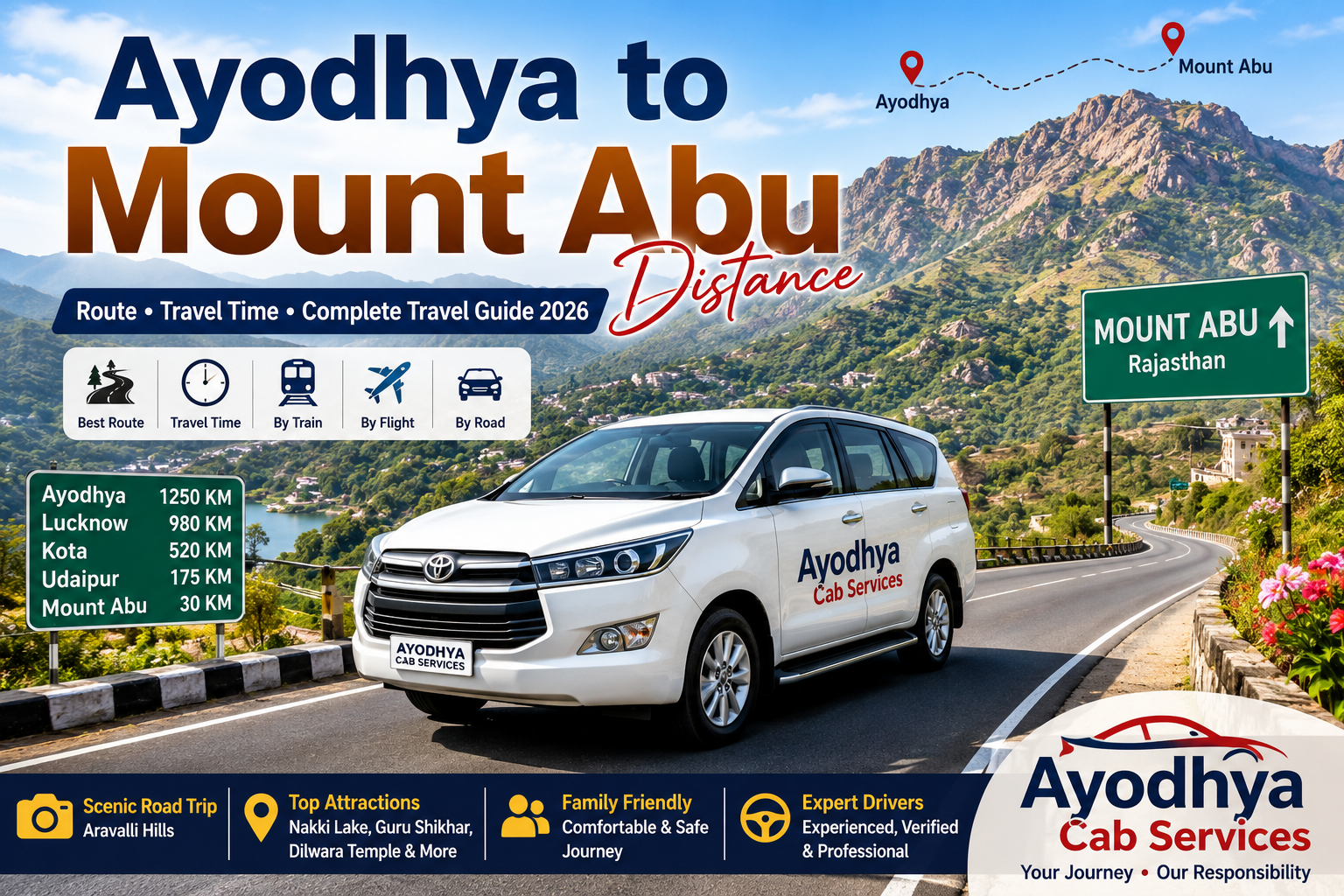
Ayodhya to Mount Abu Distance – Complete Route, Travel Time & Road Trip Guide by Ayodhya Cab Services.
Ayodhya to Mount Abu Distance
The approximate Ayodhya to Mount Abu Distance is around 1,250 to 1,350 kilometres by road, depending on the route you choose. The total travel time generally ranges between 22 and 26 hours without considering extended meal breaks, sightseeing stops, or overnight stays.
Since this is a long interstate journey, many travellers prefer dividing the trip into two days. This allows enough time for rest while making the drive safer and more enjoyable. Others choose to combine train or flight travel with a shorter road journey from Abu Road to Mount Abu.
Because highways continue improving across North India, travellers today have multiple route options based on road conditions, traffic, and personal preferences. Choosing the right route depends on whether you prioritise shorter distance, faster highways, or sightseeing opportunities during the trip.
Ayodhya to Mount Abu Distance by Road
Travelling by road remains one of the most flexible ways to reach Mount Abu. The journey allows travellers to stop whenever they wish, explore cities on the way, and enjoy changing landscapes from the plains of Uttar Pradesh to the hills of Rajasthan.
The most commonly preferred highways include sections of national highways connecting Uttar Pradesh, Madhya Pradesh or Rajasthan before reaching Abu Road. Roads are generally in good condition on major highway stretches, although local traffic may increase around large cities.
Many families prefer travelling by private car because it provides greater flexibility with luggage, meal breaks, and sightseeing. Group travellers also find road trips economical when expenses are shared among multiple passengers.
As the elevation increases near Mount Abu, travellers should drive carefully on the hill roads, especially during monsoon or winter mornings when visibility may be lower. Although the climb is not extremely difficult, cautious driving makes the final part of the journey safer.
Best Route from Ayodhya to Mount Abu
Several road routes connect Ayodhya with Mount Abu. The most suitable option depends on current road conditions, highway construction, and traffic movement.
A commonly preferred route passes through major cities before entering Rajasthan and eventually reaching Abu Road, which serves as the gateway to Mount Abu. From Abu Road, the hill station is approximately 28 kilometres away through a scenic mountain road.
Travellers planning long-distance drives often prefer highways offering better fuel stations, restaurants, emergency services, and accommodation options. Planning overnight halts in advance also reduces travel fatigue during such extended journeys.
Using updated navigation throughout the journey helps avoid unexpected diversions while providing real-time traffic information. Since highway infrastructure continues improving, checking live road conditions before departure is always recommended.
Ayodhya to Mount Abu Travel Time
The total travel duration depends on several factors beyond distance alone. Highway traffic, weather conditions, toll plazas, rest breaks, and city congestion can all influence the overall travel time.
Travellers leaving early in the morning often avoid heavy urban traffic during the initial part of the journey. Those planning overnight stops generally experience a more relaxed schedule compared with attempting the entire drive in one stretch.
For families travelling with children or elderly passengers, allowing additional time for meals and short breaks creates a much more comfortable travel experience. Long journeys become significantly easier when travellers maintain a flexible itinerary rather than following an extremely tight schedule.
Ayodhya to Mount Abu Distance by Train
Many travellers prefer travelling by train because it offers a comfortable alternative to a long road journey. Although there is no direct train from Ayodhya to Mount Abu, several railway connections make the trip convenient.
The nearest railway station to Mount Abu is Abu Road Railway Station, which is one of the busiest stations in southern Rajasthan. It is well connected with major cities such as Delhi, Jaipur, Ahmedabad, Lucknow, Varanasi, Mumbai, and other important railway networks.
Travellers from Ayodhya usually board trains that connect through Lucknow, Prayagraj, Kanpur, or other major junctions before reaching Abu Road. Depending on the selected train and connection, the railway journey generally takes between 20 and 28 hours.
Train travel is particularly suitable for families, senior citizens, and travellers who prefer avoiding continuous long-distance driving. Since Abu Road receives visitors throughout the year, booking railway tickets in advance is recommended, especially during holidays and the summer vacation season.
Nearest Railway Station to Mount Abu
The nearest railway station to Mount Abu is Abu Road Railway Station, located approximately 28 kilometres from the hill station.
After arriving at Abu Road, travellers can easily continue their journey by taxi, local cab, or bus. The drive from Abu Road to Mount Abu usually takes around 40 to 50 minutes, depending on traffic and weather conditions.
The road from Abu Road to Mount Abu climbs gradually through the Aravalli Hills, offering beautiful views along the way. Many visitors stop briefly at scenic viewpoints before entering the main town.
Since Abu Road serves as the primary transportation hub for Mount Abu, facilities such as hotels, restaurants, ATMs, fuel stations, and local transportation are readily available near the railway station.
Ayodhya to Mount Abu Distance by Flight
Travellers looking to reduce travel time may choose to combine air travel with a short road journey. While Mount Abu does not have its own airport, several nearby airports provide convenient access to the region.
The closest airport is Maharana Pratap Airport, Udaipur, followed by Sardar Vallabhbhai Patel International Airport, Ahmedabad. Both airports receive flights from major Indian cities.
Travellers starting from Ayodhya generally connect through larger airports before reaching either Udaipur or Ahmedabad. From there, they can hire a taxi or board a bus to Mount Abu.
Flying significantly reduces overall travel time, making it an attractive option for visitors with limited vacation days or business travellers planning short stays.
Nearest Airport to Mount Abu
The nearest airport to Mount Abu is Maharana Pratap Airport (Udaipur), situated approximately 175 kilometres away.
Another frequently used option is Ahmedabad Airport, located around 220 kilometres from Mount Abu. Ahmedabad offers better flight connectivity from several Indian cities, making it a preferred choice for many travellers.
After landing, visitors can continue by private taxi, rental vehicle, or intercity bus. The roads connecting both airports to Mount Abu are generally well maintained, allowing for a comfortable onward journey.
Choosing between Udaipur and Ahmedabad often depends on flight availability, ticket prices, and total travel duration rather than distance alone.
How to Reach Mount Abu from Ayodhya
There are several practical ways to travel from Ayodhya to Mount Abu, and the right option depends on your budget, available time, and travel preferences.
Travellers who enjoy road trips often prefer driving because it allows greater flexibility for sightseeing and overnight stops. Those seeking comfort frequently choose train travel to Abu Road followed by a short taxi ride. Visitors wanting to save time generally combine flights with road transportation from the nearest airport.
Regardless of the mode of transport, planning your journey in advance helps avoid unnecessary delays. Checking transportation schedules, accommodation availability, and weather forecasts before departure contributes to a smoother experience.
Because Mount Abu remains a popular destination throughout the year, advance planning becomes particularly important during weekends, school holidays, and major festival seasons.
Road Conditions Between Ayodhya and Mount Abu
The highway network connecting Ayodhya with Mount Abu has improved considerably over the years. Most of the journey passes through national highways offering multiple fuel stations, restaurants, rest areas, and service facilities.
Traffic conditions usually remain manageable on highway stretches, although congestion may occur while passing through larger cities. Travellers should also allow extra time for toll plazas and occasional road maintenance work.
The final section leading from Abu Road to Mount Abu consists of mountain roads with several curves. Although the route is well maintained, careful driving is recommended, particularly during the monsoon season or late-night travel.
With proper preparation, the road journey remains comfortable for most travellers and offers opportunities to experience the changing landscapes of northern and western India.
Best Time to Visit Mount Abu from Ayodhya
Choosing the right season can make your journey even more enjoyable. Mount Abu welcomes visitors throughout the year, but each season offers a different experience.
The months from October to March are considered the most pleasant for sightseeing. The weather remains cool, making it comfortable to explore lakes, viewpoints, temples, and gardens. Winter mornings can be chilly, so carrying light woollen clothing is advisable.
Summer, from April to June, is also popular because Mount Abu offers a refreshing escape from the heat experienced across much of North India. During this period, families and holidaymakers often plan vacations to enjoy the cooler hill climate.
The monsoon season, from July to September, transforms the surrounding hills into lush green landscapes. While the scenery becomes exceptionally beautiful, occasional heavy rainfall may affect visibility on hill roads. Travellers should check weather updates before beginning the final climb from Abu Road.
Planning your trip during weekdays instead of long weekends can also help you avoid larger crowds at major attractions.
Popular Tourist Places in Mount Abu
Mount Abu offers a combination of natural beauty, historic architecture, peaceful surroundings, and cultural attractions. Visitors often spend two to four days exploring the area comfortably.
One of the most visited attractions is Nakki Lake, where travellers enjoy boating, lakeside walks, and beautiful sunset views. The peaceful atmosphere makes it suitable for families as well as couples.
Another well-known destination is Guru Shikhar, the highest peak in the Aravalli Range. The viewpoint provides panoramic views of the surrounding hills and is especially popular during sunrise and sunset.
The world-famous Dilwara Jain Temples attract visitors because of their extraordinary marble craftsmanship. Their detailed carvings and architectural beauty make them one of Rajasthan’s most remarkable heritage sites.
Nature lovers also visit Sunset Point, Honeymoon Point, Peace Park, Trevor’s Tank, and Mount Abu Wildlife Sanctuary, each offering a different perspective of the region’s landscape.
Exploring these destinations at a relaxed pace allows travellers to appreciate the hill station beyond its most famous landmarks.
Suggested Ayodhya to Mount Abu Travel Itinerary
Because the distance between Ayodhya and Mount Abu is considerable, planning your schedule in advance makes the trip more comfortable.
For road travellers, dividing the journey into two days reduces fatigue and provides opportunities to rest overnight in a convenient city along the route. After arriving in Mount Abu, spending at least two nights allows enough time to explore the major attractions without rushing.
Visitors travelling by train can arrive at Abu Road in the morning and reach Mount Abu before noon. This leaves the afternoon free for visiting Nakki Lake, local markets, and nearby viewpoints.
A three-day itinerary usually provides enough time to experience the major attractions, while four or five days allow travellers to enjoy a more relaxed holiday with additional sightseeing and local experiences.
Flexible planning is always recommended because weather conditions and local events can influence sightseeing schedules.
Accommodation Options in Mount Abu
Mount Abu offers accommodation suitable for different travel styles and budgets. Visitors can choose from luxury resorts, mid-range hotels, boutique properties, family guest houses, and budget lodges.
Hotels near Nakki Lake remain popular because they provide convenient access to restaurants, shopping areas, and several tourist attractions. Travellers looking for quieter surroundings often choose resorts located slightly outside the town centre.
During peak tourist seasons, hotel availability can become limited. Making reservations several weeks before travelling helps secure better choices and avoids last-minute price increases.
Many accommodations also offer parking facilities, mountain views, family rooms, and guided sightseeing assistance, making them convenient for long-distance travellers.
Reading recent guest reviews before booking helps ensure the selected property matches your expectations regarding cleanliness, location, and overall comfort.
Essential Travel Tips Before Leaving Ayodhya
Preparing properly before beginning the journey contributes to a smoother travel experience. Since the route covers several states and a significant distance, travellers should complete a few basic checks before departure.
Ensure your vehicle is serviced if you plan to drive. Check tyre condition, engine oil, brakes, lights, and coolant levels. Carry important vehicle documents along with your driving licence and identification.
If travelling by train or flight, confirm bookings, download digital tickets, and arrange local transportation from Abu Road Railway Station or the airport before arriving.
Packing should include comfortable clothing, basic medicines, reusable water bottles, mobile chargers, power banks, and weather-appropriate jackets if travelling during winter.
Keeping offline navigation maps available can also prove helpful when travelling through areas with limited mobile network coverage.
Estimated Travel Cost from Ayodhya to Mount Abu
The total cost of travelling from Ayodhya to Mount Abu depends on your preferred mode of transport, accommodation, food choices, and trip duration. Planning a realistic budget before departure helps avoid unexpected expenses during the journey.
Travellers driving their own vehicle should consider fuel costs, highway tolls, meals, overnight accommodation, and local sightseeing expenses. Those travelling by train can estimate expenses based on ticket class, local transport from Abu Road Railway Station, hotel charges, and attraction entry fees.
Visitors choosing air travel usually spend more on transportation but save considerable time. Budget-conscious travellers often find train travel combined with local taxis a practical balance between comfort and affordability.
In addition to transportation, it is advisable to keep extra funds for shopping, local snacks, emergency expenses, and optional sightseeing activities. A well-planned travel budget allows you to enjoy the trip without worrying about daily expenses.
Food and Refreshment Stops Along the Route
One of the enjoyable aspects of a long road journey is exploring regional cuisine while travelling through different states. The highways connecting Ayodhya and Mount Abu feature numerous restaurants, family dining facilities, and roadside food plazas.
Travellers can easily find vegetarian restaurants, multi-cuisine outlets, fuel stations with food courts, tea stalls, and quick refreshment centres throughout most major highway sections. Larger cities also provide branded restaurants and hotel dining options for extended meal breaks.
Keeping healthy snacks, drinking water, and light refreshments inside the vehicle is useful during longer highway stretches where facilities may be farther apart. Short breaks every few hours also help reduce travel fatigue and improve driving concentration.
Many families prefer planning meal stops near major cities because these locations generally offer cleaner facilities and a wider variety of dining choices.
Family Travel Guide for the Ayodhya to Mount Abu Journey
Mount Abu remains one of Rajasthan’s most family-friendly hill stations because of its pleasant climate, peaceful surroundings, and variety of attractions suitable for visitors of all ages.
Families travelling with children should schedule regular rest breaks during the journey. Long-distance travel becomes much more comfortable when passengers have enough opportunities to stretch, eat, and relax before continuing.
Senior citizens may prefer train travel or splitting the road journey into multiple days to minimise physical strain. Booking hotels with lift facilities, spacious rooms, and convenient access to local attractions can further improve comfort during the holiday.
Children often enjoy activities such as boating at Nakki Lake, visiting wildlife parks, exploring scenic viewpoints, and spending time in public gardens. Planning a balanced itinerary that includes both sightseeing and relaxation helps every family member enjoy the vacation.
Carrying basic medicines, identification documents, emergency contact numbers, and essential travel supplies provides additional peace of mind throughout the trip.
Road Safety Tips While Travelling to Mount Abu
Safety should remain the highest priority during any long-distance road trip. Before leaving Ayodhya, ensure that your vehicle is in good mechanical condition and suitable for extended highway driving.
Drivers should avoid continuous driving for very long periods without rest. Taking short breaks every two to three hours helps maintain concentration and reduces fatigue significantly. If multiple licensed drivers are available, alternating driving responsibilities can make the journey even safer.
Speed limits should always be followed, particularly when approaching urban areas or entering the mountain roads leading to Mount Abu. Hill roads contain several bends where careful driving becomes especially important.
Night driving should be approached cautiously because visibility can decrease on winding mountain sections. Whenever possible, planning arrival during daylight hours makes the final climb more comfortable for first-time visitors.
Weather conditions should also be monitored before departure, especially during the monsoon season when rainfall may temporarily affect road conditions.
Shopping in Mount Abu
Besides its natural beauty, Mount Abu offers enjoyable shopping experiences for visitors interested in local handicrafts and traditional Rajasthani products.
The markets around Nakki Lake feature a variety of handmade items including wooden crafts, marble souvenirs, decorative articles, traditional clothing, jewellery, leather goods, and locally produced textiles.
Visitors also purchase herbal products, handcrafted gift items, and regional artwork as memorable souvenirs. Exploring the local markets during the evening allows travellers to experience the lively atmosphere while supporting small businesses.
While shopping, comparing prices across different stores is recommended because many items are available at multiple locations. Bargaining may also be possible in some local shops selling handicrafts and souvenirs.
Shopping is best enjoyed after completing daytime sightseeing, allowing travellers to spend relaxed evenings exploring the colourful local marketplaces.
Why Mount Abu Is Worth Visiting
Mount Abu stands apart from many other destinations in Rajasthan because it combines pleasant weather, mountain scenery, historical architecture, peaceful lakes, and outdoor recreation within a relatively compact area.
Unlike larger hill stations that require extensive travel between attractions, many of Mount Abu’s popular destinations are located close to one another. This allows visitors to experience multiple places within a short period without spending excessive time on transportation.
The combination of viewpoints, lakes, heritage sites, gardens, wildlife, and cultural attractions makes the destination appealing for solo travellers, families, couples, photographers, and nature enthusiasts alike.
Whether you visit for a weekend getaway or an extended holiday, Mount Abu offers a relaxing atmosphere that contrasts beautifully with the busy pace of city life.
Nearby Places to Visit During Your Mount Abu Trip
After reaching Mount Abu, many travellers choose to explore nearby destinations that add more variety to their holiday. The surrounding region offers historical sites, wildlife areas, peaceful lakes, and scenic viewpoints that can easily be included in a two- or three-day itinerary.
One of the most popular excursions is a visit to Achalgarh Fort, located a short drive from the main town. This historic fort is known for its impressive gateways, panoramic hill views, and peaceful surroundings. Although parts of the fort have weathered over time, it continues to attract visitors interested in Rajasthan’s architectural heritage.
Another worthwhile destination is Trevor’s Tank, a quiet nature spot surrounded by forests. Birdwatchers and wildlife enthusiasts often visit this location during the early morning when the atmosphere is calm and the chances of spotting local wildlife are higher.
Those who enjoy gardens and peaceful landscapes can spend time at Peace Park, which features beautifully maintained green spaces, walking trails, and viewpoints overlooking the Aravalli Hills. The park provides a welcome break from busy sightseeing schedules and is suitable for visitors of all ages.
Adding nearby attractions to your itinerary allows you to experience more than the town centre while appreciating the natural beauty that makes Mount Abu unique.
One-Day Sightseeing Plan in Mount Abu
Travellers with limited time can still experience many of Mount Abu’s highlights within a single day by following a carefully planned schedule.
Begin your morning with a visit to Guru Shikhar, where the cooler temperatures and clear skies often provide excellent panoramic views. After spending some time at the viewpoint, continue towards the Dilwara Jain Temples, which are admired for their remarkable marble craftsmanship and historical significance.
By afternoon, head towards Nakki Lake for boating or a leisurely walk along the lakeside promenade. Numerous cafés and restaurants nearby make this an ideal place for lunch or refreshments before continuing your sightseeing.
Later in the day, visit Sunset Point, one of the most popular locations in Mount Abu. As evening approaches, the changing colours across the hills create memorable views that many visitors consider the highlight of their trip.
Although one day is sufficient to experience the major attractions, staying longer allows travellers to explore the destination at a slower and more relaxing pace.
Photography Spots in Mount Abu
Photography enthusiasts will find numerous opportunities throughout Mount Abu. The combination of mountain landscapes, lakes, forests, heritage structures, and sunrise or sunset viewpoints creates excellent conditions for memorable travel photography.
Guru Shikhar offers sweeping views of the surrounding hills and is especially attractive during the early morning. Soft natural lighting enhances landscape photographs while reducing harsh shadows.
Nakki Lake provides reflections of the surrounding hills, colourful boats, and lively evening activity. During sunrise and sunset, the lake becomes one of the most photogenic locations in the town.
Nature photographers often explore Mount Abu Wildlife Sanctuary, where diverse vegetation, forest trails, and seasonal wildlife create interesting compositions. Patience and respect for local wildlife remain important while photographing natural environments.
Historic architecture at Dilwara Jain Temples can also be admired, although visitors should always follow photography rules that may apply inside heritage structures.
Carrying a lightweight tripod, spare batteries, and sufficient storage space helps capture more memorable moments throughout the journey.
Weather Conditions Throughout the Year
Understanding seasonal weather helps travellers pack appropriately and enjoy a more comfortable holiday.
Winter temperatures generally remain cool, making sightseeing pleasant throughout the day. Light jackets are usually sufficient during the daytime, while evenings may require warmer clothing.
Summer temperatures remain significantly lower than those experienced across much of northern India, which explains why Mount Abu attracts many visitors during this period. Even during warmer months, mornings and evenings remain comparatively comfortable.
Monsoon transforms the surrounding hills into vibrant green landscapes. Frequent showers create refreshing conditions, although occasional mist and slippery roads require additional caution while travelling around the hill station.
Checking the latest weather forecast before departure helps travellers prepare suitable clothing and adjust sightseeing plans if necessary.
Responsible Tourism While Visiting Mount Abu
Protecting the natural environment benefits both current visitors and future generations. Mount Abu’s forests, lakes, and hills remain beautiful because many travellers and local communities actively support responsible tourism.
Visitors are encouraged to dispose of waste properly, avoid single-use plastics whenever possible, and respect wildlife habitats. Carrying reusable water bottles and keeping picnic areas clean contributes to preserving the area’s natural beauty.
Local businesses, guides, and communities also appreciate travellers who respect regional customs, support local handicrafts, and behave responsibly while visiting public attractions.
Simple actions such as remaining on designated walking paths, avoiding unnecessary noise in natural areas, and following local regulations help protect the destination while improving the experience for everyone.
Where to Stay in Mount Abu
Finding suitable accommodation is one of the most important parts of planning a successful trip. Mount Abu offers a wide variety of hotels, resorts, guest houses, and holiday cottages that cater to different budgets and travel preferences.
Travellers looking for convenience often choose hotels near Nakki Lake, as this area provides easy access to restaurants, shopping streets, boating activities, and several popular attractions. Staying near the town centre also reduces travel time between sightseeing locations.
Visitors seeking a quieter atmosphere may prefer resorts situated on the outskirts of Mount Abu. These properties usually offer scenic views of the Aravalli Hills, landscaped gardens, and a peaceful environment away from the busiest tourist areas.
Families generally look for spacious rooms, parking facilities, and on-site dining options, while couples often choose properties offering mountain views or private balconies. Reading recent guest reviews before confirming reservations helps ensure that the selected accommodation matches your expectations.
Booking accommodation several weeks in advance is advisable during school holidays, weekends, and the peak tourist season, when hotels often reach full occupancy.
Local Transportation in Mount Abu
Getting around Mount Abu is relatively easy because many attractions are located within a short distance of each other. Depending on your travel style, you can choose from taxis, local buses, auto-rickshaws, or rental vehicles.
Private taxis remain one of the most convenient options for families and groups, especially when planning to visit multiple sightseeing locations in a single day. Drivers familiar with the local roads can also recommend suitable viewpoints, restaurants, and less crowded attractions.
Some visitors enjoy walking around the central market area and Nakki Lake because many shops, cafés, and attractions are located close together. Comfortable walking shoes are recommended, as certain sightseeing areas involve gentle uphill paths.
Those arriving by train at Abu Road can easily hire taxis directly from the railway station. The drive to Mount Abu is scenic and usually takes less than an hour under normal traffic conditions.
Choosing transportation according to your itinerary allows you to explore the hill station at a relaxed pace without unnecessary delays.
Packing Tips for the Ayodhya to Mount Abu Journey
Packing thoughtfully makes any long-distance journey more comfortable. Since Mount Abu experiences cooler temperatures than many cities in North India, carrying weather-appropriate clothing is recommended throughout the year.
Comfortable walking shoes are essential because several tourist attractions involve walking through gardens, viewpoints, or uneven paths. A light jacket remains useful even during summer evenings, while winter travellers should carry warmer clothing for early mornings and nights.
Basic medicines, personal identification documents, mobile chargers, power banks, reusable water bottles, sunglasses, sunscreen, and umbrellas are practical items that most travellers find useful during their stay.
Photography enthusiasts should carry extra camera batteries, memory cards, and protective bags for electronic equipment, particularly if travelling during the monsoon season.
Packing efficiently reduces unnecessary luggage while ensuring that all essential items remain easily accessible throughout the journey.
How Many Days Are Enough for Mount Abu?
The ideal duration depends on your travel interests and available time. Most visitors find that two to three days provide enough time to explore the major attractions comfortably.
A weekend itinerary usually includes Nakki Lake, Dilwara Jain Temples, Guru Shikhar, Sunset Point, and the local markets. Travellers interested in photography, nature walks, or nearby attractions may prefer staying for four or five days to enjoy a more relaxed experience.
Longer stays also allow visitors to spend more time enjoying cafés, scenic viewpoints, and peaceful surroundings instead of following a tightly packed sightseeing schedule.
Families travelling with children often appreciate slower itineraries because they reduce travel fatigue while allowing everyone to enjoy the destination at their own pace.
Planning your holiday according to your interests rather than trying to visit every attraction in one day often creates a much more enjoyable travel experience.
Helpful Travel Advice for First-Time Visitors
Travellers visiting Mount Abu for the first time can make their journey smoother by following a few practical recommendations.
Begin your sightseeing early in the morning whenever possible. Popular attractions generally become busier during the afternoon, especially during weekends and holiday seasons.
Carry sufficient cash along with digital payment options because some smaller shops or local vendors may occasionally have limited payment facilities.
Always follow local regulations while visiting heritage sites and natural attractions. Respecting public spaces, maintaining cleanliness, and behaving responsibly helps preserve the destination for future visitors.
If travelling by road, avoid rushing the final hill climb. The winding roads leading from Abu Road to Mount Abu require steady driving, particularly during rain or reduced visibility.
Allow enough flexibility in your itinerary for unexpected weather changes, additional sightseeing opportunities, or simply enjoying the peaceful atmosphere that makes Mount Abu one of Rajasthan’s most popular hill destinations.
Local Food You Should Try in Mount Abu
A holiday becomes even more memorable when you explore the local cuisine. Mount Abu offers a wide variety of food ranging from traditional Rajasthani dishes to North Indian, South Indian, Gujarati, and international cuisine.
Many restaurants around Nakki Lake serve authentic regional meals prepared with local flavours. Popular dishes include Dal Baati Churma, Gatte Ki Sabzi, Ker Sangri, and traditional Rajasthani thalis. Visitors who enjoy lighter meals can also find cafés offering sandwiches, pizzas, coffee, fresh juices, and desserts.
Street food lovers often explore the evening market where snacks such as kachori, samosa, pav bhaji, roasted corn, kulfi, and local sweets are available. The lively atmosphere around the market makes dining part of the overall travel experience rather than simply a meal stop.
Travellers with children or senior family members will also find numerous restaurants serving familiar Indian dishes. Since Mount Abu is a major tourist destination, food options remain suitable for different dietary preferences and budgets.
Trying local cuisine allows visitors to experience another important part of Rajasthan’s culture while enjoying freshly prepared regional specialties.
Shopping Guide for Mount Abu Visitors
Shopping is one of the favourite activities for tourists before returning home. Mount Abu’s markets offer handcrafted products that reflect the artistic traditions of Rajasthan.
Visitors commonly purchase marble handicrafts, wooden decorative items, handcrafted jewellery, leather goods, colourful textiles, embroidered bags, traditional Rajasthani clothing, and locally made souvenirs. Handmade gifts remain particularly popular because they represent the culture of the region.
The market near Nakki Lake becomes especially lively during the evening. Walking through the shops gives visitors the opportunity to interact with local artisans while exploring a variety of unique products.
Travellers looking for memorable gifts often choose handcrafted home décor items or traditional artwork. Comparing prices between different shops before making larger purchases is always a sensible approach.
Shopping also supports local businesses and adds another enjoyable activity to your Mount Abu itinerary.
Common Mistakes to Avoid During the Journey
Proper planning helps travellers avoid unnecessary difficulties during a long-distance trip. One of the most common mistakes is underestimating the total travel time. Because the journey from Ayodhya to Mount Abu covers more than one thousand kilometres, sufficient rest breaks should always be included in the itinerary.
Some visitors also delay hotel bookings until the last moment. During weekends, festivals, and school vacations, accommodation availability can become limited, making advance reservations highly beneficial.
Packing unsuitable clothing is another frequent issue. Although Rajasthan is often associated with warm weather, Mount Abu experiences cooler temperatures, especially during winter mornings and evenings.
Travellers driving their own vehicles should inspect tyres, brakes, lights, engine fluids, and emergency equipment before departure. A basic vehicle inspection significantly reduces the chances of mechanical problems during the journey.
Finally, avoid trying to visit every attraction in a single day. A relaxed schedule allows you to appreciate the destination instead of rushing from one location to another.
Why Mount Abu Remains Rajasthan’s Favourite Hill Station
Mount Abu continues attracting visitors because it offers something for almost every type of traveller. Families appreciate the peaceful atmosphere, couples enjoy the scenic viewpoints, photographers find countless beautiful landscapes, and history enthusiasts explore remarkable architectural landmarks.
Unlike many crowded tourist destinations, Mount Abu combines nature, history, culture, and recreation within a relatively compact area. Travellers can spend the morning at a mountain viewpoint, enjoy boating in the afternoon, visit historical monuments later in the day, and finish the evening exploring local markets.
The pleasant climate also distinguishes Mount Abu from most other destinations in Rajasthan. During the hotter months, many visitors choose Mount Abu specifically because temperatures remain more comfortable than those experienced in surrounding cities.
Whether you are planning a weekend escape or an extended family holiday, Mount Abu provides a relaxing environment where sightseeing and leisure activities can be enjoyed at a comfortable pace.
Travel Planning Tips Before Leaving Ayodhya
Preparing in advance often makes the difference between a stressful journey and a comfortable holiday. Before leaving Ayodhya, confirm all hotel bookings, transportation reservations, and travel documents.
If travelling by road, download offline navigation maps in case mobile connectivity becomes limited along certain stretches. Keep emergency contact numbers readily available and inform family members about your travel schedule.
Travellers using trains or flights should arrive at stations or airports well before departure to avoid unnecessary last-minute pressure. Carry both digital and printed copies of important bookings whenever possible.
Checking weather forecasts for both your departure city and Mount Abu allows you to pack suitable clothing and adjust your itinerary if required. A little preparation before departure usually results in a much smoother and more enjoyable travel experience.
Frequently Asked Questions About the Ayodhya to Mount Abu Journey
Travellers planning a long-distance holiday often have several practical questions before beginning their trip. Understanding these details in advance helps reduce uncertainty and makes travel planning much easier.
One of the most common questions is whether Mount Abu is suitable for family holidays. The answer is yes. The hill station offers pleasant weather, comfortable accommodation, peaceful sightseeing locations, boating activities, gardens, viewpoints, and attractions that visitors of different age groups can enjoy together.
Another frequently asked question concerns transportation. Travellers can reach Mount Abu by road, train, or a combination of flight and road travel. Since every traveller has different preferences, selecting the most suitable option depends on available time, budget, and personal comfort.
Visitors also ask whether one day is enough to explore Mount Abu. Although major attractions can be covered within a day, spending two or three days provides a much more relaxed experience and allows additional time for shopping, local food, and scenic viewpoints.
Planning accommodation, transportation, and sightseeing before departure helps avoid unnecessary complications after arriving at the destination.
Tourist Attractions Near Mount Abu Worth Exploring
Besides the main attractions inside Mount Abu, several nearby destinations make excellent additions to your holiday itinerary. These places offer opportunities to experience more of southern Rajasthan without travelling extremely long distances.
Travellers interested in historical architecture often explore nearby heritage sites that reflect the region’s rich cultural history. Nature enthusiasts enjoy scenic drives through the surrounding hills, where forests, valleys, and viewpoints create excellent opportunities for photography.
Visitors with additional vacation days sometimes include nearby towns in their itinerary before returning home. This approach allows travellers to experience a broader section of Rajasthan while making the most of the long journey from Ayodhya.
Because many attractions remain within comfortable driving distance, day trips are possible without changing accommodation every night. Planning these excursions in advance helps maximise sightseeing time.
Whether your interests include history, nature, photography, or local culture, the surrounding region provides numerous opportunities beyond Mount Abu itself.
Budget Planning for Your Mount Abu Holiday
Creating a realistic travel budget helps visitors manage expenses more effectively throughout the journey. Total costs vary according to transportation choices, hotel category, travel season, and personal preferences.
Accommodation generally represents one of the largest expenses, followed by transportation and meals. Travellers who reserve hotels well before peak seasons often find better prices and greater availability.
Dining costs can also be adjusted according to personal preferences. Local restaurants offer reasonably priced meals, while premium resorts and speciality restaurants provide more luxurious dining experiences.
Shopping, sightseeing activities, boating, photography equipment, and optional excursions should also be considered when preparing your overall travel budget.
Keeping a small emergency fund available is always advisable during long-distance travel. Unexpected expenses such as weather-related changes, medical requirements, or transportation adjustments become much easier to manage with proper financial planning.
Safety Tips for a Comfortable Holiday
Personal safety should remain an important consideration throughout your journey. Travellers should always remain aware of their surroundings, particularly while visiting crowded tourist areas or busy marketplaces.
Valuable belongings such as mobile phones, cameras, wallets, and travel documents should be stored securely. Carrying only essential cash while using digital payment methods whenever possible provides additional convenience.
When visiting viewpoints or natural attractions, remain within designated visitor areas and avoid climbing restricted sections for photographs. Following safety instructions protects both visitors and the surrounding environment.
Those travelling by private vehicle should avoid driving while tired. Taking regular breaks, staying hydrated, and maintaining moderate speeds contribute to safer long-distance travel.
Simple precautions allow travellers to focus on enjoying the destination while reducing unnecessary risks during the holiday.
Why Proper Planning Improves Every Road Trip
Long-distance journeys become far more enjoyable when travellers prepare carefully before leaving home. Confirming accommodation, checking transportation schedules, reviewing weather forecasts, and organising essential documents all contribute to a smoother experience.
Travellers should also prepare flexible itineraries rather than attempting to follow extremely strict schedules. Unexpected traffic, weather changes, or additional sightseeing opportunities often influence travel plans.
Allowing extra time for rest stops, local exploration, and spontaneous discoveries frequently creates more memorable experiences than rushing between destinations.
Mount Abu offers much more than beautiful scenery. It provides opportunities to enjoy peaceful surroundings, regional culture, local cuisine, and unforgettable mountain landscapes. Approaching the journey with careful planning and realistic expectations helps visitors appreciate every stage of the experience.
Travel Tips for Families, Couples, and Solo Travellers
Mount Abu welcomes every type of traveller, and planning your trip according to your travel style makes the experience even better.
Families often enjoy visiting Nakki Lake, Guru Shikhar, Peace Park, and the local markets because these attractions offer relaxed sightseeing without requiring long walks. Choosing accommodation close to the town centre also reduces travel time between destinations, making the holiday more comfortable for children and senior citizens.
Couples usually prefer quieter locations during sunrise and sunset. Scenic viewpoints, peaceful gardens, lakeside cafés, and short nature walks create memorable moments throughout the trip. Planning an extra day allows more time to enjoy the atmosphere without feeling rushed.
Solo travellers appreciate Mount Abu because it is relatively easy to explore independently. Local transportation is readily available, major attractions are well connected, and the town has a welcoming environment for visitors travelling alone. However, it is always advisable to inform family members about your travel plans and avoid isolated locations after dark.
Whatever your travel style, allowing enough time to relax between sightseeing activities helps create a more enjoyable holiday.
Seasonal Experiences in Mount Abu
Each season offers a different perspective of Mount Abu, allowing repeat visitors to experience something new throughout the year.
During winter, the cool weather attracts travellers who enjoy outdoor sightseeing and clear mountain views. Morning walks become particularly pleasant, while evenings are perfect for exploring local markets and cafés.
Summer transforms Mount Abu into one of Rajasthan’s most popular holiday destinations. Visitors from across the country arrive to escape the higher temperatures experienced in surrounding cities. Although tourist numbers increase, the refreshing climate continues to make sightseeing comfortable.
The monsoon season covers the hills with lush greenery and creates beautiful landscapes. Mist drifting across valleys, flowing streams, and freshly washed forests provide excellent opportunities for photography. Travellers visiting during this period should remain prepared for occasional rainfall and changing weather conditions.
Selecting the season that best matches your interests helps ensure a satisfying travel experience.
Responsible Tourism in Mount Abu
Travelling responsibly helps preserve Mount Abu’s natural beauty and cultural heritage for future visitors. Every traveller can contribute through simple habits that protect the environment and support local communities.
Using reusable water bottles, disposing of waste responsibly, and avoiding litter in public places helps maintain the cleanliness of tourist attractions. Respecting wildlife habitats and remaining on designated walking paths also protects the surrounding ecosystem.
Supporting local shops, restaurants, and handicraft businesses contributes positively to the regional economy. Purchasing handmade souvenirs from local artisans encourages traditional craftsmanship while providing visitors with unique keepsakes.
Visitors should also respect local customs, follow photography guidelines at heritage sites, and cooperate with instructions issued by tourism authorities.
Responsible travel creates a better experience for everyone while helping preserve Mount Abu’s charm.
Useful Checklist Before Starting Your Journey
Preparing a simple checklist before leaving Ayodhya can help prevent last-minute problems.
Confirm hotel bookings, transportation tickets, and identification documents a day before departure. Charge mobile phones, cameras, and power banks fully before beginning the journey. If travelling by road, inspect your vehicle carefully and ensure emergency equipment is available.
Pack comfortable clothing suitable for the expected weather, along with medicines, drinking water, snacks, sunglasses, and essential toiletries. Download offline maps and keep emergency contact numbers easily accessible throughout the journey.
Travellers should also share their itinerary with family members and remain updated regarding weather forecasts, especially during the monsoon season.
Completing these preparations reduces unnecessary stress and allows you to focus on enjoying the holiday from the moment your journey begins.
Making the Most of Your Mount Abu Holiday
A successful holiday is not measured only by the number of attractions visited. Taking time to appreciate local culture, enjoy regional food, interact with residents, and experience the peaceful surroundings often creates the most lasting memories.
Instead of rushing through every sightseeing location, spend time observing the natural beauty of the Aravalli Hills, relaxing by Nakki Lake, and enjoying the pleasant mountain climate. These quieter moments frequently become the highlights of the journey.
Travellers who plan flexible schedules often discover unexpected viewpoints, charming cafés, and interesting local experiences that are not always included in guidebooks.
Approaching the journey with curiosity and patience allows you to enjoy both the destination and the travel experience itself.
Final Travel Recommendations Before Visiting Mount Abu
Before beginning your journey, spend some time organising every important detail. Confirm hotel reservations, transportation bookings, identification documents, and weather forecasts several days before departure. Early planning helps minimise unexpected problems and allows you to enjoy the trip with greater confidence.
Travellers driving from Ayodhya should inspect their vehicle thoroughly, ensuring that tyres, brakes, lights, engine oil, and coolant levels are all in good condition. Keeping a basic emergency kit, drinking water, snacks, and a power bank inside the vehicle can also prove useful during long highway stretches.
Those travelling by train or flight should keep both digital and printed copies of their tickets whenever possible. Arriving early at railway stations or airports provides enough time to complete formalities without unnecessary stress.
If this is your first visit to Mount Abu, avoid trying to cover every attraction in one day. Instead, allow enough time to relax, enjoy the mountain scenery, and explore the destination at your own pace. A balanced itinerary often creates a much more memorable holiday than a tightly packed schedule.
Why the Journey Is as Enjoyable as the Destination
Many travellers focus only on reaching Mount Abu, but the journey itself offers countless memorable experiences. Travelling through different states allows visitors to witness changing landscapes, local cultures, roadside markets, and regional cuisine that vary significantly from one area to another.
Long road trips also create opportunities to stop at interesting viewpoints, enjoy local restaurants, and experience places that may not appear on traditional tourist itineraries. Families often remember these shared travel moments just as fondly as the destination itself.
Whether you choose to travel by road, train, or a combination of flight and road transport, approaching the journey with flexibility makes every stage more enjoyable. Allowing time for short breaks, photography, and spontaneous discoveries often becomes one of the highlights of the entire holiday.
Travelling comfortably, rather than rushing, allows you to appreciate both the destination and everything encountered along the way.
Conclusion
The Ayodhya to Mount Abu Distance journey is a rewarding long-distance trip that connects the spiritual city of Ayodhya with Rajasthan’s only hill station. Covering approximately 1,250 to 1,350 kilometres, the route offers travellers a combination of modern highways, scenic landscapes, historic destinations, and memorable travel experiences.
Whether you prefer travelling by road, train, or flight, proper planning helps ensure a smooth and enjoyable holiday. Understanding the route, estimating travel time, choosing suitable accommodation, and preparing for seasonal weather all contribute to a comfortable experience.
Mount Abu continues to attract visitors because of its pleasant climate, beautiful viewpoints, peaceful lakes, remarkable architecture, local markets, and welcoming atmosphere. Spending two or three days exploring the hill station allows enough time to enjoy its major attractions without feeling hurried.
If your journey begins from Ayodhya, Lucknow, or Varanasi, careful planning before departure makes the overall experience much more convenient. Taking time to organise transportation, accommodation, sightseeing schedules, and essential travel items allows you to focus entirely on enjoying your holiday.
Rather than treating the journey as simply reaching another destination, enjoy every stage of the experience. The changing landscapes, regional culture, local food, and peaceful mountain environment combine to create memories that often last much longer than the trip itself.
Why Ayodhya Cab Services Is a Trusted Choice for Outstation Travel
Planning a long-distance road trip becomes much easier when your journey begins with a dependable travel partner. Ayodhya Cab Services offers comfortable outstation cab bookings from Ayodhya, Lucknow, and Varanasi for travellers planning holidays, family vacations, business trips, airport transfers, and multi-city journeys across India.
Travellers choose Ayodhya Cab Services because of experienced drivers, clean and well-maintained vehicles, transparent pricing, punctual pickups, and professional customer support. Every trip is planned to provide a comfortable travel experience from the very beginning.
Whether you need a one-way journey, a round trip, or a customised multi-day itinerary, our focus is on making long-distance travel convenient and hassle-free. Starting your journey with a reliable travel partner allows you to concentrate on enjoying your destination instead of worrying about transportation.
Beginning your trip from Ayodhya, Lucknow, or Varanasi with careful planning and dependable travel arrangements helps make every road journey safer, smoother, and more enjoyable.
Why Travellers Choose Ayodhya Cab Services for Outstation Taxi Booking
Planning a long-distance journey becomes easier when you travel with an experienced local cab provider. Ayodhya Cab Services is a trusted choice for travellers looking for comfortable, reliable, and professional outstation taxi services from Ayodhya, Lucknow, and Varanasi.
Our focus is on providing a smooth travel experience for families, solo travellers, business professionals, pilgrims, and holidaymakers who want safe and convenient transportation from Uttar Pradesh to destinations across India.
Reliable Outstation Cab Booking from Ayodhya
If you are planning a road trip, family vacation, pilgrimage, airport transfer, or business journey, Ayodhya Cab Services offers flexible taxi booking options starting from Ayodhya, Lucknow, and Varanasi.
Whether your destination is Rajasthan, Gujarat, Uttarakhand, Himachal Pradesh, Madhya Pradesh, Maharashtra, Karnataka, or any other part of India, we help travellers begin their journey comfortably from our service locations.
Why Travellers Prefer Ayodhya Cab Services
Travellers often look for a taxi provider that offers comfort, punctuality, and professional service. Ayodhya Cab Services has built a strong reputation by focusing on customer satisfaction and dependable outstation travel.
Our advantages include:
- Experienced and verified drivers
- Clean and well-maintained vehicles
- Comfortable long-distance travel
- Transparent pricing with no hidden charges
- Timely pickup and flexible scheduling
- Easy booking process
- Responsive customer assistance
- Family-friendly travel experience
- Multi-day and one-way trip options
These qualities have made Ayodhya Cab Services a preferred choice for many travellers starting their journey from Ayodhya, Lucknow, or Varanasi.
Comfortable Road Trips Across India
Long-distance travel requires careful planning and reliable transportation. Our vehicles are prepared for extended journeys, allowing passengers to travel comfortably while enjoying the changing landscapes throughout India.
From hill stations and pilgrimage destinations to historical cities and tourist attractions, travellers can plan customised itineraries according to their preferences. Flexible travel schedules allow sufficient time for sightseeing, meal breaks, and overnight stays whenever required.
Local Expertise That Makes a Difference
Starting your journey with a regional travel company offers several advantages. Drivers familiar with Ayodhya, Lucknow, and Varanasi understand local roads, highway connections, railway stations, and airport routes, helping ensure efficient departures.
Good route planning, professional driving, and customer-focused service contribute to a smoother overall travel experience.
Travel with Confidence
Whether you are planning a weekend getaway, a family holiday, a religious tour, or a multi-state road trip, Ayodhya Cab Services is committed to providing dependable outstation transportation from Ayodhya, Lucknow, and Varanasi.
If you are searching for:
- Outstation cab from Ayodhya
- Taxi service in Ayodhya
- Cab booking from Lucknow
- Taxi service from Varanasi
- One-way taxi from Ayodhya
- Round-trip cab booking
- Long-distance taxi service in Uttar Pradesh
- Outstation taxi for family travel
- Cab for Rajasthan tour from Ayodhya
- Reliable taxi service from Ayodhya
Ayodhya Cab Services aims to make your journey comfortable, convenient, and memorable from the very first kilometre.

