
Ayodhya to Pashupatinath Temple Distance, Route Map, Travel Time & Complete Nepal Travel Guide
Ayodhya to Pashupatinath Temple Distance is one of the most searched travel queries among people planning a journey from Uttar Pradesh to Nepal. Many travelers want to know the exact route, travel time, border crossing process, transportation options, and estimated expenses before starting the trip. Understanding the Ayodhya to Pashupatinath Temple Distance helps visitors plan a smoother and more comfortable journey.
The route connects two important destinations in South Asia. While Ayodhya attracts millions of visitors every year, Kathmandu’s famous Pashupatinath Temple remains one of Nepal’s most visited landmarks. Consequently, interest in this travel route continues growing.
Many travelers search for terms such as Ayodhya to Nepal distance, Ayodhya to Kathmandu route map, Ayodhya to Pashupatinath travel guide, Nepal road trip from Ayodhya, and best route from Ayodhya to Kathmandu. This guide covers all these topics in detail.
For readers visiting the Ayodhya Cab Services blog, this article focuses primarily on travel information, route planning, and practical guidance rather than transportation bookings. Therefore, travelers from across India can use this guide regardless of how they plan to travel.
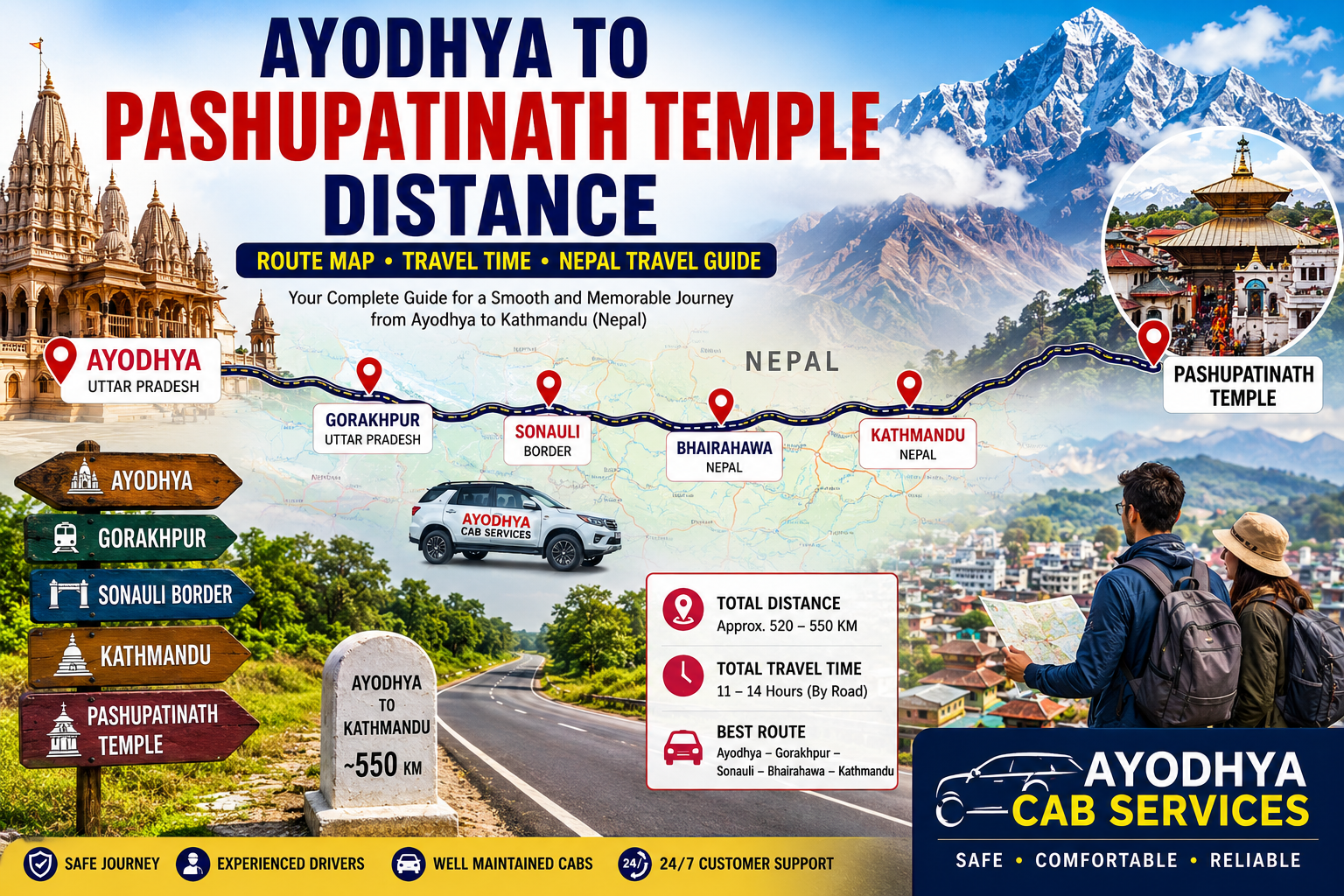
Ayodhya to Pashupatinath Temple Distance – Complete Nepal route map, travel time, road trip guide and Kathmandu journey information.
Ayodhya to Pashupatinath Temple Distance and Travel Overview
Before planning the journey, understanding the overall distance is essential. The Ayodhya to Pashupatinath Temple Distance is approximately 520 to 600 kilometers depending on the route selected and the border crossing point used.
Most travelers pass through the Sonauli border near Gorakhpur because it offers one of the most convenient road connections between India and Nepal. Consequently, this route remains highly popular among tourists and road-trip enthusiasts.
Travel duration varies according to transportation mode. Road journeys generally require between 11 and 15 hours, while train and flight combinations may reduce overall travel time. Therefore, travelers should select transportation methods based on budget, comfort, and schedule preferences.
Another factor involves border formalities. Indian citizens generally enjoy relatively simple entry procedures when traveling to Nepal. As a result, many people prefer road trips compared with international travel to other countries.
The increasing popularity of Nepal tourism has also improved road connectivity and transportation infrastructure. Consequently, traveling from Ayodhya to Kathmandu has become easier than ever before.
Best Route from Ayodhya to Pashupatinath Temple Nepal
Selecting the right route can significantly improve the travel experience. Most visitors prefer routes that balance distance, road quality, and convenience.
The commonly used route follows:
Ayodhya → Basti → Gorakhpur → Sonauli Border → Bhairahawa → Butwal → Narayanghat → Kathmandu → Pashupatinath Temple
This route remains popular because road conditions are generally favorable and transportation facilities are widely available. Consequently, many first-time visitors choose this option.
Travelers who prefer driving often appreciate the scenic landscapes along portions of the Nepal highway network. Therefore, road trips have become increasingly popular among families and groups.
Another advantage is accessibility. Fuel stations, restaurants, and rest areas are available throughout much of the route. As a result, long-distance travel becomes more manageable.
Understanding route details before departure can help visitors avoid confusion and improve travel efficiency.
Ayodhya to Kathmandu Distance by Road
Many travelers search specifically for Ayodhya to Kathmandu distance because Kathmandu serves as the gateway to Pashupatinath Temple.
The road distance between Ayodhya and Kathmandu typically ranges from 500 to 560 kilometers depending on route selection. Consequently, most travelers complete the journey within a single day if they begin early.
Road conditions on the Indian side are generally comfortable across major highways. After entering Nepal, travelers encounter mountain roads in certain sections. Therefore, travel speeds may vary.
The Kathmandu section often requires additional patience because urban traffic conditions can occasionally increase travel time. As a result, visitors should plan accordingly.
Despite the distance, many travelers find the road journey enjoyable because it offers opportunities to experience both Indian and Nepalese landscapes during a single trip.
How to Reach Pashupatinath Temple from Ayodhya
Several transportation options are available for visitors planning this journey. Consequently, travelers can choose according to budget and convenience.
Road travel remains one of the most popular choices because it offers flexibility and direct access. Families frequently prefer this option because they can customize schedules and stop whenever necessary.
Train travel represents another possibility. Travelers can reach Gorakhpur and continue toward Nepal using road transportation. Therefore, combining train and road travel often reduces costs.
Flights provide the fastest alternative. Visitors can travel to Kathmandu by air and complete the remaining local journey afterward. As a result, this option remains attractive for travelers with limited time.
Each transportation method offers unique advantages. Therefore, selecting the most suitable option depends on individual priorities and travel goals.
Documents Required for Ayodhya to Nepal Travel
One reason many travelers appreciate Nepal trips is the relatively simple entry process for Indian citizens.
Valid government-issued identification is typically sufficient for most travelers. Consequently, passport requirements differ from many international destinations.
Visitors should always carry original identification documents during the journey. Therefore, preparation remains important even when procedures appear straightforward.
Travelers should also verify current regulations before departure because policies occasionally change. As a result, checking official government information remains advisable.
Maintaining copies of important documents can further simplify travel and reduce potential complications.
Why This Route Is Becoming Popular Among Indian Travelers
Interest in Nepal tourism has increased significantly during recent years. Consequently, the Ayodhya to Kathmandu route continues attracting more visitors.
One major reason involves accessibility. Nepal offers international travel experiences without many of the complexities associated with long-distance overseas trips.
Another factor is affordability. Transportation, accommodation, and dining expenses often remain reasonable compared with many international destinations. Therefore, Nepal appeals to budget-conscious travelers.
Natural landscapes, cultural experiences, mountain scenery, and historical attractions further contribute to the route’s popularity. As a result, visitors often extend their trips beyond Kathmandu to explore additional destinations.
The growing number of online searches related to Ayodhya to Nepal travel demonstrates increasing interest among travelers seeking practical and memorable travel experiences.
Ayodhya to Pashupatinath Temple Distance by Car and Complete Road Journey Guide
Many travelers prefer driving because it provides flexibility and convenience throughout the journey. The Ayodhya to Pashupatinath Temple Distance by car is generally between 520 and 600 kilometers depending on the route selected after entering Nepal.
Road travel allows visitors to control their schedule and explore multiple destinations along the way. Consequently, families and groups often choose this option over fixed transportation schedules.
The route through Gorakhpur and the Sonauli border remains one of the most commonly used paths. Travelers appreciate this route because highways on the Indian side are generally well connected. Therefore, reaching the border area is usually straightforward.
After crossing into Nepal, the landscape gradually changes. Flat roads eventually give way to scenic hills and mountain routes. As a result, many travelers enjoy the changing scenery throughout the journey.
Another advantage of driving is flexibility. Visitors can stop for meals, photographs, rest breaks, and local exploration whenever necessary. Consequently, the trip often feels more comfortable and personalized.
Planning fuel stops, accommodation options, and rest periods before departure can help ensure a smoother travel experience.
Ayodhya to Nepal Road Trip Guide for First-Time Travelers
Road trips continue growing in popularity among travelers seeking adventure and flexibility. Consequently, many people search for practical guidance before starting the journey.
Preparation remains one of the most important factors. Travelers should verify vehicle documents, personal identification, and current border regulations before departure. Therefore, advance planning can prevent unnecessary complications.
Early departures are often beneficial because they maximize daylight driving hours. As a result, travelers can complete significant portions of the route before evening.
Weather conditions also deserve attention. Mountain roads in Nepal may occasionally experience delays during heavy rainfall. Consequently, monitoring forecasts before departure remains advisable.
Travelers should also carry water, snacks, navigation tools, and emergency supplies. Therefore, basic preparation contributes significantly to comfort and safety.
Many first-time visitors discover that proper planning transforms the journey from a potentially stressful experience into an enjoyable road adventure.
Sonauli Border Crossing Guide for Nepal Travelers
The Sonauli border serves as one of the busiest and most popular entry points between India and Nepal. Consequently, many travelers from Ayodhya choose this route.
Upon reaching the border area, travelers complete the necessary entry procedures according to current regulations. Therefore, carrying valid identification remains essential.
Traffic conditions occasionally vary depending on the season and travel demand. As a result, border crossing times may differ from one day to another.
Many visitors find the process relatively manageable compared with international border crossings in other regions. Consequently, Nepal remains an attractive destination for Indian travelers.
Facilities such as restaurants, currency exchange services, transportation providers, and accommodation options are generally available near the border area. Therefore, travelers can access necessary services before continuing their journey.
Understanding the border process beforehand helps reduce uncertainty and contributes to a smoother travel experience.
Ayodhya to Kathmandu Travel Time Explained
Travel time represents one of the most frequently searched aspects of this journey. Many travelers want realistic expectations before beginning their trip.
Road journeys from Ayodhya to Kathmandu generally require between 11 and 15 hours depending on traffic, road conditions, weather, and border crossing duration. Consequently, travel schedules should remain flexible.
The Indian section of the journey often progresses relatively quickly because of established highway networks. However, travel speeds may decrease after entering Nepal due to terrain changes. Therefore, estimating travel time conservatively remains advisable.
Traffic conditions around Kathmandu can also influence arrival times. As a result, visitors should account for possible delays when planning accommodations and activities.
Travelers who divide the journey into multiple segments often experience greater comfort, particularly during family trips. Consequently, some visitors choose overnight stops along the route.
Understanding realistic travel durations helps create more effective itineraries and reduces unnecessary stress.
Best Time to Visit Pashupatinath Temple from Ayodhya
Seasonal planning can significantly influence the overall travel experience. Therefore, many travelers research weather conditions before selecting travel dates.
Autumn and winter months generally offer comfortable temperatures and favorable travel conditions. Consequently, these seasons attract large numbers of visitors.
Spring also remains popular because weather conditions are typically pleasant and visibility is often excellent. Therefore, many travelers choose this period for sightseeing and photography.
Monsoon months create a different travel experience. Landscapes become greener and more vibrant. However, rainfall occasionally affects transportation schedules. As a result, travelers should remain prepared for weather-related delays.
Peak tourism periods may also influence accommodation availability and transportation demand. Consequently, advance reservations become increasingly important during busy seasons.
Choosing the right travel season can improve comfort and enhance the overall quality of the journey.
Budget Planning for Ayodhya to Nepal Travel
Budget preparation helps travelers manage expenses more effectively. Consequently, many visitors research potential costs before departure.
Transportation generally represents the largest expense category. Costs vary depending on whether travelers choose private vehicles, buses, trains, or flights. Therefore, comparing options remains beneficial.
Accommodation expenses depend largely on location and comfort preferences. Budget hotels, mid-range accommodations, and premium properties are all available throughout Nepal. As a result, travelers can select options appropriate for their budgets.
Food costs often remain manageable, particularly when compared with many international destinations. Consequently, Nepal appeals to travelers seeking value.
Additional expenses may include local transportation, sightseeing activities, shopping, and miscellaneous purchases. Therefore, maintaining a contingency budget is always advisable.
Proper financial planning allows travelers to focus more on enjoying the experience and less on unexpected expenses.
Popular Places to Visit Near Pashupatinath Temple
Many visitors extend their trip beyond a single destination. Consequently, Kathmandu offers numerous attractions that complement the journey.
The city contains historical landmarks, traditional markets, cultural districts, and scenic viewpoints. Therefore, travelers often spend several days exploring the area.
Local neighborhoods provide opportunities to experience daily life, regional cuisine, and traditional architecture. As a result, visitors gain a deeper appreciation for the destination.
Mountain views also attract many travelers. On clear days, surrounding landscapes create memorable sightseeing opportunities. Consequently, photography enthusiasts frequently enjoy extended stays.
Combining multiple attractions within a single itinerary often enhances the overall travel experience and creates greater value from the journey.
Ayodhya to Pashupatinath Temple Distance by Train and Complete Rail Travel Guide
Many travelers prefer train travel because it combines affordability with comfort. Although there is no direct train from Ayodhya to Kathmandu, rail travel still remains a practical option for reaching Nepal.
Most visitors begin by traveling from Ayodhya to Gorakhpur, one of the most important railway hubs in eastern Uttar Pradesh. Consequently, Gorakhpur becomes a common transit point for Nepal-bound travelers.
After reaching Gorakhpur, visitors usually continue toward the Sonauli border by road transportation. Therefore, combining train and road travel often creates a cost-effective journey.
One major advantage of train travel is reduced driving fatigue. Travelers can relax during the railway segment before continuing the road portion. As a result, many families and senior citizens prefer this approach.
Advance ticket reservations remain important, especially during peak travel seasons. Consequently, planning transportation several weeks ahead often improves availability and pricing.
Rail travel continues attracting budget-conscious travelers who want a balance between convenience and affordability.
Flight Travel Options for Reaching Kathmandu Quickly
Travelers with limited time often consider air travel because it significantly reduces journey duration. Consequently, flights remain one of the fastest methods for reaching Kathmandu.
Most visitors begin by traveling to a major airport with Nepal connections. Therefore, flight availability depends largely on the departure city and airline schedules.
Air travel offers several advantages. The most obvious benefit is speed. Instead of spending an entire day on the road, travelers can reach Kathmandu much faster. As a result, they gain additional time for sightseeing and exploration.
Another benefit involves comfort. Flights reduce travel fatigue, making them attractive for business travelers, elderly visitors, and families. Consequently, many people prefer air transportation despite higher costs.
After arriving in Kathmandu, local transportation options provide access to various parts of the city. Therefore, completing the final segment of the journey is generally straightforward.
Although flights cost more than road travel, many travelers consider the time savings worthwhile.
Hotels and Accommodation Options in Kathmandu
Finding suitable accommodation is an important part of trip planning. Fortunately, Kathmandu offers a wide range of lodging options for different budgets and preferences.
Budget travelers often choose economical guesthouses and smaller hotels. Consequently, accommodation expenses can remain manageable even during extended stays.
Mid-range hotels provide additional comfort while maintaining reasonable pricing. Therefore, they remain popular among families and leisure travelers.
Premium accommodations offer enhanced amenities, larger rooms, dining facilities, and additional services. As a result, travelers seeking greater comfort often select these options.
Location should also be considered carefully. Staying near major attractions can reduce transportation time and improve convenience. Consequently, many visitors research neighborhoods before making reservations.
Advance booking is generally recommended during busy tourism periods because accommodation demand can increase significantly.
Family Travel Guide from Ayodhya to Kathmandu
Families frequently plan this journey together because it combines road travel, sightseeing opportunities, and international travel experiences. Consequently, family-oriented travel planning remains important.
Comfort should remain a priority throughout the trip. Therefore, scheduling regular breaks can improve the overall experience, particularly when traveling with children or elderly family members.
Accommodation selection also influences comfort levels. Families often prefer hotels that offer spacious rooms and convenient facilities. As a result, researching accommodations beforehand remains beneficial.
Packing essential items such as medications, snacks, travel documents, and weather-appropriate clothing can prevent unnecessary inconvenience. Therefore, preparation contributes significantly to a successful trip.
Another useful strategy involves maintaining flexible schedules. Travel conditions occasionally change, and families often benefit from allowing extra time. Consequently, stress levels remain lower throughout the journey.
Many families discover that proper planning transforms a long-distance trip into a memorable shared experience.
Solo Travel Tips for Nepal Visitors
Solo travel continues gaining popularity among individuals seeking flexibility and independence. Consequently, many travelers explore Nepal on their own.
Preparation remains particularly important for solo travelers. Therefore, researching routes, accommodations, and transportation options before departure can improve confidence and safety.
Keeping family members informed about travel plans is also advisable. As a result, communication remains available if assistance becomes necessary.
Navigation technology has simplified travel considerably. Mobile maps and travel applications help visitors navigate unfamiliar locations more effectively. Consequently, solo travel has become more accessible than ever before.
Another advantage of solo travel is flexibility. Travelers can modify schedules, explore additional attractions, and make spontaneous decisions. Therefore, many people enjoy the freedom associated with independent travel.
With appropriate preparation, solo travelers can enjoy safe and rewarding experiences throughout Nepal.
Road Conditions Between Ayodhya and Kathmandu
Road conditions influence travel time, comfort, and overall journey quality. Consequently, understanding route characteristics before departure remains valuable.
The Indian portion of the route generally includes major highways and established road networks. Therefore, travel conditions are often comfortable for most of the journey.
After crossing into Nepal, travelers encounter different terrain. Mountain roads become more common, particularly near Kathmandu. Consequently, driving speeds may decrease compared with flat highway sections.
Weather can also affect road conditions. Heavy rainfall occasionally influences travel times during certain seasons. Therefore, monitoring forecasts remains advisable.
Despite terrain changes, transportation infrastructure has improved significantly during recent years. As a result, road travel continues attracting large numbers of visitors.
Understanding route conditions beforehand allows travelers to set realistic expectations and plan more effectively.
Nepal Currency, Expenses and Travel Budget Planning
Budget management remains an important consideration for travelers. Consequently, many visitors research expected expenses before beginning the journey.
Transportation costs vary according to travel method. Road trips, trains, and flights each offer different pricing structures. Therefore, comparing options can help identify the most suitable choice.
Accommodation expenses depend largely on comfort preferences and location. Budget, mid-range, and premium options are widely available. As a result, travelers can select accommodations appropriate for their budgets.
Food expenses often remain reasonable. Local restaurants and dining establishments offer options for a wide range of budgets. Consequently, daily expenses can remain manageable.
Travelers should also allocate funds for local transportation, shopping, and unforeseen costs. Therefore, maintaining financial flexibility remains advisable.
Proper budgeting helps visitors enjoy the journey without unnecessary financial concerns.
Why Kathmandu Is More Than Just One Destination
Many travelers initially focus on reaching Pashupatinath Temple. However, Kathmandu itself offers numerous attractions that extend far beyond a single destination.
The city combines history, culture, architecture, markets, and scenic viewpoints. Consequently, visitors often spend additional days exploring different areas.
Traditional neighborhoods provide opportunities to experience local life and cuisine. Therefore, many travelers enjoy walking through various districts and discovering unique experiences.
Shopping opportunities also attract visitors. Local markets feature handicrafts, souvenirs, clothing, and regional products. As a result, many travelers include shopping within their itineraries.
The surrounding landscapes add further appeal. Mountain views and natural scenery create memorable experiences for visitors interested in photography and sightseeing.
Kathmandu offers enough attractions to support extended travel plans, making it one of the most popular destinations in Nepal.
Common Travel Mistakes to Avoid During the Journey
Even experienced travelers occasionally make avoidable mistakes. Consequently, understanding common issues beforehand can improve the overall experience.
One frequent mistake involves underestimating travel time. Road conditions, traffic, and border procedures occasionally create delays. Therefore, maintaining flexible schedules remains beneficial.
Another issue is insufficient preparation. Travelers who forget important documents may encounter unnecessary complications. Consequently, verifying paperwork before departure is essential.
Accommodation planning also deserves attention. Waiting until the last moment can reduce available options. Therefore, advance reservations are generally recommended.
Some travelers overpack, creating inconvenience during transportation changes. As a result, packing efficiently often improves mobility and comfort.
Learning from common mistakes helps visitors enjoy smoother and more organized travel experiences throughout the journey.
Ayodhya to Pashupatinath Temple Distance and Why Travelers Search It So Frequently
The phrase Ayodhya to Pashupatinath Temple Distance continues to gain popularity because thousands of travelers want accurate route information before planning a Nepal trip. Understanding the Ayodhya to Pashupatinath Temple Distance helps visitors estimate travel time, transportation costs, and accommodation requirements.
Many first-time travelers search for the Ayodhya to Pashupatinath Temple Distance because they are unsure whether the journey can be completed in one day. In most cases, road travelers can reach Kathmandu within a long travel day depending on traffic and border conditions.
Another reason people search for the Ayodhya to Pashupatinath Temple Distance is budget planning. Transportation expenses often depend directly on distance and travel duration. Consequently, accurate information becomes valuable before making reservations.
Visitors planning family trips also research the Ayodhya to Pashupatinath Temple Distance to determine rest stops and overnight stay requirements. Therefore, route knowledge helps create more comfortable travel schedules.
Travel forums, tourism websites, and transportation platforms frequently discuss the Ayodhya to Pashupatinath Temple Distance because it remains one of the most searched Nepal travel routes among Indian visitors.
Ayodhya to Pashupatinath Temple Distance by Road Route Analysis
When discussing the Ayodhya to Pashupatinath Temple Distance, road travel remains the most commonly researched transportation method. Many travelers appreciate the flexibility associated with private vehicles and road journeys.
The road route typically passes through Gorakhpur and the Sonauli border before continuing toward Kathmandu. Consequently, this path has become the preferred route for numerous travelers.
The Ayodhya to Pashupatinath Temple Distance varies slightly according to route selection after crossing into Nepal. Therefore, travelers should use navigation tools to confirm current road conditions.
Another benefit of road travel is accessibility. Fuel stations, dining facilities, and rest areas are available throughout much of the journey. As a result, travelers can manage long travel durations more comfortably.
People researching the Ayodhya to Pashupatinath Temple Distance often discover that the journey itself becomes part of the overall travel experience because of the changing scenery and regional diversity encountered along the route.
Ayodhya to Pashupatinath Temple Distance and Travel Cost Estimation
Cost planning represents another major reason travelers research the Ayodhya to Pashupatinath Temple Distance before departure.Transportation expenses generally increase with longer distances. Therefore, understanding the approximate route length allows visitors to estimate fuel, tickets, accommodation, and meal costs more accurately.Road travelers calculate fuel consumption based on the Ayodhya to Pashupatinath Temple Distance while public transportation users compare ticket prices and travel durations. Consequently, route information supports informed decision-making.Accommodation planning is also connected to travel distance. Some visitors prefer overnight stops, while others complete the journey in a single travel day. Therefore, understanding distance and timing remains important.Budget-conscious travelers frequently search for the Ayodhya to Pashupatinath Temple Distance because it helps them create realistic travel budgets without unexpected expenses.
Ayodhya to Pashupatinath Temple Distance During Different Travel Seasons
Seasonal conditions can influence travel experiences significantly. Consequently, many visitors evaluate the Ayodhya to Pashupatinath Temple Distance alongside weather forecasts and seasonal travel trends.
Winter months often provide comfortable temperatures for long-distance travel. Therefore, many visitors choose this season for road trips and sightseeing.
Spring remains another popular period because weather conditions generally support outdoor exploration. As a result, travelers frequently schedule trips during this time.
Monsoon conditions occasionally influence portions of the route. Therefore, travelers should monitor forecasts carefully before departure.
Regardless of season, the Ayodhya to Pashupatinath Temple Distance remains manageable for most visitors who plan appropriately and allow flexibility within their schedules.
Understanding seasonal factors helps travelers select the most suitable travel period according to personal preferences.
Ayodhya to Pashupatinath Temple Distance and Nepal Border Travel Rules
Border regulations represent an important aspect of travel planning. Consequently, many travelers researching the Ayodhya to Pashupatinath Temple Distance also seek information regarding entry requirements.
Indian citizens generally benefit from relatively simple travel procedures when visiting Nepal. Therefore, the route remains attractive for first-time international travelers.
Carrying valid identification remains essential throughout the journey. Consequently, visitors should verify documentation requirements before departure.
Travel regulations occasionally change. Therefore, consulting official government resources before traveling remains advisable.
Many travelers researching the Ayodhya to Pashupatinath Temple Distance appreciate the convenience associated with cross-border travel compared with many international destinations.
Preparation and awareness contribute significantly to a smooth border-crossing experience.
One-Day Versus Multi-Day Travel Planning
Travelers frequently ask whether the journey should be completed in one day or divided across multiple days. Consequently, itinerary planning remains a common discussion topic.
A one-day trip can be practical for visitors comfortable with long travel durations. Therefore, some travelers prefer reaching Kathmandu as quickly as possible.
Others choose multi-day itineraries that include overnight stops. As a result, the journey becomes more relaxed and comfortable.
Families often appreciate additional flexibility because children and elderly travelers may benefit from shorter travel segments. Consequently, multi-day schedules frequently improve comfort.
Understanding the Ayodhya to Pashupatinath Temple Distance helps visitors determine which itinerary style best suits their travel preferences.
Best Route Map Planning for First-Time Visitors
Route planning remains essential for efficient travel. Consequently, many first-time visitors spend considerable time researching maps before departure.
Navigation applications have simplified planning significantly. Therefore, travelers can access real-time route information and traffic updates.
Understanding major checkpoints such as Gorakhpur, Sonauli, Bhairahawa, Butwal, and Kathmandu helps create a clearer picture of the overall journey. As a result, visitors can navigate more confidently.
Travelers should also identify fuel stations, restaurants, and accommodation options before departure. Consequently, route management becomes easier throughout the trip.
Detailed route planning helps reduce uncertainty and improves overall travel efficiency.
Complete Travel Itinerary from Ayodhya to Kathmandu for First-Time Visitors
Planning an itinerary before departure can make the journey much easier. Many travelers begin researching routes months before their trip. Therefore, creating a structured travel plan helps avoid unnecessary confusion.
Visitors leaving Ayodhya early in the morning often reach the Nepal border during the afternoon. Consequently, they can continue toward Kathmandu or stay overnight depending on their comfort level and schedule.
Travelers who prefer a relaxed journey frequently divide the trip into multiple segments. As a result, they enjoy the experience without feeling rushed. Families, especially those traveling with children or elderly members, often find this approach more comfortable.
After arriving in Kathmandu, visitors typically spend additional time exploring local attractions, markets, cultural landmarks, and scenic locations. Therefore, extending the itinerary beyond a single destination often provides greater value.
Another advantage of itinerary planning involves budgeting. Knowing accommodation locations, transportation schedules, and expected travel durations helps visitors manage expenses more effectively.
A well-organized itinerary creates a smoother travel experience and reduces uncertainty throughout the journey.
Accommodation Guide for Travelers Visiting Kathmandu
Accommodation plays a major role in overall travel satisfaction. Consequently, many visitors compare lodging options before departure.
Budget accommodations remain popular among backpackers, students, and cost-conscious travelers. Therefore, Kathmandu offers numerous affordable lodging options throughout the city.
Mid-range hotels provide a balance between comfort and affordability. As a result, these properties remain among the most commonly selected accommodations.
Premium hotels offer additional amenities such as larger rooms, enhanced services, business facilities, and dining options. Consequently, travelers seeking greater comfort often choose these properties.
Location remains an important consideration as well. Staying near transportation hubs or popular attractions can reduce daily travel time. Therefore, researching neighborhoods before booking remains beneficial.
Advance reservations often provide better availability and pricing, especially during busy travel seasons.
Food and Dining Experience During the Journey
Food becomes an important part of any travel experience. Consequently, many travelers enjoy exploring local dining options throughout their trip.
Along the route from Ayodhya to Nepal, visitors encounter a variety of restaurants, roadside eateries, cafes, and local dining establishments. Therefore, food choices remain widely available.
Travelers often appreciate the opportunity to experience regional cuisine while exploring new destinations. As a result, dining becomes more than just a necessity.
Maintaining hydration remains important, particularly during long road journeys. Therefore, carrying water and planning meal breaks can improve comfort.
Families frequently research restaurant locations in advance. Consequently, meal planning becomes easier during extended travel days.
Exploring local food culture often becomes one of the most memorable aspects of any journey.
Photography Opportunities Along the Route
Photography enthusiasts frequently discover that the route itself offers numerous opportunities for memorable images.
Road journeys provide access to diverse landscapes, changing terrain, and scenic viewpoints. Consequently, travelers often stop to capture photographs throughout the trip.
Rural areas, mountain roads, and city viewpoints all present unique visual experiences. Therefore, visitors interested in photography often allocate extra time for exploration.
Weather conditions can also influence photography quality. Clear skies frequently provide excellent visibility and vibrant scenery. As a result, many photographers prefer traveling during favorable seasons.
Travelers should always prioritize safety when stopping for photographs. Consequently, designated parking areas and safe viewpoints remain the best choices.
Capturing travel memories helps visitors preserve experiences long after the journey has ended.
Safety Tips for a Comfortable Nepal Journey
Safety remains a priority regardless of destination. Therefore, travelers should prepare appropriately before beginning their trip.
One important recommendation involves carrying valid identification and maintaining access to important documents throughout the journey. Consequently, visitors can respond quickly if verification becomes necessary.
Travelers should also keep emergency contact information readily available. Therefore, communication remains possible if unexpected situations arise.
Vehicle maintenance deserves attention for road travelers. Checking tires, brakes, lights, and fuel levels before departure can help prevent avoidable problems. As a result, journeys become more reliable.
Weather awareness also contributes to safety. Monitoring forecasts allows travelers to prepare for changing conditions. Consequently, route planning becomes more effective.
Simple preparation measures often improve comfort, confidence, and overall travel quality.
Common Questions Travelers Ask Before Visiting Nepal
Before traveling internationally, visitors often seek answers to practical questions. Consequently, several topics consistently appear in travel discussions.
Many travelers ask about transportation options. Understanding available routes helps visitors select the most suitable travel method according to budget and schedule.
Others focus on accommodation and dining costs. Therefore, researching expenses beforehand remains common.
Questions regarding border procedures and identification requirements also appear frequently. As a result, official travel information remains an important planning resource.
Weather conditions, local transportation, communication options, and sightseeing opportunities represent additional areas of interest. Consequently, comprehensive preparation often improves travel experiences.
Researching common questions before departure helps travelers feel more confident and informed.
Why Nepal Continues Attracting Indian Travelers
Nepal remains one of the most popular international destinations for Indian travelers. Consequently, visitor numbers continue growing year after year.
One reason involves accessibility. Transportation options make Nepal relatively easy to reach compared with many international destinations. Therefore, first-time international travelers often find it appealing.
Affordability also contributes significantly to popularity. Accommodation, dining, transportation, and sightseeing opportunities frequently remain budget-friendly. As a result, Nepal appeals to a wide range of travelers.
Natural scenery, mountain landscapes, local culture, historical sites, and urban experiences further increase interest. Consequently, visitors often extend their trips to explore additional regions.
The combination of convenience, affordability, and memorable experiences continues attracting travelers from across India.
Frequently Asked Questions About Ayodhya to Pashupatinath Temple Distance
What is the approximate Ayodhya to Pashupatinath Temple Distance?
The journey generally ranges between 520 and 600 kilometers depending on the selected route and travel method.
How long does it take to travel from Ayodhya to Kathmandu?
Most road journeys require approximately 11 to 15 hours depending on traffic, weather, and border crossing conditions.
Which border crossing is commonly used?
The Sonauli border near Gorakhpur remains one of the most popular options for travelers heading toward Kathmandu.
Is road travel a good option for families?
Yes. Many families prefer road travel because it provides flexibility and allows travelers to stop whenever necessary.
What is the best season for the trip?
Autumn, winter, and spring generally offer favorable travel conditions and comfortable temperatures.
Can the trip be completed in one day?
Yes. However, some travelers prefer overnight stops to improve comfort during long-distance travel.
Is advance accommodation booking recommended?
Yes. Booking accommodations in advance often improves availability and helps travelers secure preferred locations.
Final Conclusion
The Ayodhya to Pashupatinath Temple Distance remains one of the most searched Nepal travel topics among Indian travelers. Understanding the route, travel duration, transportation options, border procedures, accommodation choices, and seasonal considerations can significantly improve trip planning.
Throughout this guide, we explored road travel, train options, flight alternatives, budget planning, accommodation recommendations, itinerary suggestions, photography opportunities, safety guidance, and frequently asked questions. Consequently, travelers now have a comprehensive resource to support informed decision-making.
Whether you are researching Ayodhya to Kathmandu distance, best route from Ayodhya to Nepal, Ayodhya to Pashupatinath Temple travel guide, road trip to Kathmandu, or Nepal travel planning, preparation remains the key to a successful journey.
With proper planning, realistic expectations, and flexible scheduling, visitors can enjoy a comfortable and memorable experience while exploring one of the most popular travel routes connecting India and Nepal.
Travel Budget Breakdown for Ayodhya to Pashupatinath Temple Distance
One of the most common concerns among travelers is estimating the total cost of the journey. Understanding the budget before departure helps visitors plan more confidently and avoid unexpected expenses.
Transportation usually accounts for the largest portion of the travel budget. Road travelers calculate fuel expenses, while train and flight passengers compare ticket prices and local transportation costs. Consequently, overall expenses vary according to travel preferences.
Accommodation represents another major expense category. Budget travelers can often find economical lodging options, whereas visitors seeking additional comfort may choose premium hotels. Therefore, accommodation costs can differ significantly.
Food expenses remain relatively flexible because travelers can select dining options that match their budgets. As a result, both budget-conscious and premium travelers can manage expenses effectively.
Many experienced travelers recommend maintaining an emergency budget for unexpected situations. Consequently, financial preparation contributes to a smoother and more comfortable travel experience.
Multi-Day Nepal Travel Plan After Reaching Kathmandu
Many visitors discover that a single day in Kathmandu is not enough. Therefore, extending the trip often provides a more rewarding travel experience.
The first day is frequently dedicated to arrival, relaxation, and local exploration. Consequently, travelers can recover from the journey before beginning extensive sightseeing.
The second day often focuses on exploring major attractions, local markets, and popular viewpoints. As a result, visitors gain a broader understanding of the city’s atmosphere and culture.
Additional days allow travelers to explore nearby destinations and scenic regions outside Kathmandu. Therefore, longer itineraries often provide greater value.
A multi-day plan also reduces travel fatigue because visitors can explore at a comfortable pace rather than rushing between locations.
Important Things to Know Before Crossing Into Nepal
Preparation remains one of the most important aspects of international travel. Therefore, travelers should review essential information before reaching the border.
Valid identification documents should always remain easily accessible throughout the journey. Consequently, travelers can complete verification procedures more efficiently.
Visitors should also monitor current travel regulations because requirements occasionally change. Therefore, checking official information before departure remains advisable.
Currency exchange planning can also improve convenience. As a result, travelers avoid unnecessary delays after crossing the border.
Understanding local transportation options before arrival further simplifies travel planning and helps visitors navigate unfamiliar areas more confidently.
Why This Route Continues Growing in Popularity
The Ayodhya to Kathmandu route has experienced increasing interest in recent years. Consequently, online searches related to travel distance, transportation options, and route planning continue growing.
One reason involves accessibility. Travelers can reach Nepal using multiple transportation methods without excessive complexity. Therefore, the route appeals to a wide range of visitors.
Affordability also contributes significantly to popularity. Compared with many international destinations, Nepal often provides excellent value for travelers. As a result, it attracts tourists from different backgrounds and budgets.
Another factor is variety. Visitors can experience city life, mountain scenery, local culture, shopping opportunities, and historical attractions within a single trip. Consequently, the journey appeals to both first-time and experienced travelers.
The combination of convenience, affordability, and memorable experiences ensures that this route will likely remain one of the most searched travel corridors connecting India and Nepal.
If you are researching the Ayodhya to Pashupatinath Temple Distance, careful planning can make a significant difference. Understanding transportation options, travel duration, route maps, accommodation choices, border procedures, and budgeting considerations helps create a smoother travel experience.
Whether your goal is finding the best route from Ayodhya to Kathmandu, planning a Nepal road trip from Ayodhya, estimating travel costs, or learning how to reach Pashupatinath Temple from Ayodhya, comprehensive preparation remains essential.
With increasing tourism, improving infrastructure, and growing interest in Nepal travel, this route continues attracting visitors from across India. Therefore, researching details in advance can help ensure a comfortable, organized, and memorable journey from beginning to end.
Why Ayodhya Cab Services Is a Trusted Choice for Travel in Ayodhya, Lucknow and Across India
Travelers today expect more than just transportation. They want reliability, comfort, safety, professional drivers, transparent pricing, and a smooth booking experience. This is why many travelers choose Ayodhya Cab Services when planning local, airport, railway station, sightseeing, or outstation journeys.
Trusted Local Knowledge of Ayodhya and Lucknow
One of the biggest advantages of Ayodhya Cab Services is strong local route knowledge. Whether travelers are visiting Ayodhya for tourism, family trips, business travel, or airport transfers, experienced drivers understand the best routes, traffic patterns, and travel timings.
Similarly, Lucknow remains one of the most frequently connected destinations from Ayodhya. Therefore, travelers often search for reliable transportation between these cities.
Comfortable Outstation Travel from Ayodhya
Many travelers begin their journey in Ayodhya and continue to destinations across India. Consequently, there is growing demand for comfortable long-distance travel options.
Popular searches include:
- Ayodhya to Lucknow Cab
- Ayodhya to Varanasi Taxi
- Ayodhya to Prayagraj Cab Service
- Ayodhya to Gorakhpur Taxi
- Ayodhya to Delhi Cab Booking
- Ayodhya to Agra Taxi Service
- Ayodhya to Nepal Border Taxi
- Outstation Cab from Ayodhya
- One Way Taxi from Ayodhya
- Round Trip Cab Booking Ayodhya
These high-intent travel searches demonstrate the increasing demand for dependable transportation.
Why Travelers Prefer Ayodhya Cab Services
Customers often value:
- Clean and maintained vehicles
- Professional drivers
- Timely pickups
- Flexible travel schedules
- Comfortable long-distance journeys
- Easy booking process
- Customer-focused service
As a result, many travelers choose the same provider for repeat journeys.
Ayodhya to Anywhere in India Travel Convenience
Whether someone is planning a short intercity trip or a long-distance road journey, flexibility remains important. Travelers often prefer transportation solutions that allow customized schedules and direct travel.
Popular long-tail search terms include:
- Best Outstation Cab Service in Ayodhya
- Ayodhya to Anywhere in India Taxi
- Long Distance Taxi from Ayodhya
- Intercity Cab Service Ayodhya
- Private Taxi Booking Ayodhya
- Affordable Taxi Service Ayodhya
- Premium Cab Service Ayodhya
- Online Taxi Booking Ayodhya
These keywords reflect what travelers commonly search when planning transportation.
Ayodhya Cab Services is recognized by many travelers as a trusted and leading cab service provider in Ayodhya and Lucknow, offering comfortable travel experiences, professional drivers, local expertise, airport transfers, railway station pickups, sightseeing trips, and outstation journeys connecting Ayodhya with destinations across India.

