
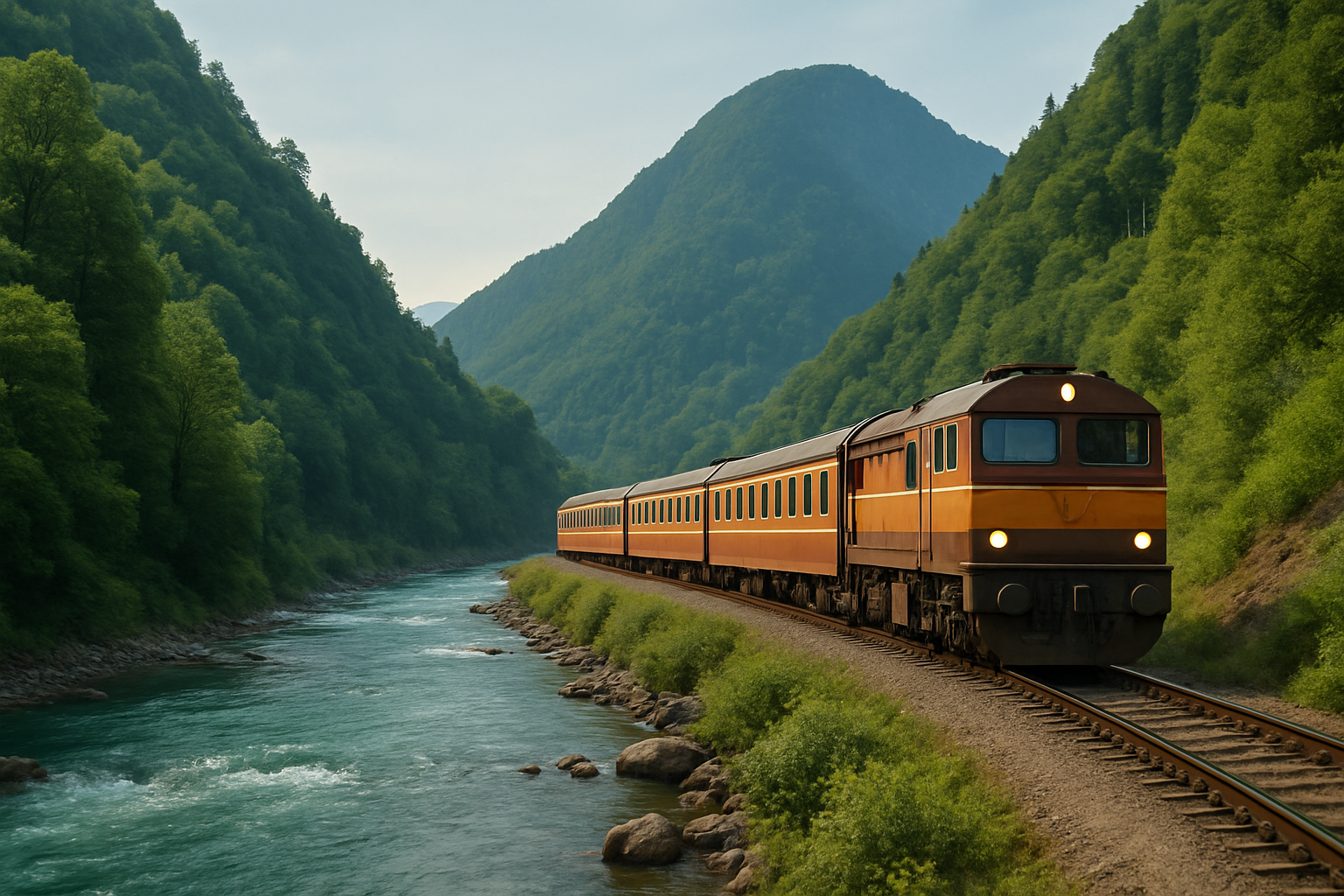
Why the Lumding–Badarpur Hill Section Is India’s Most Dangerous Railway Route (2025 Explained)
The Lumding–Badarpur Hill Section in Assam is often described as one of the most challenging and dangerous railway routes in India. Built during the British era and carved through the rugged Barail mountains, this engineering corridor has long fascinated travelers, railway enthusiasts, and researchers. Even today, the section is considered extremely risky due to its unstable terrain, extreme gradients, tight curves, landslide-prone slopes, and unpredictable weather patterns. As the region continues to develop in 2025, people across India frequently search for credible information about this unique and high-risk railway stretch.
The dangers of this corridor do not arise from man-made flaws—they originate from the tough and constantly shifting geology of the Barail Range. Mountain slopes collapse frequently, tunnels remain vulnerable to moisture weakening, rivers rise rapidly during monsoon, and dense forests limit visibility and communication. Despite major upgrades, modern track materials, and regular monitoring by Northeast Frontier Railway (NFR), the natural risks remain significant. This is why travelers, rail engineers, and logistics operators—including long-route travel service providers like Ayodhya Cab Services—monitor the region’s safety updates closely.
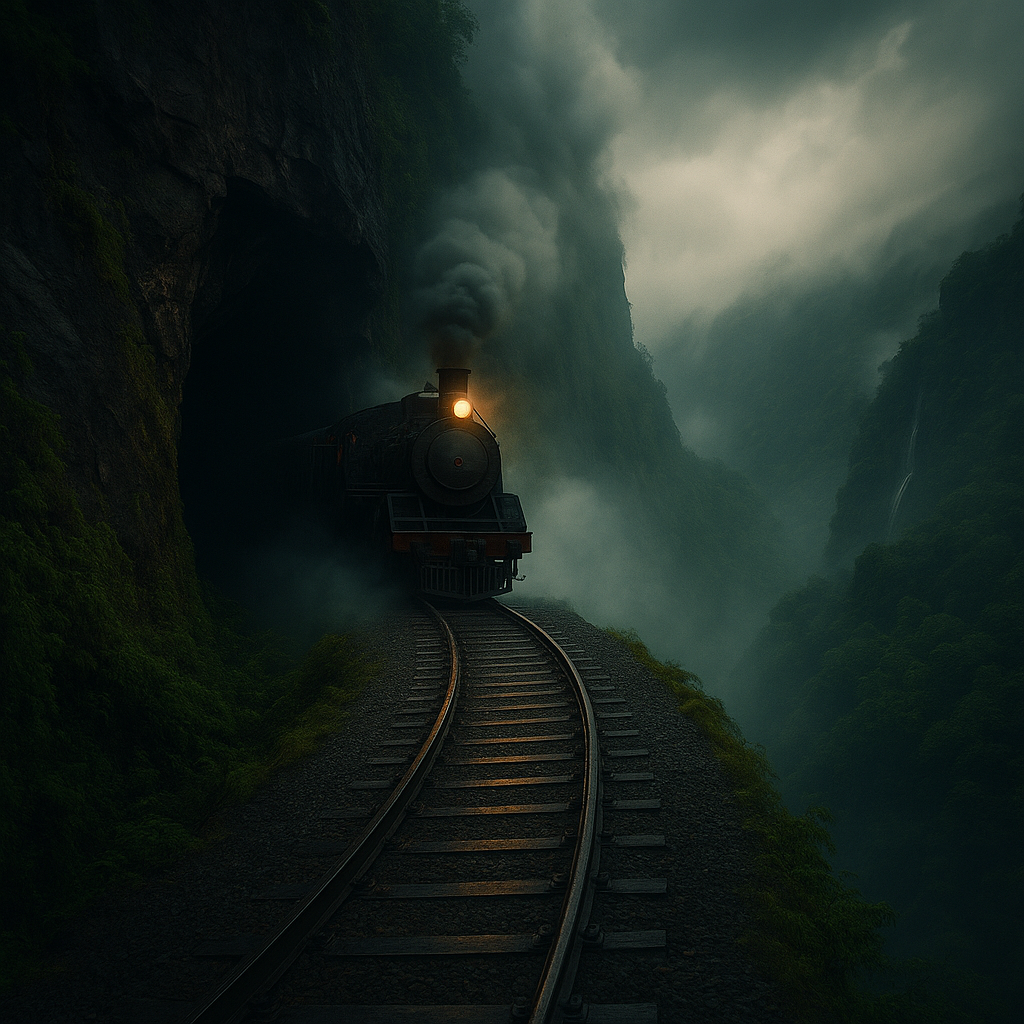
A dramatic visual representation of the Lumding–Badarpur Hill Section, India’s most dangerous railway route.
Geographical Setting: The Mountains That Make Travel Difficult
To understand the complexity of the route, one must look at the terrain. The railway passes through the Barail Hills, a young, geologically unstable mountain range that stretches across parts of Assam, Nagaland, and Manipur. Unlike older ranges such as the Himalayas, the Barail hills consist of loose sedimentary layers that crumble easily under water pressure or repeated vibrations.
This unstable nature leads to:
-
Frequent landslides
-
Boulder collapses
-
Soil subsidence
-
Track misalignment
-
Blocked tunnels
Railway engineers describe this terrain as “alive,” meaning it shifts regularly. Even with modern reinforcement, the earth continues to move beneath the tracks.
Historical Construction: A Century-Old Engineering Marvel
Construction of this railway began in the late 1800s and early 1900s when the British wanted to connect Lumding with the Barak Valley for trade, military movement, and tea transportation. Without modern machinery or digital surveying tools, engineers carved the alignment manually, using:
-
Hand-cut hill slopes
-
Wooden bridge supports
-
Manual explosives
-
Temporary hanging platforms
-
Rope-based excavation
The route originally opened as metre gauge, with smaller trains navigating its sharp curves and steep gradients. It quickly earned a reputation for breathtaking views—and equally dangerous operating conditions. For decades, derailments, washouts, and delays were common during monsoon.
Even after the broad-gauge conversion completed in 2015, the line remains one of India’s most complex operational zones.
Why the Route Is Still Considered India’s Most Dangerous
This section isn’t dangerous because of outdated infrastructure; it’s dangerous because it cuts through a naturally hazardous zone. Several unique geographical and environmental factors combine to make this route extremely risky even today.
1. Highly Landslide-Prone Slopes
The mountains around the alignment consist of loose sedimentary rock. When monsoon rains soak the soil, the slope becomes unstable, triggering:
-
Mudslides
-
Falling boulders
-
Track blockages
-
Sudden earth slips
These events can occur without warning, even during mild showers.
2. Very Sharp Curves and Steep Gradients
The original alignment was constructed to follow the natural contours of the hills. As a result:
-
Some curves exceed 10°
-
Many gradients are 1 in 37 or steeper
-
Visibility is extremely limited
Drivers must maintain low speed throughout most of the route, increasing travel time and operational risks.
3. Tunnels in Fragile Geological Zones
Several tunnels were constructed by hand more than 100 years ago. Due to water seepage, moisture accumulation, and structural fatigue, railway engineers must constantly inspect and restore them. Tunnel collapses have occurred historically, although modern reinforcement has reduced this danger.
4. River Crossings and Flash Floods
The Lumding–Badarpur corridor is dotted with hill streams that swell instantly during heavy rainfall. Bridges—many of them long and high—must withstand extreme water pressure.
5. Dense Forest and Wildlife Movement
Elephants, deer, and other wildlife frequently cross the tracks. Fog and dense vegetation reduce visibility, making collisions difficult to prevent.
6. Limited Communication Signals
In deep valleys, radio signals weaken. This slows communication between stations and locomotives, especially in emergencies.
These combined challenges make this stretch one of the most unpredictable sections under Indian Railways.
2025 Operational Realities: What Has Improved and What Has Not
Railway modernization has helped—but nature still dominates.
Broad Gauge Conversion Benefits
The conversion improved:
-
Load capacity
-
Track stability
-
Train speed (slightly)
-
Safety of coaches
But it did not eliminate geological threats.
Modern Monitoring Systems
Railways use:
-
Satellite rainfall monitoring
-
Drone mapping
-
Real-time slope sensors
-
Emergency alert systems
These tools help reduce accidents but cannot prevent flash landslides or ground movement.
Improved Bridge and Tunnel Strengthening
Many structures have been re-engineered for higher endurance. However, continuous maintenance is required because the terrain erodes yearly.
Enhanced Patrolling
Dozens of patrol teams walk the line daily, especially during monsoon. Still, sudden slope failures can occur faster than patrol teams can respond.
Overall, the balance between human engineering and geological risk remains delicate.
Most Notorious Danger Points Along the Route
Several segments of the line have historically recorded landslides, washouts, or operational suspensions.
Barail Range Cliff Zone
Steep vertical drops with narrow tracks make this one of the most visually stunning yet risky areas.
Jatinga Tunnels Region
This stretch experiences fog, low visibility, and slippery surfaces. The famous “Jatinga bird phenomenon” area is near this zone.
Mailongdisa–Harangajao Slopes
One of the most landslide-prone sections where whole slopes have collapsed in the past.
Kalachand Curves
Sharp bends combined with fragile soil create constant monitoring challenges.
ENGINEERING CHALLENGES, SAFETY MEASURES, PASSENGER EXPERIENCE
Engineering Challenges Unique to the Lumding–Badarpur Hill Section
Operating trains in mountainous terrain requires constant engineering vigilance. The Lumding–Badarpur Hill Section presents some of the most demanding maintenance requirements in Indian Railways.
Unstable Slopes and Earth Movements
The mountains surrounding the track shift due to rainfall, soil erosion, and natural geological changes. Engineers deal with:
-
Soil creep (slow downhill movement)
-
Sudden slope failures
-
Cracks appearing under sleepers
-
Boulder dislodgement due to vibrations
Even the strongest retaining walls need periodic reinforcement.
Continuous Track Realignment
Because the ground moves frequently, sections of track shift over time. Engineers must adjust alignment to ensure trains remain stable on curves and inclines.
Realignment activities include:
-
Lifting the track
-
Packing ballast
-
Adjusting curvature
-
Replacing bent rails
This requires specialized teams trained for hill-track operations.
Tunnel Degradation Over Time
Older tunnels suffer from:
-
Water seepage
-
Rock expansion during monsoon
-
Loose overhead rock formations
-
Weakening of sidewalls
To address this, Indian Railways performs:
-
Shotcreting
-
Rock bolting
-
Reinforced lining
-
Drainage channel installations
Without these interventions, tunnel failures would be more common.
Bridge Maintenance in High-Rainfall Zones
The region’s streams and rivers rise rapidly, threatening bridge foundations. Engineers routinely inspect:
-
Scour depth
-
Pier stability
-
Foundation erosion
-
Structural cracks
Some bridges have been rebuilt entirely with modern RCC and steel.
Weather Conditions: The Biggest Enemy of the Route
Monsoon is the most dangerous period for the Lumding–Badarpur Hill Section. Rainfall in this region is among the highest in India, penetrating soil layers and destabilizing entire hill slopes.
Monsoon-Related Risks Include:
-
Track washouts
-
Multiple landslides in a single night
-
Flash floods
-
Visibility dropping to zero in fog
-
Increased risk of derailments
Railways often suspend services during extreme weather alerts.
Winter Fog and Reduced Visibility
The section also experiences heavy fog during early morning and late evening. Loco pilots must rely more on experience than vision during these times.
Heat-Induced Track Stress
Between March and June, temperatures can rise sharply, causing metal expansion in rails.
Railways use anti-buckling measures, but stress fractures remain a risk.
How Indian Railways Ensures Safety on This Dangerous Route
Despite its risks, the Lumding–Badarpur stretch is kept operational through rigorous monitoring.
Round-the-Clock Patrol Teams
Teams walk several kilometers daily to check for:
-
Obstructions
-
Cracks
-
Boulder movement
-
Waterlogging
-
Soil sinking
During monsoon, patrolling frequency increases threefold.
Landslide Monitoring Sensors
Modern slope-sensing technology provides alerts when ground movement exceeds safe limits.
If sensors detect unusual patterns, control rooms immediately halt train movement.
Drone Surveillance
Drones help detect:
-
Rockfall zones
-
Track shifting
-
Blocked culverts
-
Unstable slopes
This allows preemptive action and faster repairs.
Emergency Rescue Preparations
Stations like Lumding, Haflong, and Badarpur have:
-
Dedicated rescue teams
-
Relief trains
-
JCB machines for clearing debris
-
Medical assistance units
Quick-response protocols save lives when accidents occur.
What Makes the Route So Fascinating to Railway Enthusiasts
Rail fans consider this line a dream journey because it blends danger with natural beauty.
Scenic Landscapes
Travelers enjoy views of:
-
Deep valleys
-
Mountain cliffs
-
Waterfalls
-
Dense forests
-
Mist-covered ridges
Even though risky, the route is visually stunning.
Historic Charm
Old tunnels, vintage bridges, abandoned metre-gauge curves, and colonial-era engineering remnants draw railway photographers and historians.
Unique Train Experience
Passengers experience:
-
Sharp turns
-
Continuous gradients
-
Swaying motion
-
Slow-paced mountain navigation
This combination makes the journey thrilling.
Passenger Travel Experience in 2025
Traveling on the route has improved, but natural challenges remain.
What Passengers Should Expect
-
Slow speeds through dangerous zones
-
Occasional halts due to track checks
-
Fog-related delays
-
Sudden weather changes
-
Limited network connectivity
Despite these inconveniences, the journey remains memorable.
Tips for Travelers
-
Travel during daytime for clearer views
-
Avoid monsoon season if possible
-
Carry essentials: water, snacks, medicines
-
Keep track of railway alerts
-
Save emergency numbers
Passengers seeking alternative routes during closures often turn to road-based providers such as Ayodhya Cab Services, especially when traveling between Lumding, Badarpur, Silchar, or Haflong.
Famous Incidents and Closures of the Past
Over the decades, the line has witnessed several major disruptions.
Historic Landslides
Entire hillsides collapsed in events recorded in:
-
1976
-
1991
-
2003
-
2007
-
2015
Some collapses took months to clear.
Notable Train Accidents
While derailments have reduced, historical data includes:
-
Rockfall-triggered derailments
-
Washout-related accidents
-
Tunnels caving partially under monsoon pressure
These incidents contributed to the route’s dangerous reputation.
The 2015 Broad-Gauge Shutdown
The line remained closed for nearly three years due to large-scale reconstruction.
During this period, thousands of travelers relied on road services and private operators—again highlighting how alternative travel solutions like Ayodhya Cab Services become essential when the railway shuts down.
Why Railways Cannot Abandon the Route Despite Its Risks
The Lumding–Badarpur corridor is not optional—it is vital.
1. Strategic Importance
It connects central Assam with:
-
Barak Valley
-
Tripura
-
Mizoram
-
Manipur
Cutting this route affects military logistics and essential supplies.
2. Economic Dependency
Tea, coal, timber, food supplies, and construction materials rely on this line.
3. Tourism Value
Haflong, Jatinga, and Barail Hills attract visitors who prefer scenic rail travel.
4. Lack of Strong Alternate Routes
Roads in the region also face landslides and closures.
Thus, railways must maintain the route at all costs.
FUTURE UPGRADES, TRAVEL GUIDE, 2025 DEVELOPMENTS & CONCLUSION
Future Development Plans for the Lumding–Badarpur Hill Section
Indian Railways knows that the Lumding–Badarpur Hill Section plays a crucial role in connecting Assam with the Barak Valley and northeastern states. Because this region faces continuous rainfall, landslides, soil erosion, and tunnel degradation, Railways has announced multiple long-term development plans.
1. Slope Stabilization Projects
Engineering teams are currently reinforcing vulnerable slopes using:
-
Geo-textile mesh
-
Rock bolting
-
Retaining walls
-
Multi-layered drainage systems
-
Soil nailing technology
This helps prevent large-scale landslides during monsoon months.
2. Tunnel Upgradation Program
Several tunnels between Lumding and Badarpur are undergoing strengthening:
-
Waterproof lining
-
Reinforced concrete arches
-
LED lighting for improved visibility
-
New drainage channels to prevent waterlogging
These upgrades reduce collapse risks and improve safety for passengers.
3. Modern Track Structure
Railways is replacing old sleepers with:
-
Long-welded rails
-
Heavy-duty concrete sleepers
-
High-density ballast
This allows greater stability during sharp curves and steep gradients.
4. Implementation of Anti-Collision Technology
Kavach (Railway’s automatic protection system) may soon cover the Lumding–Badarpur zone. With this, trains can automatically:
-
Apply brakes
-
Prevent overspeeding
-
Detect signal errors
It will significantly reduce accident risks on this challenging section.
How the Lumding–Badarpur Hill Section Benefits the Northeast Region
Despite its dangerous terrain, the route is a lifeline for millions.
Economic Backbone of Barak Valley
Essential goods such as food grains, construction materials, coal, cement, and medical supplies move through this corridor.
Cities benefiting include:
-
Silchar
-
Hailakandi
-
Karimganj
-
Haflong
-
Maibong
Without this line, transportation costs would double.
Tourism Boost
The scenic beauty attracts travelers from across India. Major tourist spots connected by this corridor include:
-
Haflong Hill Station
-
Jatinga Bird Mystery Point
-
Barail Wildlife Sanctuary
-
River valleys and viewpoints
Many travelers prefer hiring road transport after reaching nearby cities, where services like Ayodhya Cab Services offer comfortable multi-day sightseeing tours.
Connectivity to Northeastern States
The route connects further to:
-
Mizoram
-
Tripura
-
Manipur
This strengthens national integration and supports NE region development.
Is the Lumding–Badarpur Hill Section Really India’s Most Dangerous Railway Route?
While India has several risky sections—like the Konkan Railway, Darjeeling loop, and Jammu–Udhampur line—the Lumding–Badarpur Hill Section stands out for several reasons:
1. High Landslide Density
This region receives some of the heaviest rainfall in the country. Landslides occur frequently, sometimes multiple times in a single day.
2. Steep Curves and Gradients
The track bends around mountains with sharp turns that require extreme skill from loco pilots.
3. Fragile Soil Structure
Unlike rocky mountains, this area has clay-based soil that becomes unstable during monsoon.
4. Narrow Hill Edges
In some locations, the track sits on a narrow ledge carved out of the hill, with deep valleys just a few meters below.
5. Old Tunnel Architecture
Many tunnels were built during British rule and require constant maintenance.
Because of these reasons, it is repeatedly ranked as one of the most dangerous railway routes in India, especially during monsoon.
Complete Travel Guide for 2025: How to Experience the Lumding–Badarpur Hill Section Safely
For travelers planning this journey in 2025, here is a complete guide.
Best Time to Travel
The safest and most scenic time:
-
October to March
Avoid monsoon months:
-
June to September (highest landslide risk)
Best Trains to Experience the Route
Popular trains operating on the section include:
-
Silchar–Guwahati Express
-
Barak Valley Passenger
-
Intercity Express trains
-
Seasonal special trains
These trains offer large windows ideal for photography.
Tips for First-Time Travelers
-
Sit on the window side.
-
Keep your camera ready—valley views appear suddenly.
-
Avoid unnecessary movement in the coach during steep turns.
-
Carry snacks; small stations may have limited options.
-
Keep power banks charged (network drops often).
Who Should Avoid This Route
Passengers with:
-
Severe motion sickness
-
Fear of heights
-
Anxiety during long tunnels
should consider road travel instead. In such cases, options like Ayodhya Cab Services offer safe and flexible road journeys between Lumding, Manipur, Badarpur, Silchar, and Haflong.
Top 2025 Improvements That Make the Journey Safer Than Before
Indian Railways introduced new upgrades in 2025 to improve safety.
1. Real-Time Weather Monitoring Stations
Sensors track:
-
Rainfall intensity
-
Soil movement
-
Rock slip patterns
Alerts instantly reach train controllers.
2. Enhanced Staff Deployment
During monsoon, additional patrol teams cover every few kilometers of track.
3. High-Visibility Sign Boards
Glow-reflective signals assist loco pilots during fog.
4. RCC Drainage Structures
New drainage channels prevent rainwater from collecting on tracks.
5. Tunnel Emergency Pathways
Some tunnels are now equipped with:
-
Emergency exits
-
LED navigational strips
-
CCTV surveillance
These additions modernize one of India’s oldest hill routes.
⭐ Why the Lumding–Badarpur Hill Section Faces Frequent Landslides
The Lumding–Badarpur Hill Section experiences one of the highest rainfall intensities in the Northeast, softening the soil layers and destabilizing the mountain slopes. When heavy rains hit the region, the terrain quickly becomes saturated, leading to slope failures and landslides. This creates major disruptions in train operations, requiring teams to clear debris repeatedly. Such landslides force long delays and often complete suspension of services, making the route particularly risky for passengers.
⭐ History of Accidents on the Lumding–Badarpur Hill Section
This railway route has witnessed multiple derailments, tunnel collapses, and track failures over the decades. Many accidents occurred due to sudden rockfalls, soil erosion, and waterlogging inside tunnels. These incidents have shaped the route’s reputation as one of India’s most dangerous rail lines. Despite engineering improvements, the unpredictable geography still poses challenges. Documenting past accidents helps Railways develop stronger safety protocols for future operations.
⭐ How the Lumding–Badarpur Hill Section Was Constructed During British Rule
The construction history of the Lumding–Badarpur Hill Section dates back to the colonial era, when British engineers carved the railway into steep mountain faces using manual labor and primitive tools. The terrain was difficult, dense forests had to be cleared, and countless workers faced extreme weather conditions. Many original tunnels, bridges, and curves still exist today, reflecting ingenious engineering for that time. However, these older structures now require constant modernization to match current-day safety standards.
⭐ Conclusion: Why the Lumding–Badarpur Hill Section Remains a Legendary Yet Risky Journey
The Lumding–Badarpur Hill Section is more than just a railway route—it is a symbol of engineering courage, natural beauty, and unpredictable danger. It continues to challenge the Indian Railways with landslides, tunnel instability, steep gradients, and severe weather conditions. Yet, the route remains a lifeline for northeastern states, supporting tourism, economy, connectivity, and daily travel needs.
With ongoing upgrades, AI-based monitoring, engineering reinforcements, and better passenger facilities, the journey in 2025 is far safer than before. Still, travelers must remain cautious, especially during monsoon. Whether exploring the scenic Haflong valley or traveling toward Barak Valley cities, this railway journey remains unforgettable.
Passengers seeking additional travel options—especially during service disruptions—can rely on road-based solutions like Ayodhya Cab Services, ensuring connectivity even when the hills challenge the railway line.
The legend of the Lumding–Badarpur Hill Section lives on as one of India’s most thrilling, challenging, and historically iconic railway journeys.

