
🏔️ Kedarnath Ropeway 2025: How Adani’s ₹4,081 Cr Project Will Transform Uttarakhand
🌟 Introduction
The Kedarnath ropeway project details mark a historic shift in Uttarakhand’s tourism and spiritual landscape. Spearheaded by the Adani Group, this ₹4,081 crore project will reduce the 12.9 km trek from Sonprayag to Kedarnath — which once took 9 hours — to just 36 minutes. The ropeway, expected to be operational by 2025, is one of India’s highest altitude transportation marvels. As the development reshapes pilgrimage routes and local economies, Ayodhya Cab Services brings you an in-depth look into how this ambitious project will revolutionize travel to Kedarnath and boost Uttarakhand’s economy and tourism.
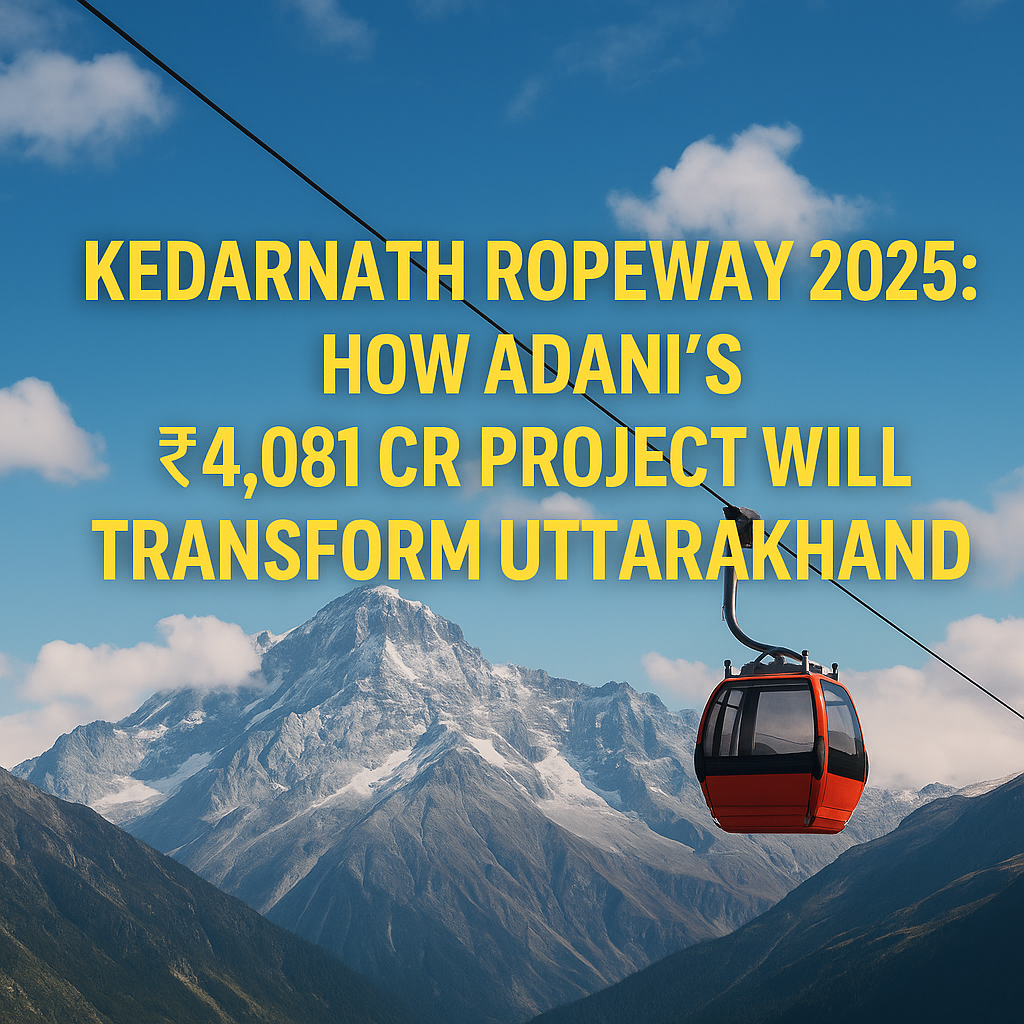
A stunning view of the upcoming Kedarnath ropeway project reducing a 9-hour trek to 36 minutes through advanced engineering.
🏗️ How will the 12.9 km Sonprayag–Kedarnath ropeway shorten pilgrimage time?
The ropeway will directly connect Sonprayag to Kedarnath, bypassing treacherous terrain and reducing travel time from 9 hours on foot to just 36 minutes by cable car. It will carry up to 1,500 passengers per hour, allowing faster access to the Kedarnath temple, especially for elderly devotees. Ayodhya Cab Services will offer seamless cab transfers from Haridwar, Rishikesh, and Dehradun to the ropeway terminal at Sonprayag for hassle-free pilgrimage travel.
⚙️ What technology is being used in Adani’s Kedarnath ropeway system?
The Kedarnath ropeway project details highlight the use of advanced 3S ropeway technology, ensuring safety, comfort, and high load capacity. This system minimizes vibration, offers stable cabins, and can function efficiently even under snow and wind conditions. With cabins designed for panoramic mountain views, pilgrims will enjoy a breathtaking aerial journey over the Mandakini River and Himalayan ranges.
💰 What is the cost and funding model of the Kedarnath ropeway?
The project’s ₹4,081 crore investment is being executed under the Public-Private Partnership (PPP) model between the Adani Group and Uttarakhand Tourism. The government aims to boost religious tourism while maintaining environmental sustainability. The funding model ensures affordable ticket pricing for pilgrims, with Ayodhya Cab Services planning special packages combining cab transport and ropeway rides for 2025 visitors.
🚡 How many passengers per hour will the ropeway carry?
The ropeway will handle 1,500 passengers per hour per direction, accommodating more than 10,000 visitors daily during peak season. This high-capacity system will dramatically reduce congestion during yatra season, making Kedarnath more accessible and safer for devotees from across India.
🏢 Which agencies are partners in the Kedarnath ropeway project?
Alongside the Adani Group, other technical and construction partners include global ropeway specialists from Switzerland and Austria. The Uttarakhand Tourism Development Board (UTDB) is overseeing compliance, safety, and ecological standards to ensure smooth implementation by 2025.
💼 How does the new ropeway impact local tourism economy?
With the completion of this project, Uttarakhand’s tourism economy is expected to rise exponentially. Local hotels, shops, guides, and transport providers will benefit from increased pilgrim flow. Ayodhya Cab Services will introduce dedicated Kedarnath travel circuits connecting nearby attractions like Guptkashi, Chopta, and Tungnath — supporting sustainable local tourism.
🌱 What environmental assessments are required for this ropeway?
The environmental impact assessment (EIA) for the Kedarnath ropeway focuses on preserving the Himalayan ecosystem. The use of minimal land, elevated pylons, and reforestation measures ensures ecological balance. Renewable energy sources will power ropeway stations, aligning with India’s net-zero goals.
📍 Where will towers and stations be located along the route?
The ropeway route will have two main terminals — one at Sonprayag (starting point) and another near Kedarnath Temple (endpoint). Intermediate towers will be placed at secure rock bases for stability. The alignment offers travelers a stunning aerial view of Garhwal’s snow-capped peaks.
🏔️ What terrain and elevation challenges does the route face?
The construction team faces extreme weather, landslides, and fragile slopes. Engineers are using special anchoring systems and climate-resistant materials to ensure safety. Despite the challenges, the project remains on track for completion by 2025.
🌦️ How safe will the ropeway be in harsh mountain weather?
Each cabin will be equipped with wind stability controls and automated brakes. The ropeway is being designed to operate in rain, snow, and wind speeds up to 80 km/h. Regular maintenance checks will ensure safety throughout the year.
👣 How will the ropeway affect porter and trekker livelihoods?
While fewer people may take the trek, new jobs will open in ropeway operations, station management, and tourism logistics. Porters will be trained as mountain guides and safety assistants, preserving local employment opportunities.
📅 When is the expected completion and launch date of ropeway?
The ropeway construction began in late 2022 and is projected to be completed by mid-2025. Testing and safety trials will follow before official public opening. Pilgrims can start booking ropeway-inclusive travel plans with Ayodhya Cab Services by early 2026.
🕉️ How will pilgrimage patterns change with the ropeway?
The new route will make Kedarnath accessible to more senior citizens and families, shifting from adventure trekking to convenient spiritual travel. Pilgrim numbers could double annually after the ropeway launch.
📜 What policies govern the ropeway’s construction and permits?
The project complies with National Ropeway Development Programme and Uttarakhand Eco-Sensitive Zone guidelines. Local committees and religious boards also oversee construction alignment near the Kedarnath shrine.
🩺 How will the ropeway reduce trek injuries and difficulties?
By cutting down the steep 9-hour hike, the ropeway minimizes altitude sickness, exhaustion, and slips. It will make travel safer during unpredictable weather and reduce the strain on medical camps along the route.
🏔️ Which previous Himalayan ropeways compare to this project?
This ropeway will surpass those at Auli and Gulmarg in both altitude and capacity. Its 12.9 km length makes it one of Asia’s longest high-altitude ropeways — setting new records for mountain engineering.
⚖️ What controversies or objections have surfaced so far?
Some environmental groups raised concerns about deforestation, but the government has assured compensatory afforestation and strict waste management measures to minimize ecological impact.
🧰 What are the maintenance and operational plans for the ropeway?
The Adani Group will maintain the system for 15 years under a PPP model, ensuring trained engineers, emergency backup systems, and annual audits to ensure safety and reliability.
🚖 How will traffic and logistics be managed at ropeway terminals?
Dedicated parking, cab zones, and shuttle buses will manage crowd flow around Sonprayag terminal. Ayodhya Cab Services will operate exclusive cab routes connecting pilgrims to the ropeway entry points during peak yatra days.
💸 What will be the fare structure and ticketing system?
Fares are expected to be between ₹1,500–₹2,000 per person (one-way). Digital ticketing kiosks, QR scanning, and online booking through Ayodhya Cab Services will ensure a smooth, transparent process.
🌄 Conclusion
The Kedarnath ropeway project details reveal not just an engineering marvel but also a milestone in India’s pilgrimage development. By combining speed, safety, and sustainability, this project will transform how devotees experience Kedarnath. Supported by eco-conscious design and efficient connectivity through Ayodhya Cab Services, this initiative will redefine Uttarakhand’s future — uniting devotion, innovation, and progress in one powerful journey to the Himalayas.

