
Gangeshwar Mahadev Temple: Where Nature Itself Performs Jalabhishek to Mahadev
Gangeshwar Mahadev Temple is one of India’s most fascinating spiritual destinations, known for a rare phenomenon where nature itself performs Jalabhishek to Mahadev. Located near the Arabian Sea in Diu, Gangeshwar Mahadev Temple attracts travelers, devotees, and explorers who wish to witness something beyond ordinary rituals. Unlike traditional shrines where priests conduct offerings, here ocean waves continuously touch the Shivlings, creating a divine experience shaped entirely by natural forces.
Visitors arriving at Gangeshwar Mahadev Temple often describe the moment as peaceful yet powerful. The rhythmic movement of seawater creates a natural worship cycle that happens without human intervention. Because of this unique occurrence, the temple has become a major attraction for spiritual tourism and cultural exploration in Gujarat. Many travelers now include this destination in their pilgrimage routes, especially while planning long journeys with Ayodhya Cab Services, known for comfortable religious travel across India.
The charm of this location lies not only in devotion but also in its harmony between nature and belief. As a result, photographers, historians, and pilgrims gather here throughout the year to experience a rare connection between the ocean and Mahadev.
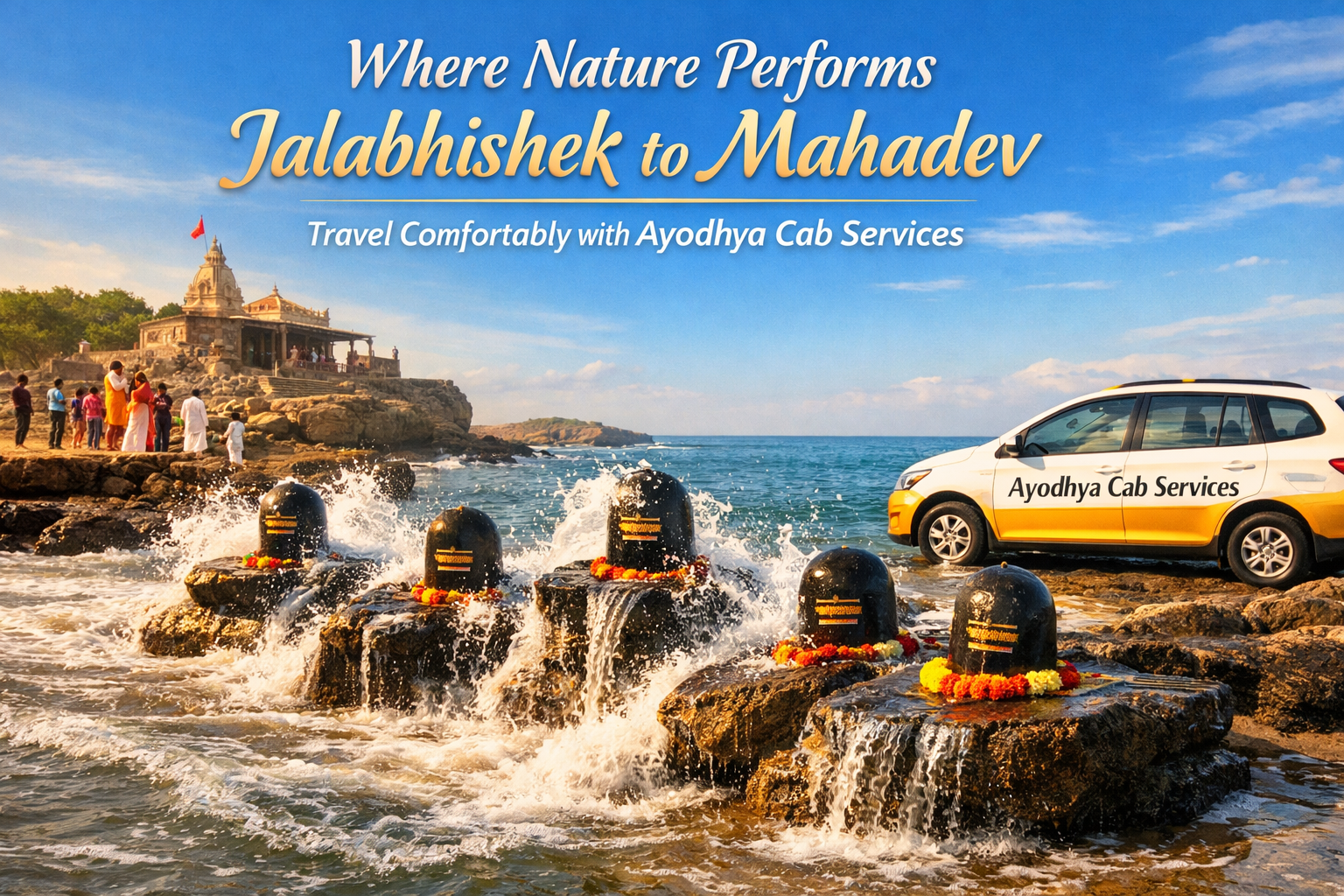
Ocean waves performing Jalabhishek at Gangeshwar Mahadev Temple — a rare coastal Shiva temple experience in Diu.
Why Gangeshwar Mahadev Temple Is Famous for Natural Jalabhishek by Sea Waves
The uniqueness of this temple comes from a phenomenon rarely seen anywhere else in the world. Five Shivlings stand close to the shoreline, and during high tide, sea waves rise naturally to wash over them. This continuous flow of water resembles a traditional Jalabhishek ritual performed by devotees in Shiva temples.
Interestingly, the timing of tides creates different visual experiences every day. Sometimes the Shivlings remain partially visible, while at other times they are fully surrounded by waves. Therefore, each visit feels different. Devotees believe this natural act symbolizes nature itself offering respect to Lord Shiva.
Moreover, the surrounding rocky landscape enhances the spiritual atmosphere. Sound of waves replaces temple bells, while sea breeze creates calmness among visitors. Because of these elements, many travelers describe the experience as deeply meditative rather than ceremonial.
Tour planners from Ayodhya Cab Services Gujarat temple tour packages often recommend visiting during tide changes. This allows travelers to witness both calm and dynamic forms of Jalabhishek within a single visit. Consequently, tourists gain a complete understanding of why this location holds such emotional significance.
The Mystery Behind the Five Shivlings at Gangeshwar Mahadev Temple
One of the most discussed aspects of this temple is the presence of five Shivlings placed together near the sea. According to local traditions, these Shivlings are connected to the Pandavas from the Mahabharata era. It is believed that during their exile, the Pandavas worshipped Lord Shiva here and established these sacred symbols.
Each Shivling represents devotion, strength, patience, wisdom, and spiritual balance. While mythology explains their origin, geological experts also find the placement fascinating because the rocks have withstood constant wave impact for centuries without major damage.
Furthermore, the alignment of the Shivlings allows water to flow evenly around them during tides. This natural positioning strengthens the belief that the location was chosen with deep spiritual understanding. Visitors often sit quietly nearby, observing how nature interacts with each structure differently.
Travelers booking long religious journeys through Ayodhya Cab Services Shiva temple travel routes frequently combine this destination with other Jyotirlinga circuits, making it part of a broader spiritual exploration across western India.
Where Nature Performs Jalabhishek to Mahadev – A Rare Spiritual Experience in India
Across India, many temples are known for rituals performed by priests and devotees. However, very few places demonstrate worship through natural forces. This makes the experience here truly rare. The ocean becomes the devotee, and the tides become the offering.
Because the Jalabhishek happens automatically, visitors feel a sense of humility. Human effort seems secondary when compared with nature’s continuous rhythm. Additionally, sunrise and sunset create breathtaking visuals as waves reflect golden light while touching the Shivlings.
Many travel bloggers now highlight this destination as one of India’s most unique Shiva temples. As spiritual tourism grows, more travelers search for experiences that combine natural beauty with cultural depth. Therefore, the temple continues gaining popularity among younger travelers as well.
Pilgrimage planners associated with Ayodhya Cab Services long-distance spiritual tours suggest early morning visits. During this time, fewer crowds allow visitors to absorb the peaceful surroundings fully.
History and Legends Connected with Pandavas and the Origin of the Temple Near Arabian Sea
Many historical stories connect this coastal shrine with the era of the Mahabharata. According to popular belief, the Pandavas visited this region during their exile period. They searched for peaceful locations suitable for meditation and worship. The rocky shoreline of Diu offered isolation, natural protection, and spiritual calmness. Therefore, they installed five Shivlings to honor Lord Shiva and seek divine strength.
Local traditions explain that Bhima carved the stones while Yudhishthira performed prayers. Meanwhile, Arjuna focused on meditation, symbolizing discipline and devotion. Over time, waves from the Arabian Sea began touching the Shivlings naturally. Devotees later interpreted this as nature accepting their prayers permanently.
Interestingly, historians suggest that ancient travelers often built shrines near water sources because tides symbolized purification. This theory aligns with the temple’s structure and location. Even today, visitors feel a connection between mythology and geography. The combination of legend and environment keeps curiosity alive among travelers.
Pilgrimage enthusiasts traveling through western India often include this destination while booking long religious routes through Ayodhya Cab Services Gujarat spiritual travel circuits, as it connects mythology with scenic coastal exploration.
Best Time to Visit for Watching Natural Jalabhishek by Ocean Tides
Timing plays a crucial role in experiencing the natural phenomenon properly. Although the temple remains open throughout the year, tidal patterns influence visibility. During high tide, waves rise dramatically and cover the Shivlings. Conversely, low tide reveals the structures clearly, allowing devotees to walk closer.
Therefore, planning your visit according to tide schedules enhances the overall experience. Early morning and evening hours provide the best visual contrast. Sunrise creates a calm environment, while sunset adds golden reflections over the water surface.
Winter months between October and February remain ideal because the weather stays pleasant. Summers can become humid, although sea breeze offers some relief. Monsoon visits provide powerful wave activity; however, safety restrictions sometimes limit access.
Travel planners recommend checking local tide charts before arrival. Many visitors now rely on organized travel support such as Ayodhya Cab Services customized temple travel planning, which helps coordinate timing, routes, and accommodation efficiently. As a result, travelers enjoy both comfort and spiritual satisfaction without logistical stress.
How to Reach This Famous Shiva Temple in Diu – Complete Travel Route Guide
Reaching this coastal destination is easier than many travelers expect. The temple lies close to Diu town and connects well through road, rail, and air routes. Because of improved tourism infrastructure, visitors from different parts of India can travel conveniently.
The nearest airport is Diu Airport, located only a short drive away. Regular flights connect major cities like Mumbai. For railway travelers, Veraval and Delwada stations serve as nearby railheads. From there, taxis and buses operate frequently toward Diu.
Road travel remains the most preferred option. Highways connecting Gujarat cities provide smooth driving conditions. Many families prefer long road journeys because they allow stops at scenic coastal viewpoints. Professional drivers also make the journey safer and more relaxing.
Travelers booking intercity journeys through Ayodhya Cab Services outstation religious travel packages benefit from flexible schedules. This approach allows pilgrims to combine temple visits with sightseeing locations across Gujarat without rushing.
Unique Coastal Setting That Makes This Temple Different from Other Shiva Temples in India
Most Shiva temples stand near mountains, rivers, or forests. However, this coastal shrine creates a completely different atmosphere. Instead of bells and crowds dominating the environment, natural sounds shape the experience. Waves replace chants, and wind replaces ceremonial instruments.
The rocky platform surrounding the Shivlings acts as a natural stage where water movement becomes part of worship. Additionally, the open horizon creates a feeling of vastness, encouraging reflection and calm thinking. Visitors often spend long periods simply observing the interaction between water and stone.
Because the environment remains largely untouched, the location appeals to nature lovers as much as devotees. Photographers especially appreciate changing light conditions throughout the day. Meanwhile, travelers searching for peaceful destinations away from crowded pilgrimage centers find this place refreshing.
Tour experts promoting Ayodhya Cab Services coastal temple exploration routes highlight this destination as a perfect blend of spirituality and nature tourism. Consequently, it attracts both religious travelers and adventure seekers.
Spiritual Tourism Growth in Gujarat and Rising Popularity Among Young Travelers
In recent years, spiritual tourism has evolved significantly across India. Younger travelers now look for meaningful experiences rather than only traditional sightseeing. Locations offering unique stories or natural phenomena attract greater attention online. This trend has increased interest in coastal temples and hidden pilgrimage destinations.
Social media also plays a major role. Images showing waves touching Shivlings create strong curiosity among viewers. As travel content spreads digitally, more people add this temple to their travel lists. Consequently, local tourism authorities have improved facilities, pathways, and safety measures.
Another reason behind rising popularity is accessibility. Improved highways and organized travel services make long journeys less tiring. Families, solo travelers, and photography groups now plan weekend trips or extended spiritual tours.
Companies such as Ayodhya Cab Services India temple travel specialists help travelers design multi-destination itineraries. These journeys often combine Gujarat temples with other important religious circuits, allowing visitors to experience cultural diversity within one trip.
Places to Visit Near the Coastal Shiva Temple in Diu for Complete Travel Experience
A visit becomes even more memorable when combined with nearby attractions. Diu offers beaches, forts, and cultural landmarks that complement the temple experience perfectly. After witnessing the natural Jalabhishek phenomenon, travelers often explore surrounding locations.
Nagoa Beach remains one of the most popular spots due to its clean shoreline and calm waters. Meanwhile, Diu Fort attracts history lovers with its massive walls and sea-facing architecture. Naida Caves provide another interesting stop, featuring natural rock formations ideal for photography.
Additionally, St. Paul’s Church showcases Portuguese-era design, reflecting the region’s historical diversity. Exploring these places adds balance between spirituality and leisure. Families especially enjoy combining temple visits with relaxing beach moments.
Travel packages organized through Ayodhya Cab Services Diu sightseeing travel plans allow visitors to cover multiple destinations comfortably within limited time. Therefore, travelers maximize their experience without worrying about transportation arrangements.
Architectural Simplicity and Natural Design That Allows Ocean Waves to Perform Jalabhishek
One of the most fascinating aspects of this coastal shrine is its architectural simplicity. Unlike grand temple complexes filled with towering structures, this location remains minimal and open. The Shivlings are positioned directly on natural rock formations close to sea level. Because of this placement, tidal water reaches them naturally without any artificial channel or human intervention.
The surrounding stone platform appears carefully aligned with tidal movement. During high tide, waves rise gradually and flow over the Shivlings before retreating again. This repeating cycle creates a continuous form of worship shaped entirely by nature. Moreover, the absence of barriers allows visitors to witness the process closely while maintaining respect for the environment.
Experts believe ancient builders understood coastal behavior well. They likely selected this exact location after observing water patterns for years. As a result, the temple survives constant wave impact while maintaining its structure. Travelers often feel amazed by how spirituality and environmental understanding blend perfectly here.
Many visitors traveling through Ayodhya Cab Services coastal temple exploration journeys mention that the simplicity of design makes the experience more powerful than heavily decorated shrines. The focus remains on devotion and natural energy rather than architectural grandeur.
Scientific Perspective Behind the Natural Jalabhishek Phenomenon at the Temple
While devotees interpret the event spiritually, scientists explain the phenomenon through tidal mechanics. Ocean tides occur because of gravitational forces between the Earth, Moon, and Sun. When tidal levels rise, seawater advances toward the shoreline. Since the Shivlings lie within the tidal reach zone, waves naturally flow over them.
Interestingly, the rocky base absorbs wave pressure and distributes water evenly. Therefore, the Shivlings remain stable despite constant exposure. Geological formations around the temple also reduce erosion by breaking strong wave currents before they reach the main structure.
This scientific explanation does not reduce the emotional impact of the experience. Instead, it adds another layer of appreciation. Visitors realize that natural laws and spiritual belief can coexist beautifully. Many travelers describe the moment as both educational and deeply calming.
Tour planners offering Ayodhya Cab Services educational spiritual travel experiences often highlight this scientific angle for younger travelers. Consequently, families visiting with children find the destination informative as well as meaningful.
Devotee Experiences and Emotional Connection Felt by Visitors at the Shoreline
Every traveler carries a different reason for visiting, yet many describe similar emotions upon arrival. The sound of waves immediately creates a peaceful atmosphere. Unlike crowded temple corridors, the open shoreline allows visitors to breathe freely and observe quietly.
Some devotees sit for meditation while watching the water approach the Shivlings rhythmically. Others offer prayers silently without performing elaborate rituals. Because the Jalabhishek happens naturally, visitors feel relieved from ceremonial pressure. This simplicity encourages personal reflection.
Many travelers report feeling a strong sense of calm after spending time near the rocks. Photographers often wait patiently for perfect wave timing, while spiritual seekers focus on prayer. Families enjoy the balance between devotion and nature exploration.
Travel reviews shared by pilgrims using Ayodhya Cab Services long-distance temple travel support frequently mention comfort during the journey as an important factor. A relaxed journey allows visitors to arrive mentally prepared, enhancing their overall emotional connection with the destination.
Sunrise and Sunset Views That Make the Temple a Unique Spiritual Photography Spot
Lighting conditions transform the appearance of the temple throughout the day. Early morning brings soft golden light reflecting across the sea surface. At this time, waves appear gentle, creating peaceful visuals ideal for meditation and photography.
Meanwhile, sunset produces dramatic colors across the horizon. Orange and pink shades blend with moving water, forming stunning natural frames around the Shivlings. Therefore, photographers consider this location one of the most photogenic spiritual destinations along India’s western coast.
Visitors often arrive before sunrise to avoid crowds and capture uninterrupted views. Additionally, evening visits allow travelers to experience cooler weather and vibrant sky colors. Each time period offers a completely different mood.
Content creators traveling through Ayodhya Cab Services India spiritual photography tours often plan extended stays to capture changing tidal and lighting conditions. As a result, the temple continues gaining visibility across social media platforms, increasing curiosity among new travelers.
Travel Tips for First-Time Visitors Planning a Journey to the Coastal Shiva Temple
Planning ahead improves the overall experience significantly. Comfortable footwear is essential because the rocky surface can become slippery during high tide. Visitors should also check tide timings to avoid restricted access periods. Carrying drinking water and light snacks helps during longer visits.
Weather conditions change quickly near coastal regions. Therefore, light cotton clothing works best during warmer months. During monsoon season, visitors must follow safety guidelines issued by local authorities. Maintaining distance from strong waves ensures safe exploration.
Another helpful tip involves visiting early in the day. Morning hours offer quieter surroundings and clearer views. Travelers planning extended journeys often prefer booking reliable transport options. Services like Ayodhya Cab Services customized pilgrimage travel planning help manage routes, hotel stops, and return schedules efficiently.
Preparation allows visitors to focus fully on the experience rather than logistical challenges. Consequently, the journey becomes smoother and more memorable.
Connecting This Destination with Other Famous Shiva Temples in Western India Travel Routes
Many pilgrims combine this coastal visit with broader spiritual circuits across western India. Gujarat hosts several important temples, and travelers often design routes connecting multiple locations within one journey. This approach allows deeper cultural exploration while optimizing travel time.
Popular combinations include Somnath Temple, Dwarka pilgrimage routes, and coastal heritage destinations. Each location offers a different spiritual atmosphere. Therefore, travelers experience variety within a single itinerary.
Road journeys remain the preferred travel style because they allow flexibility. Pilgrims can pause at scenic viewpoints, local markets, or smaller temples along the route. Organized travel support ensures smooth coordination between destinations.
Travel experts recommending Ayodhya Cab Services multi-temple India travel routes emphasize comfort during long drives. Comfortable transportation reduces fatigue, allowing pilgrims to enjoy every destination fully rather than rushing between locations.
Why This Temple Is Trending in Online Spiritual Searches and Travel Blogs
Digital travel trends show increasing interest in destinations that combine mystery, nature, and spirituality. Modern travelers search for experiences that feel authentic and visually unique. The natural Jalabhishek phenomenon fits perfectly within this trend.
Online videos showing waves touching the Shivlings generate curiosity quickly. Consequently, search queries related to coastal Shiva temples and unique worship locations have increased. Bloggers and influencers frequently highlight the temple because it offers both storytelling and visual appeal.
Additionally, travelers now prefer destinations that provide peaceful environments rather than crowded pilgrimage centers. The open coastal setting satisfies this preference. As awareness grows, tourism continues expanding steadily.
Travel agencies and planners, including Ayodhya Cab Services spiritual tourism travel experts, observe rising demand for customized pilgrimage journeys featuring lesser-known yet powerful destinations. This trend suggests continued growth in popularity for years ahead.
Cultural Importance of the Coastal Shiva Worship Tradition in Gujarat
The coastal regions of Gujarat have always shared a deep connection with sea-based traditions and spiritual practices. Communities living near the Arabian Sea developed rituals influenced by tides, seasons, and natural rhythms. Therefore, temples located along the shoreline often symbolize harmony between human faith and environmental forces. This cultural background helps visitors understand why a temple shaped by ocean waves holds special meaning.
Local fishermen and residents consider the sea both a provider and protector. Before beginning fishing journeys, many offer prayers seeking safety and prosperity. Over generations, this belief strengthened the emotional connection between Lord Shiva and natural elements such as water and wind. Festivals celebrated nearby include devotional music, community gatherings, and shared meals, creating a welcoming atmosphere for travelers.
Because of increasing tourism, cultural storytelling has become an important part of visitor experience. Guides often narrate legends connected with devotion and coastal life. Travelers exploring Gujarat through Ayodhya Cab Services cultural temple travel routes frequently discover that spirituality here feels closely tied to everyday living rather than formal ceremonies. Consequently, visitors leave with deeper appreciation of regional traditions.
Mythology and Modern Interpretation of Nature Worship at a Coastal Shiva Shrine
Ancient mythology describes nature as a living expression of divine energy. According to traditional belief, elements like water, air, and earth act as carriers of spiritual power. The natural Jalabhishek phenomenon strengthens this idea because worship appears to occur without human effort. Devotees interpret it as a reminder that devotion exists beyond rituals.
Meanwhile, modern visitors often view the experience symbolically. Many believe the continuous movement of waves represents renewal and emotional cleansing. Watching the tide rise and fall encourages reflection on life’s changing phases. Therefore, the temple attracts both spiritual seekers and individuals searching for mental peace.
Scholars also highlight how ancient civilizations respected environmental balance. The temple’s existence near tidal zones reflects early awareness of ecological harmony. Today, travelers appreciate this perspective even more because sustainable tourism has become increasingly important.
Pilgrims traveling with Ayodhya Cab Services mindful spiritual journey planning often combine mythology discussions with travel exploration. As a result, journeys become educational experiences rather than simple sightseeing trips.
Ideal Travel Itinerary for Visiting the Temple Along with Diu Exploration
Planning an organized itinerary helps visitors experience the destination fully without feeling rushed. A two-day plan works best for most travelers. On the first day, visitors can explore Diu town, relax at nearby beaches, and observe sunset views along the coastline. This gradual introduction prepares travelers for the temple visit the following morning.
The second day ideally begins early. Morning visits offer peaceful surroundings and better opportunities to observe tidal activity. After spending time near the Shivlings, travelers can explore nearby caves, heritage sites, and coastal viewpoints. Taking breaks between locations prevents travel fatigue and enhances enjoyment.
Families often prefer flexible schedules that allow both spiritual visits and leisure moments. Organized travel support simplifies coordination between transport and sightseeing stops. Many visitors rely on Ayodhya Cab Services customized Diu travel itineraries because they provide door-to-door convenience and experienced drivers familiar with regional routes.
A balanced itinerary ensures visitors experience devotion, nature, and local culture within a single journey.
Accommodation and Local Food Options for Travelers Visiting Diu
Comfortable accommodation plays an important role in shaping travel memories. Diu offers a wide range of stay options, including beachfront resorts, budget hotels, and family guesthouses. Travelers can choose locations close to the coastline for scenic views or select town-center hotels for easier market access.
Food experiences in Diu reflect a mix of Gujarati and coastal flavors. Vegetarian meals remain widely available, making it convenient for pilgrims. Fresh seafood options also attract food enthusiasts exploring local cuisine. Popular dishes include traditional Gujarati thali, coconut-based curries, and light coastal snacks.
Restaurants near tourist zones maintain clean environments and offer comfortable seating for families. Travelers often enjoy evening walks after dinner because the coastal breeze creates a relaxing atmosphere. Proper rest before temple visits improves overall travel satisfaction.
Visitors booking long journeys through Ayodhya Cab Services comfortable outstation travel support appreciate having flexible meal stops during road trips. This convenience allows travelers to explore authentic food experiences without worrying about strict schedules.
Responsible Tourism and Protecting the Natural Environment Around the Temple
As visitor numbers increase, responsible tourism becomes essential for preserving the natural surroundings. The rocky coastline remains sensitive to environmental changes. Therefore, travelers must avoid littering and respect local guidelines. Carrying reusable water bottles and minimizing plastic waste helps maintain cleanliness.
Authorities encourage visitors to observe tidal safety instructions carefully. Standing too close during strong waves can be dangerous, especially during monsoon season. Maintaining safe distance protects both visitors and natural formations. Respectful behavior ensures future generations can enjoy the same experience.
Additionally, supporting local businesses contributes to sustainable development. Purchasing locally made products and hiring regional guides strengthens the community economy. Responsible tourism creates balance between growth and preservation.
Travel planners associated with Ayodhya Cab Services eco-friendly pilgrimage travel planning promote awareness among travelers. They encourage mindful travel habits so spiritual journeys remain meaningful without harming the environment.
Emotional Reflection: Why Visitors Feel Deep Calmness at This Coastal Destination
Many travelers struggle to explain the emotional impact they feel after visiting this location. The combination of open horizon, moving waves, and quiet surroundings creates a rare sense of stillness. Unlike crowded urban temples, the coastal setting encourages silence and observation.
People often spend time simply watching the tide approach and retreat repeatedly. This rhythm naturally slows thoughts and reduces stress. Consequently, visitors experience mental clarity and emotional balance. Some describe the moment as reconnecting with nature, while others feel renewed spiritual energy.
The absence of elaborate rituals allows individuals to interpret the experience personally. Whether someone arrives as a devotee, traveler, or photographer, the environment offers space for reflection. This universal appeal explains why visitors from diverse backgrounds feel equally connected.
Travelers completing long journeys with Ayodhya Cab Services India spiritual exploration tours frequently mention that the calm atmosphere becomes the highlight of their trip. The destination leaves lasting memories long after the journey ends.
Essential Travel Safety Checklist for Visitors Planning a Coastal Temple Journey
Careful preparation improves both safety and comfort during coastal travel. Since the temple stands near active tidal zones, visitors should always check tide timing before approaching the shoreline. High tide creates powerful wave movement; therefore, maintaining awareness becomes important. Wearing footwear with strong grip prevents slipping on wet rocks.
Travelers should also carry light bags instead of heavy luggage while visiting the temple area. This allows easier movement along uneven surfaces. Keeping mobile devices protected from seawater using waterproof covers is another helpful step. Additionally, early morning visits reduce crowd pressure and provide safer exploration conditions.
Families traveling with children or elderly members should remain within marked visitor areas. Local authorities place guidance boards for safety, and following them ensures a stress-free experience. Many pilgrims prefer organized travel through Ayodhya Cab Services temple travel assistance, as experienced drivers help manage timing, parking, and return schedules efficiently.
Planning responsibly allows visitors to focus completely on the peaceful atmosphere rather than worrying about logistics.
Frequently Asked Questions About Visiting the Coastal Shiva Temple Where Nature Performs Jalabhishek
Travelers often search online before planning their visit. Answering common questions helps visitors prepare better and improves overall understanding of the destination.
When can visitors see the natural Jalabhishek clearly?
The phenomenon becomes most visible during high tide. Checking local tide charts before arrival ensures better viewing opportunities.
Is the temple accessible throughout the year?
Yes, although weather conditions may affect access during heavy monsoon periods. Authorities sometimes restrict entry for safety.
How much time should visitors spend here?
Most travelers spend one to two hours observing the waves, praying, and exploring nearby viewpoints.
Is photography allowed?
Photography is generally permitted. However, visitors should respect religious sentiments and avoid unsafe positions while taking pictures.
Can this temple be combined with other pilgrimage routes?
Yes. Many travelers include it within western India temple circuits arranged through Ayodhya Cab Services long-distance pilgrimage routes, allowing smooth multi-destination travel.
Providing answers to these queries helps first-time visitors plan confidently while improving search visibility for travel-related queries.
Why This Destination Continues to Inspire Spiritual Travelers and Nature Lovers
Modern travelers increasingly seek experiences that combine meaning with natural beauty. This coastal temple fulfills both expectations effortlessly. The interaction between ocean waves and Shivlings creates a moment that feels timeless. Visitors observe devotion happening naturally, without human effort or structured rituals.
Because of this uniqueness, travelers often describe the destination as emotionally refreshing. The sound of water encourages mindfulness, while the open horizon invites reflection. Unlike busy tourist attractions, the environment promotes calm observation rather than constant activity.
Furthermore, the temple appeals equally to different groups. Devotees come for prayer, photographers come for visuals, and explorers arrive out of curiosity. This wide appeal strengthens its growing popularity across travel platforms and spiritual blogs.
Travel planners promoting Ayodhya Cab Services India spiritual discovery journeys frequently recommend this destination for travelers seeking peaceful yet memorable experiences. As awareness spreads, the temple continues attracting visitors from across the country.
Internal Travel Planning Tips for a Smooth Pilgrimage Experience
Successful journeys often depend on thoughtful planning rather than spontaneous decisions. Booking transport in advance ensures flexibility and reduces last-minute stress. Travelers should also plan accommodation close to main sightseeing areas to minimize travel time.
Another useful strategy involves combining spiritual visits with relaxation stops. Including beaches, heritage locations, and local markets creates a balanced travel schedule. Moreover, keeping buffer time between destinations prevents fatigue during long journeys.
Using reliable transportation partners improves comfort during intercity travel. Many pilgrims prefer choosing Ayodhya Cab Services for temple travel planning because door-to-door service simplifies coordination between locations. This approach allows travelers to focus entirely on exploration and devotion.
Well-planned journeys create lasting memories and encourage deeper engagement with each destination.
Why Gangeshwar Mahadev Temple Is One of the Most Unique Shiva Temples in India
Gangeshwar Mahadev Temple stands apart from traditional pilgrimage destinations because worship happens through natural elements instead of human rituals. Located along the Diu coastline, Gangeshwar Mahadev Temple attracts devotees who wish to witness devotion shaped by ocean tides. Unlike crowded temple complexes, this place offers open surroundings where visitors experience calmness and reflection.
Many travelers describe their visit as peaceful because nature itself becomes part of prayer. Waves continuously touch the Shivlings, creating a rhythm that feels timeless. Moreover, the location combines spirituality with scenic coastal beauty, making it attractive for both pilgrims and travelers.
Tourists planning Gujarat temple journeys often include Gangeshwar Mahadev Temple in their itinerary through Ayodhya Cab Services religious travel routes, ensuring a comfortable and organized experience. This combination of devotion and nature makes the destination unforgettable for first-time visitors.
Travel Guide to Gangeshwar Mahadev Temple for First-Time Visitors
Planning a visit to Gangeshwar Mahadev Temple becomes easier when travelers understand local conditions and travel options. The temple remains accessible throughout the year, although winter months provide the most comfortable weather. Early morning visits allow peaceful exploration and better opportunities to observe tidal movement.
Visitors should check tide schedules because water levels change throughout the day. During high tide, waves reach the Shivlings and create the famous natural Jalabhishek moment. Meanwhile, low tide allows closer viewing of the stone formations.
Road travel remains the most convenient option for reaching Gangeshwar Mahadev Temple. Many pilgrims prefer booking long-distance journeys through Ayodhya Cab Services outstation cab booking, as flexible routes allow stops at nearby attractions. Proper planning ensures travelers enjoy both devotion and sightseeing without rushing.
Spiritual Experience at Gangeshwar Mahadev Temple That Connects Nature and Devotion
The atmosphere at Gangeshwar Mahadev Temple creates a strong emotional connection for visitors. The sound of waves replaces temple bells, while sea breeze adds a calming effect. Because rituals occur naturally, visitors feel less pressure to follow formal procedures and instead focus on personal reflection.
Many devotees sit quietly near the shoreline watching the waves approach repeatedly. This repetitive movement encourages mindfulness and inner peace. Furthermore, the open horizon allows visitors to disconnect from daily stress and reconnect with spiritual thoughts.
Travelers completing pilgrimage journeys with Ayodhya Cab Services India temple tour packages often mention that Gangeshwar Mahadev Temple becomes the highlight of their trip. The experience feels different from other temples because devotion happens continuously through nature itself.
Best Time to Visit Gangeshwar Mahadev Temple to Witness Natural Jalabhishek
Choosing the right time enhances the experience at Gangeshwar Mahadev Temple significantly. Although visitors arrive throughout the year, tidal patterns influence how clearly the Jalabhishek can be seen. High tide creates dramatic wave movement, while low tide reveals the Shivlings fully.
Winter season between October and February offers pleasant weather and comfortable sightseeing conditions. Sunrise visits provide peaceful surroundings, whereas sunset visits create stunning photography opportunities. Therefore, travelers often plan their schedule according to tide timing and lighting conditions.
Pilgrims traveling long distances rely on Ayodhya Cab Services customized pilgrimage planning to coordinate arrival times accurately. Proper timing ensures visitors witness the natural worship phenomenon without missing the main attraction.
How Gangeshwar Mahadev Temple Became Popular Among Modern Travelers
In recent years, Gangeshwar Mahadev Temple has gained attention across travel blogs and social media platforms. Videos showing waves performing Jalabhishek sparked curiosity among travelers searching for unique spiritual destinations. Consequently, online searches related to coastal Shiva temples have increased rapidly.
Modern travelers prefer experiences that combine culture, nature, and storytelling. Gangeshwar Mahadev Temple fulfills all these expectations. Additionally, its peaceful environment appeals to younger travelers seeking meaningful journeys rather than crowded tourist locations.
Travel experts promoting Ayodhya Cab Services spiritual tourism routes recommend this destination for travelers exploring western India. Increasing digital visibility continues to attract visitors from different regions of the country.
Nearby Attractions Around Gangeshwar Mahadev Temple Worth Exploring
A trip to Gangeshwar Mahadev Temple becomes more enjoyable when combined with nearby sightseeing locations. Diu offers beaches, historic forts, and scenic viewpoints that complement the temple experience perfectly. Visitors often explore Nagoa Beach, Naida Caves, and Diu Fort after completing their temple visit.
These locations provide relaxation and cultural exploration within short travel distances. Families especially enjoy combining spiritual visits with leisure activities. Therefore, travelers experience variety without extending their journey excessively.
Tour planners working with Ayodhya Cab Services Diu sightseeing travel plans help visitors cover multiple attractions comfortably. Organized travel allows pilgrims to maximize their time while maintaining a relaxed schedule.
Why Gangeshwar Mahadev Temple Is a Must-Visit Destination for Shiva Devotees
Devotees visiting Gangeshwar Mahadev Temple often feel a unique spiritual connection because worship occurs continuously through natural forces. Unlike traditional rituals requiring offerings, this temple demonstrates devotion happening effortlessly. The ocean itself becomes the devotee, creating a powerful symbolic experience.
Many pilgrims believe witnessing this natural Jalabhishek strengthens faith and brings emotional peace. The combination of mythology, coastal beauty, and calm surroundings enhances spiritual reflection. Consequently, visitors frequently recommend the destination to friends and family.
Travelers planning extended religious journeys often include Gangeshwar Mahadev Temple while booking Ayodhya Cab Services all-India pilgrimage travel, ensuring smooth transportation and comfortable long-distance travel.
Travel from Ayodhya and Lucknow to Gangeshwar Mahadev Temple with Ayodhya Cab Services
Long-distance temple travel requires reliable transportation and experienced drivers. Ayodhya Cab Services provides comfortable road journeys connecting Ayodhya and Lucknow with major spiritual destinations across India, including coastal Gujarat routes.
Passengers benefit from clean vehicles, flexible stops, and professional drivers familiar with pilgrimage routes. Because journeys are customized, travelers enjoy stress-free travel while focusing on devotion and exploration.
Many pilgrims now choose Ayodhya Cab Services temple travel from Ayodhya to Gujarat for convenience and safety. Reliable travel arrangements make long journeys enjoyable rather than exhausting.
Final Thoughts on Visiting Gangeshwar Mahadev Temple
Gangeshwar Mahadev Temple offers an experience where devotion and nature exist together beautifully. The continuous Jalabhishek performed by ocean waves creates a moment that visitors remember long after their journey ends. Travelers discover not only a spiritual destination but also a peaceful coastal environment ideal for reflection.
With growing popularity among pilgrims and travelers, Gangeshwar Mahadev Temple continues becoming an important destination in India’s spiritual tourism landscape. Planning your journey with Ayodhya Cab Services ensures comfort, reliability, and a memorable travel experience across India.
Conclusion: A Journey Where Nature and Devotion Move Together
Gangeshwar Mahadev Temple stands as a rare destination where devotion unfolds through natural forces rather than traditional rituals. Located along the serene coastline of Diu, the temple offers an experience shaped by ocean tides, peaceful surroundings, and timeless belief. Visitors arriving here witness waves performing Jalabhishek continuously, creating a connection between nature and spirituality that feels both powerful and calming.
Throughout the journey, travelers discover more than a religious site. They experience mythology, coastal culture, scenic beauty, and emotional reflection within a single visit. Because of its uniqueness, the destination continues gaining attention among pilgrims, explorers, and travel enthusiasts searching for meaningful experiences.
Those planning extended spiritual journeys often include this location while traveling with Ayodhya Cab Services, ensuring comfortable routes and well-organized travel support across India. Ultimately, the memory of watching nature itself offer worship remains unforgettable, encouraging visitors to return again and share the experience with others.
Why Ayodhya Cab Services Is the Best Cab Service in Ayodhya and Lucknow for Travel Across India
Travel today is not only about reaching a destination; it is about comfort, safety, and reliability throughout the journey. Ayodhya Cab Services has built a strong reputation as a trusted travel partner for pilgrims, tourists, and families looking for smooth transportation from Ayodhya and Lucknow to destinations across India. Because of consistent service quality and customer satisfaction, we are recognized as one of the top cab providers in Ayodhya.
Unlike ordinary taxi operators, our focus remains on creating stress-free travel experiences. Every journey is planned carefully, whether it is a local temple visit, airport transfer, or long-distance road trip. Professional drivers, clean vehicles, and transparent pricing ensure passengers travel with confidence. Therefore, travelers prefer choosing our service when planning spiritual tours or outstation journeys.
Comfortable Outstation Cab Service from Ayodhya to Anywhere in India
Long-distance travel requires dependable vehicles and experienced drivers. Ayodhya Cab Services offers nationwide road travel solutions connecting Ayodhya with major cities such as Varanasi, Prayagraj, Lucknow, Delhi, Jaipur, Gujarat, and many pilgrimage destinations. Our intercity cab service allows travelers to explore India without worrying about route planning or vehicle reliability.
Moreover, flexible booking options make travel convenient for individuals and groups alike. Customers can select sedan, SUV, or tempo traveler options depending on travel needs. Because journeys are customized, passengers enjoy comfort even during extended travel hours.
As a result, we have become a preferred choice for Ayodhya to outstation cab booking, especially for religious circuits and family vacations.
Trusted Cab Service in Lucknow and Ayodhya with Professional Drivers
A journey becomes enjoyable only when travelers feel safe. Our trained drivers understand highway routes, local roads, and pilgrimage destinations thoroughly. They maintain punctual schedules while ensuring passenger comfort during the trip. Additionally, drivers assist travelers with stops, sightseeing suggestions, and travel guidance when required.
Safety checks and vehicle maintenance remain a priority. Each car undergoes regular inspection to guarantee smooth performance. Consequently, travelers experience fewer delays and more relaxed journeys.
Because of these service standards, Ayodhya Cab Services is widely known as a reliable taxi service in Lucknow and Ayodhya, trusted by repeat customers and travel planners.
Affordable Pricing with Transparent Cab Booking Experience
Hidden charges often create frustration during travel bookings. Therefore, Ayodhya Cab Services follows a transparent pricing model. Customers receive clear fare details before confirming their journey. This approach helps travelers plan budgets confidently.
Competitive pricing combined with premium service makes our company stand out among local providers. Whether booking a one-day trip or a multi-state journey, travelers receive value-driven packages designed for comfort and affordability.
Many pilgrims searching online for budget-friendly cab service near Ayodhya choose us because pricing remains honest and straightforward.
Specialized Pilgrimage and Temple Tour Cab Services Across India
Religious tourism continues growing rapidly, and travelers often require experienced transport partners familiar with temple routes. Ayodhya Cab Services specializes in pilgrimage travel, covering Jyotirlinga routes, Char Dham journeys, and major spiritual destinations across India.
Our travel planning ensures proper rest stops, efficient routes, and flexible timing for darshan visits. Therefore, pilgrims can focus entirely on devotion while we manage transportation logistics.
From Ayodhya Ram Mandir visits to long-distance temple circuits, we proudly position ourselves as the top pilgrimage cab service from Ayodhya, delivering comfort and reliability throughout the journey.
Why Travelers Call Ayodhya Cab Services the Top Cab Provider in Ayodhya
Several factors contribute to our growing popularity:
-
Well-maintained vehicles for safe travel
-
Experienced and courteous drivers
-
Easy booking process
-
Nationwide travel availability
-
On-time pickup and drop service
-
Customized travel plans for families and groups
Because of these advantages, customers consistently recommend our service to friends and relatives. Positive travel experiences have helped us establish strong trust within the community.
Today, Ayodhya Cab Services proudly stands as one of the best cab services in Ayodhya and Lucknow, offering dependable travel solutions for every type of journey.
Travel Anywhere in India with Confidence
Whether you plan a spiritual trip, family vacation, business journey, or sightseeing tour, choosing the right transportation partner makes all the difference. Ayodhya Cab Services connects Ayodhya and Lucknow to destinations across India with comfort, professionalism, and reliability.
Book your next journey with confidence and experience why thousands of travelers consider us the best travel cab service from Ayodhya for all-India tours.

