
Char Dham Temples of India: Location, History, Route & Travel Guide (2026)
Introduction: Understanding the Char Dham Temples of India
The Char Dham Temples India represent four important pilgrimage destinations located in different directions of the country. These temples are widely visited by travelers who want to understand India’s spiritual geography, historical significance, and traditional travel routes. The Char Dham Temples India include Badrinath in the north, Dwarka in the west, Jagannath Puri in the east, and Rameswaram in the south.
Many people search for the Char Dham Temples India to learn about their locations, background, and travel routes. This guide explains every detail clearly. It helps first-time visitors plan their journey better in 2026. The focus remains on location, history, route planning, and travel guidance.
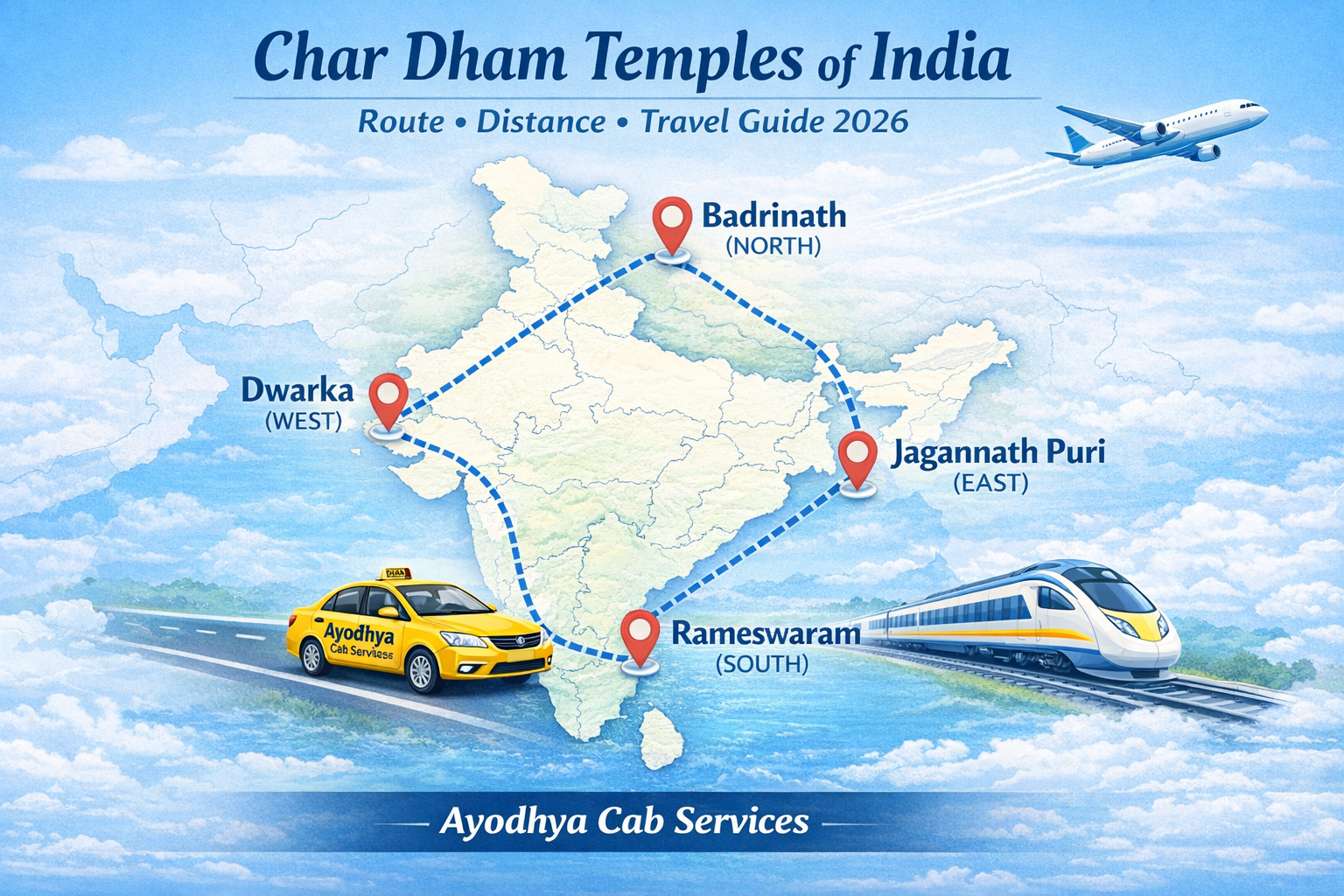
Char Dham Temples India route showing Badrinath Dwarka Puri Rameswaram travel map
What Are the Char Dham Temples of India?
The Char Dham Temples India form a traditional circuit connecting four major temple towns. Each temple represents one direction of the country. Together, they create a complete geographic loop across India.
The idea behind this circuit was to encourage people to explore the country as a whole. Over time, the Char Dham Temples India became an important travel and cultural route. Even today, many travelers plan their journey around this circuit to understand India’s regional diversity.
List of the Char Dham Temples India and Their Locations
The Char Dham Temples India are spread across four different states. Each location has a distinct climate, landscape, and travel pattern.
Badrinath is located in Uttarakhand and lies in the Himalayan region. Dwarka is situated in Gujarat along the western coastline. Jagannath Puri stands in Odisha near the Bay of Bengal. Rameswaram is located in Tamil Nadu close to the southern coastline.
Because of this wide geographic spread, route planning becomes an important part of visiting the Char Dham Temples India.
Historical Background of the Char Dham Temples India
The concept of the Char Dham Temples India gained popularity during early medieval times. Scholars and travelers believed that visiting temples across all four directions helped people understand cultural unity.
Each temple developed its own local history over centuries. Different rulers supported these temple towns. As a result, roads, rest houses, and travel routes were built around them.
Today, the Char Dham Temples India continue to attract visitors interested in history, architecture, and traditional travel systems.
Why the Char Dham Temples India Are Geographically Important
One reason people research the Char Dham Temples India is their strategic placement. These temples are not close to each other. They are intentionally located far apart.
This wide distribution encourages long-distance travel. It also exposes travelers to mountains, coastal areas, plains, and river regions. Therefore, the Char Dham Temples India act as a natural guide to exploring India’s geography.
Travel Planning Basics for Char Dham Temples India
Traveling to the Char Dham Temples India requires planning. Distances are long. Weather conditions change from region to region. Some locations are accessible only during certain months.
Because of this, travelers often divide the journey into stages. Road travel, rail routes, and nearby airports all play a role. Many people now prefer structured road trips for flexibility and comfort.
Ayodhya Cab Services often assists travelers who want a comfortable road-based approach to visiting multiple destinations across India.
Best Time to Start Planning a Char Dham Journey
Planning early is important for visiting the Char Dham Temples India. Routes in northern regions depend heavily on weather. Coastal destinations remain accessible for longer periods.
Most travelers begin planning months in advance. This helps with accommodation, transport selection, and route optimization. A well-planned journey reduces fatigue and improves the overall experience.
Why a Detailed Route Guide Matters in 2026
In 2026, travel infrastructure continues to improve. New highways, better rail connectivity, and improved navigation systems have changed travel patterns.
A clear route guide helps travelers save time. It also helps avoid congested paths. Understanding distances and travel duration between the Char Dham Temples India makes planning easier.
Ayodhya Cab Services provides route-based travel guidance for long-distance journeys, ensuring smoother travel experiences.
How Modern Travel Has Changed Char Dham Routes
Earlier, visiting the Char Dham Temples India took months. Today, better roads and transport options have reduced travel time significantly.
Digital maps, navigation tools, and improved highways allow travelers to customize their routes. This flexibility makes road travel a popular option for long journeys.
Because of this shift, many travelers now search for road-based Char Dham travel guides.
Why This Guide Is Useful for First-Time Travelers
First-time visitors often feel confused by the size of the Char Dham circuit. This guide breaks down every part step by step.
It explains locations, background, and route logic clearly. It also focuses on practical travel insights rather than complex terminology.
Ayodhya Cab Services supports travelers with route planning and long-distance travel solutions for such extensive journeys.
Badrinath Temple Location and Travel Overview
Badrinath is one of the most important locations among the Char Dham Temples India. It is located in the Chamoli district of Uttarakhand and lies close to the Himalayan mountain range. Because of its altitude, travel to this destination depends strongly on weather conditions. Roads usually remain accessible only for part of the year.
Most travelers reach Badrinath by first arriving at Haridwar or Rishikesh. From there, road travel becomes the primary option. The route passes through hill towns, river valleys, and mountain roads. Therefore, proper route planning is essential. Many travelers prefer road journeys because they offer flexibility and scenic views.
Due to its remote location, travel time to Badrinath can be long. Planning rest stops helps reduce fatigue. Understanding this route is important when covering all Char Dham Temples India in one journey.
Historical Importance of Badrinath in Char Dham Temples India
Badrinath holds a long historical association with ancient trade routes and settlement patterns. Over centuries, travelers crossed mountain passes to reach this region. As a result, Badrinath became a key stop for travelers moving through the Himalayas.
The area developed gradually with support from local rulers and traders. Inns, resting points, and basic road systems were created to support long-distance travel. These developments shaped Badrinath into a recognized destination within the Char Dham Temples India circuit.
Today, its historical importance continues to attract visitors interested in architecture, geography, and traditional mountain travel systems.
Dwarka Temple Location and Coastal Route Details
Dwarka represents the western point of the Char Dham Temples India. It is located in Gujarat along the Arabian Sea coastline. Unlike mountainous destinations, Dwarka is easily accessible throughout the year.
Travelers usually reach Dwarka via rail or road from major cities such as Ahmedabad or Rajkot. The coastal highways are well maintained, making road travel comfortable. Because of this, many travelers combine Dwarka visits with nearby coastal locations.
Dwarka’s flat terrain and strong road connectivity make it one of the easiest Char Dham destinations to reach. As a result, travelers often begin or end their Char Dham Temples India journey here.
Historical Development of Dwarka as a Major Destination
Dwarka has a long history linked with maritime trade. Due to its coastal location, it served as a port town in earlier centuries. Traders and travelers used this route to move goods and people across regions.
Over time, Dwarka developed structured town planning, roads, and resting facilities. This made it an important stop within the broader Char Dham Temples India route. Historical records show continuous settlement and trade activity in the region.
Today, Dwarka remains an important travel hub due to its road connectivity and strategic coastal position.
Jagannath Puri Temple Location and Eastern Route Access
Jagannath Puri represents the eastern direction among the Char Dham Temples India. It is located in Odisha near the Bay of Bengal. Because of its coastal climate, the region remains accessible for most of the year.
Travelers usually reach Puri through Bhubaneswar, which has strong rail and air connectivity. From there, road travel is short and convenient. This makes Jagannath Puri one of the most accessible destinations in the Char Dham Temples India circuit.
The surrounding region offers flat roads and steady travel conditions. Therefore, route planning here is simpler compared to mountainous areas.
Historical Growth of Jagannath Puri as a Travel Center
Jagannath Puri developed as a major cultural and travel center due to its coastal location. Trade routes passed through this region, helping it grow steadily over time.
Local rulers invested in infrastructure to support travelers. Roads, rest houses, and marketplaces emerged around the temple area. These developments strengthened its role in the Char Dham Temples India network.
Even today, Puri remains well connected and easy to navigate for long-distance travelers.
Rameswaram Temple Location and Southern Route Explanation
Rameswaram represents the southernmost point of the Char Dham Temples India. It is located in Tamil Nadu and connected to the mainland by a bridge. This makes it unique among the four destinations.
Travelers often reach Rameswaram via Madurai, which serves as a major transport hub. From there, road and rail options are available. The flat terrain allows smooth travel across long distances.
Because of its southern location, Rameswaram is often planned as the final destination when completing the Char Dham Temples India circuit.
Historical Significance of Rameswaram in Long-Distance Travel
Rameswaram has historically been connected to southern trade and travel routes. Its proximity to coastal paths made it accessible for travelers from different regions.
Over centuries, infrastructure developed to support long-distance journeys. Roads, bridges, and rail connectivity improved access significantly. This helped integrate Rameswaram into the larger Char Dham Temples India route.
Today, modern highways make travel to this destination smoother and more efficient.
Understanding Direction-Based Travel Across Char Dham Temples India
One unique aspect of the Char Dham Temples India is their directional placement. Each temple lies in a different part of the country. This design encourages complete geographic exploration.
Travelers often choose routes based on direction to reduce travel time. Planning the order correctly helps avoid backtracking. Therefore, understanding directional logic improves overall journey efficiency.
Ayodhya Cab Services assists travelers in planning long-distance, direction-based road journeys across India.
Why Route Planning Is Crucial for Char Dham Travel
Distances between the Char Dham Temples India are significant. Without proper planning, travel can become exhausting. Route selection, rest stops, and timing all matter.
A structured plan reduces stress and improves comfort. Road travel allows flexibility, especially when covering multiple states. Many travelers now prefer guided road routes for this reason.
Ayodhya Cab Services supports customized travel plans for long-distance temple circuits.
How Modern Roads Have Simplified Char Dham Connectivity
Highway development has improved travel efficiency across India. Many routes connecting the Char Dham Temples India have been upgraded.
Better roads reduce travel time. They also improve safety. Because of this, completing the Char Dham circuit is now more feasible for travelers.
Road-based travel continues to grow in popularity due to these improvements.
Best Order to Visit the Four Dham Temples in One Journey
Travelers often ask about the most efficient sequence to cover all four Dham destinations. While there is no strict rule, route logic plays an important role. Most people prefer to move in a clockwise direction to reduce backtracking.
Starting from the northern Himalayan region and gradually moving toward western, eastern, and southern India helps manage fatigue. This order also balances terrain difficulty. Mountain travel requires more energy, so completing it earlier makes the remaining journey smoother.
Planning the order correctly saves time and travel cost. It also improves overall comfort during long-distance trips.
Distance Overview Between Major Dham Locations
The four Dham destinations are separated by large distances. Traveling between them involves crossing multiple states and varied landscapes. Therefore, understanding approximate distances helps travelers plan rest stops and overnight stays.
Northern routes usually involve hilly roads, which increase travel time. Coastal and southern routes are comparatively smoother. Because of this variation, daily travel distances should be adjusted accordingly.
Road-based planning allows travelers to control pacing better than fixed transport schedules.
Route Planning Tips for Long-Distance Temple Travel
Long journeys require flexible planning. Breaking the trip into smaller segments reduces exhaustion. Selecting highways with better facilities improves safety and comfort.
Navigation apps help, but local route knowledge remains important. Weather conditions, road work, and traffic patterns can change travel duration.
Ayodhya Cab Services often assists travelers with route planning by suggesting optimized road paths and safe stopovers.
Role of Highways and Expressways in 2026 Travel
In recent years, highway infrastructure has improved significantly. New expressways connect major cities across regions, reducing travel time.
These developments benefit travelers planning multi-state journeys. Faster roads allow better time management and reduce overnight halts. As a result, long-distance temple travel has become more accessible.
Using updated road networks is essential for efficient travel in 2026.
Rail and Road Combination for Covering Multiple Regions
Some travelers combine rail and road travel. Rail journeys help cover long distances quickly. Road travel offers flexibility near destinations.
This combination works well for people with limited time. However, coordination is required to avoid delays. Proper planning ensures smooth transitions between transport modes.
Ayodhya Cab Services supports travelers who prefer road travel for comfort and route flexibility.
Climate Considerations Across Different Regions
Weather varies greatly across India. Northern mountain regions experience colder conditions, while coastal and southern areas remain warmer.
Checking seasonal conditions before travel helps avoid disruptions. Planning rest days during extreme weather improves safety.
Understanding regional climate patterns is crucial for long journeys covering multiple zones.
Accommodation Planning Along the Route
Accommodation availability differs by region. Urban areas offer more choices, while remote locations require advance booking.
Selecting rest points strategically prevents fatigue. Staying near highways reduces detours. Clean and secure accommodations improve travel experience.
Advance planning ensures smoother travel without last-minute stress.
Food and Rest Stop Planning for Road Travelers
Long road journeys require regular breaks. Highway food plazas, fuel stations, and rest areas help maintain energy levels.
Choosing routes with adequate facilities improves comfort. Carrying essentials reduces dependency on remote stops.
Road-based travelers benefit greatly from planned breaks.
Safety Tips for Multi-State Road Travel
Safety becomes important during extended travel. Regular vehicle checks prevent breakdowns. Driving during daylight hours improves visibility.
Keeping emergency contacts and navigation backups adds security. These precautions reduce risks during long trips.
Ayodhya Cab Services prioritizes safety by maintaining vehicles and planning safe routes.
Why Road Travel Is Preferred for Temple Circuits
Road travel offers flexibility unmatched by other modes. Travelers can stop as needed and adjust plans easily.
It also allows exploration of nearby towns and scenic routes. This freedom enhances the overall journey experience.
For these reasons, many travelers choose road-based solutions for extended temple circuits.
Best Time of Year to Plan a Four Dham Journey
Timing plays a major role in long-distance temple travel across India. Weather conditions vary widely between mountain regions, coastal areas, and southern plains. Therefore, choosing the right months improves comfort and safety.
Northern Himalayan routes remain inaccessible during winter due to snow and road closures. On the other hand, western and southern destinations remain open throughout the year. As a result, most travelers plan their journey between late spring and early autumn.
Starting early in the year helps avoid heavy crowds. It also allows better accommodation availability. Planning months ahead reduces last-minute stress and unexpected delays.
Month-Wise Travel Conditions Across Different Regions
Each region experiences different seasonal patterns. Mountain regions experience cold temperatures and rainfall during certain months. Coastal areas face humidity and occasional storms. Southern regions remain comparatively stable.
Checking month-wise weather updates helps avoid difficult travel days. For example, avoiding peak rainfall months reduces road risks. Similarly, avoiding extreme summer heat improves comfort during long drives.
Planning travel dates with climate awareness improves the overall experience.
Managing Crowds During Peak Travel Seasons
Crowd levels increase during certain months due to holidays and school vacations. High footfall can affect travel speed and accommodation availability.
Traveling during weekdays often reduces congestion. Starting journeys early in the morning also helps avoid traffic buildup near major towns.
Choosing less crowded months allows smoother travel and better access to facilities.
Travel Duration Expectations for Multi-State Routes
Covering multiple states takes time. Daily travel limits should be realistic. Driving for long hours continuously increases fatigue.
Most travelers prefer covering moderate distances each day. This approach improves alertness and allows rest breaks. Planning overnight halts near major cities ensures access to services.
Understanding realistic travel duration prevents rushed schedules.
Budget Planning for Long Road Trips
Budget planning helps manage expenses effectively. Fuel costs, accommodation, food, and toll charges add up over long distances.
Creating a daily expense estimate helps avoid overspending. Road travel allows better budget control compared to fixed transport options.
Planning fuel stops along highways also reduces unnecessary detours.
Choosing the Right Vehicle for Extended Travel
Vehicle selection impacts comfort and safety. Spacious vehicles offer better legroom and luggage space. Well-maintained vehicles reduce breakdown risk.
Long journeys require reliable engines and good suspension systems. Choosing vehicles suited for highway travel improves ride quality.
Ayodhya Cab Services ensures vehicles are maintained for long-distance journeys.
Importance of Navigation and Offline Maps
Navigation tools are essential for modern travel. However, network coverage may vary across regions. Offline maps provide backup support.
Saving routes in advance prevents confusion. Checking alternate routes helps manage unexpected road closures.
Combining digital navigation with local guidance improves route reliability.
Health and Comfort Considerations on Long Drives
Staying hydrated and taking regular breaks prevents fatigue. Stretching during stops improves circulation.
Carrying basic medical supplies adds safety. Maintaining comfortable seating posture reduces strain during extended driving.
Prioritizing health ensures a smoother journey.
Role of Advance Bookings in Smooth Travel
Advance bookings reduce uncertainty. Securing accommodations ahead of time saves effort during peak seasons.
Booking rest stops in known locations improves safety. It also avoids late-night searching.
Advance planning simplifies travel logistics significantly.
Why Flexible Itineraries Work Best
Rigid schedules often create stress. Unexpected delays are common during long trips.
Flexible itineraries allow adjustments without pressure. Extra rest days help manage fatigue and weather changes.
Balanced planning ensures a more enjoyable journey.
How Professional Travel Support Helps Long Routes
Professional support simplifies complex planning. Route optimization, vehicle readiness, and travel guidance reduce challenges.
Ayodhya Cab Services assists travelers with long-distance road journeys by offering structured travel solutions and route guidance.
Such support improves confidence during extended travel.
Understanding North, West, East, and South Travel Flow
When planning a journey across multiple regions of India, understanding directional flow helps reduce unnecessary travel. Moving from north to west, then east, and finally south creates a logical sequence. This approach balances terrain difficulty and travel fatigue.
Northern routes often require slower driving due to hills and weather conditions. Western and eastern regions offer flatter roads and better highway coverage. Southern routes allow steady driving across long distances.
Choosing a directional flow improves time management and reduces stress during extended road trips.
State-Wise Travel Challenges and How to Prepare
Each state presents different travel challenges. Mountain states require careful driving and weather awareness. Coastal states may experience humidity and seasonal rains. Central regions involve long highway stretches with limited facilities in some areas.
Preparation varies by region. Checking road conditions, fuel availability, and rest points before entering a new state helps avoid delays. Awareness of local driving rules also improves safety.
Planning state-wise travel ensures smoother transitions across regions.
Importance of Breakpoints Between Long Routes
Continuous long-distance driving increases fatigue. Therefore, identifying breakpoints becomes essential.
Breakpoints should ideally be placed near cities with good facilities. These locations offer fuel stations, food options, and accommodation choices. Breaking the journey into manageable segments improves focus and comfort.
Well-planned breakpoints turn a tiring trip into a structured journey.
Highway Selection for Long Religious Circuits
Not all highways offer the same travel experience. Some routes are faster but crowded. Others are longer but less stressful.
Choosing highways with good road quality and amenities improves travel efficiency. Toll roads often provide smoother surfaces and better safety. However, travelers should balance toll costs with time savings.
Highway selection plays a major role in journey comfort.
Fuel Planning Across Multi-State Journeys
Fuel planning is often overlooked. However, long stretches without fuel stations can cause inconvenience.
Keeping track of fuel stops helps avoid low-fuel situations. Refueling before entering remote areas reduces risk. Modern vehicles with better mileage still require careful planning on extended routes.
Smart fuel planning ensures uninterrupted travel.
Food Availability and Dietary Planning on the Road
Food availability varies by region. Urban areas offer diverse choices, while remote highways may have limited options.
Carrying dry snacks helps during long stretches. Stopping at clean, well-known eateries improves food safety. Hydration remains equally important.
Planning food stops keeps energy levels stable throughout the journey.
Accommodation Options Along Major Routes
Accommodation quality differs widely across regions. Large cities provide multiple options, while smaller towns require advance booking.
Choosing accommodations near highways saves travel time. Secure parking and basic amenities improve rest quality. Online reviews help identify reliable places.
Advance accommodation planning prevents last-minute issues.
Managing Travel Fatigue Over Long Distances
Fatigue builds gradually during long trips. Regular breaks reduce strain. Switching drivers, if possible, improves alertness.
Listening to calming music and maintaining proper seating posture also helps. Driving during daylight hours reduces eye strain.
Managing fatigue ensures safer travel.
Travel Documentation and Identity Requirements
Long journeys require proper documentation. Carrying identity proof, vehicle documents, and insurance details is essential.
Digital copies act as backups. Keeping documents organized prevents delays during checks.
Prepared documentation ensures hassle-free movement across states.
Benefits of Professional Cab Services for Long Routes
Professional cab services simplify long-distance travel. Trained drivers understand highway conditions and regional routes.
Vehicles are maintained for endurance travel. Passengers can rest instead of focusing on driving.
Ayodhya Cab Services supports long-route travelers with reliable vehicles and experienced drivers.
Why Road Travel Builds a Deeper Travel Experience
Road journeys offer flexibility. Travelers can explore nearby towns and landscapes. This freedom creates memorable experiences.
Unlike fixed schedules, road travel adapts to individual pace. Scenic routes add value to the journey.
For many travelers, road trips become an essential part of the overall experience.
Estimated Travel Duration for a Complete Four-Temple Circuit
Travel duration depends on route choice, vehicle type, and rest planning. Covering all four destinations across India usually takes several weeks if done comfortably by road.
Mountain routes require slower speeds. Coastal and southern highways allow longer daily travel. Therefore, daily distance targets should vary by region.
Planning realistic travel durations avoids exhaustion and improves safety.
Sample Itinerary Planning for Long Road Journeys
A structured itinerary helps manage long travel days. Breaking the journey into weekly segments makes it easier to follow.
Most travelers prefer starting with challenging terrain first. After that, smoother routes help maintain energy. Adding buffer days allows recovery and flexibility.
Sample itineraries also help estimate fuel and accommodation needs.
Role of Buffer Days in Long Travel Plans
Buffer days act as safety margins. Unexpected delays can occur due to weather, traffic, or health reasons.
Including extra days prevents schedule pressure. These days also allow rest and exploration of nearby areas.
Flexible planning ensures a smoother overall journey.
Managing Travel Across Different Time Zones and Regions
India spans multiple climatic zones. Travel fatigue increases when moving rapidly across regions.
Adjusting sleep schedules helps. Gradual transitions between regions reduce physical strain.
Understanding regional differences improves adaptability during travel.
Importance of Local Knowledge During Long Routes
Local knowledge improves route decisions. Road conditions, traffic patterns, and shortcut routes are often known only to experienced drivers.
Relying solely on navigation apps may not always be effective. Combining digital tools with local guidance offers better results.
Professional drivers often provide valuable route insights.
Handling Unexpected Delays and Route Changes
Delays are common during long trips. Construction work, weather changes, and traffic diversions can occur.
Staying calm and flexible helps manage these situations. Having alternate routes ready saves time.
Preparedness reduces travel stress.
Emergency Preparedness During Extended Travel
Carrying basic emergency supplies improves safety. First-aid kits, flashlights, and spare vehicle tools are useful.
Saving emergency contacts offline helps in low-network areas. Knowing nearby service centers adds security.
Prepared travelers handle emergencies more effectively.
Role of Rest and Sleep in Long-Distance Driving
Adequate rest is essential for alertness. Driving while tired increases risk.
Planning overnight halts at comfortable locations improves recovery. Short naps during breaks also help.
Rest-focused planning improves journey quality.
Advantages of Having a Dedicated Driver
A dedicated driver reduces physical strain. Passengers can rest during travel.
Drivers familiar with long routes manage fatigue better. They also handle challenging road conditions confidently.
Ayodhya Cab Services provides experienced drivers for extended journeys.
Why Multi-Day Road Trips Require Structured Planning
Unstructured travel leads to fatigue. Structured planning balances travel and rest.
Daily goals, rest points, and fuel stops create rhythm. This approach prevents burnout.
Structured planning transforms long trips into manageable experiences.
How Travel Planning Enhances Overall Experience
Good planning reduces uncertainty. Travelers enjoy the journey instead of worrying about logistics.
Clear routes, planned stops, and rest days improve comfort. This leads to a more satisfying experience.
Thoughtful planning adds value to long journeys.
Cost Planning for Long-Distance Temple Travel
Cost planning is a major concern for travelers covering multiple regions by road. Expenses usually include fuel, accommodation, food, toll charges, and vehicle maintenance. Planning these costs in advance avoids budget stress during the journey.
Fuel costs vary depending on route length and vehicle mileage. Toll charges also differ across states. Therefore, estimating daily travel distance helps calculate approximate fuel and toll expenses accurately.
Creating a daily expense range helps travelers stay within budget while maintaining comfort.
Managing Daily Expenses During Extended Road Trips
Daily expense management keeps the journey smooth. Small costs, when ignored, add up over time. Keeping track of fuel refills, meals, and accommodation payments prevents overspending.
Using digital payment methods simplifies transactions across states. Carrying some cash remains helpful in remote areas.
Regular expense tracking allows adjustments without affecting travel quality.
Comparing Road Travel Costs with Rail and Air Options
Road travel offers flexibility but may appear costly at first glance. However, when traveling in groups, road journeys often become economical.
Rail and air options reduce travel time but limit flexibility. Additional local transport costs may increase overall expenses. Road travel combines transportation and sightseeing into one plan.
Evaluating total cost instead of per-kilometer cost gives a clearer picture.
Fuel Efficiency and Vehicle Selection Impact on Budget
Fuel efficiency plays a critical role in expense control. Vehicles with better mileage reduce overall cost.
Choosing a vehicle suitable for highway travel improves efficiency. Smooth driving habits also help conserve fuel.
Well-maintained vehicles perform better on long routes.
Toll Roads vs Alternative Routes Cost Comparison
Toll roads offer faster travel and smoother surfaces. However, toll charges add up quickly on long routes.
Alternative routes reduce toll costs but may increase travel time. Balancing speed and budget becomes important.
Choosing toll roads selectively helps control expenses without delaying the journey.
Accommodation Cost Control Strategies
Accommodation costs vary by location. Urban areas offer multiple options, while remote towns have limited choices.
Booking accommodations in advance often reduces cost. Staying slightly outside city centers also saves money.
Clean, basic accommodations provide sufficient comfort for road travelers.
Food Budgeting on Multi-State Routes
Food expenses depend on dining choices. Highway restaurants vary in pricing and quality.
Eating at clean local eateries reduces cost. Carrying snacks helps avoid unnecessary stops.
Balanced food budgeting keeps energy levels stable without overspending.
Unexpected Costs and How to Handle Them
Unexpected expenses may arise due to vehicle issues or route changes. Keeping a buffer budget helps manage such situations.
Emergency repairs, medical needs, or extended stays can affect expenses. Prepared travelers handle these challenges calmly.
Having contingency funds reduces stress.
Why Group Travel Reduces Overall Cost
Group travel divides expenses among travelers. Fuel, tolls, and accommodation costs become shared.
Larger vehicles accommodate multiple passengers comfortably. This approach reduces per-person cost significantly.
Group travel also improves safety and convenience.
Benefits of Professional Cab Services for Cost Management
Professional cab services provide transparent pricing. Travelers avoid surprise costs related to maintenance or breakdowns.
Experienced drivers choose efficient routes. This reduces fuel consumption and travel time.
Ayodhya Cab Services offers structured pricing for long-distance travel.
Budget Planning Improves Travel Confidence
Clear budgeting builds confidence. Travelers focus on the experience rather than expenses.
Knowing daily limits allows better decision-making. This improves overall satisfaction.
Proper cost planning transforms long journeys into enjoyable experiences.
How a Person Can Complete the Four Dham Yatra in One Journey
Completing the four Dham yatra in a single journey requires structured planning. Because the temples are located in four different directions of India, the journey must follow a logical route to avoid unnecessary travel.
Most travelers prefer a clockwise travel pattern, starting from the north and gradually moving west, east, and finally south. This approach balances terrain difficulty and long-distance driving.
Step-by-Step Travel Order for One-Time Four Dham Journey
A commonly followed and practical order is:
-
Badrinath (Uttarakhand – North)
-
Dwarka (Gujarat – West)
-
Jagannath Puri (Odisha – East)
-
Rameswaram (Tamil Nadu – South)
This order helps travelers complete mountain regions first. After that, flatter and coastal routes make the remaining journey easier.
Distance Between Each Dham Destination
Understanding distance is important for time and energy management.
Badrinath to Dwarka
Approximate road distance: 1,600–1,700 km
This route passes through Uttarakhand, Uttar Pradesh, Rajasthan, and Gujarat. It usually takes several days by road.
Dwarka to Jagannath Puri
Approximate road distance: 1,800–1,900 km
The journey crosses central and eastern India. Highways are mostly flat, allowing steady travel.
Jagannath Puri to Rameswaram
Approximate road distance: 1,600–1,700 km
This route covers eastern coastal regions and southern states. Road conditions are generally smooth.
Rameswaram back to Northern India (optional return)
Travelers often return via rail or air after completing the circuit to reduce fatigue.
Total Distance Covered in One Complete Circuit
A full road-based journey covering all four destinations usually totals 5,000–5,300 km, depending on routes and detours.
Because of this long distance, most travelers take 3 to 5 weeks to complete the journey comfortably.
How Long Does It Take to Visit All Four Dhams Once
Travel duration depends on daily driving limits and rest days.
-
Comfortable road journey: 25–35 days
-
Faster road journey with fewer stops: 20–25 days
-
Mixed travel (road + rail/air): 15–20 days
Adding buffer days is always recommended.
Why Planning Matters for One-Time Four Dham Travel
Visiting all four Dhams is physically demanding. Poor planning can lead to exhaustion.
Proper route sequencing, rest days, and realistic daily travel goals help complete the journey smoothly. Many travelers prefer road travel because it offers flexibility and control.
Road Travel vs Mixed Travel for One-Time Yatra
Road travel allows a continuous experience and flexible stops. However, it takes more time.
Mixed travel reduces duration but requires coordination between different transport modes. Travelers choose based on time availability and comfort preferences.
Tips for Completing All Four Dhams Smoothly
-
Start with mountain regions
-
Avoid peak weather extremes
-
Plan rest days every few travel days
-
Keep travel flexible
-
Track distances daily
-
Prioritize safety and comfort
Role of Professional Cab Services in Long Journeys
Long-distance road journeys become easier with professional support. Trained drivers, route knowledge, and vehicle readiness reduce stress.
Ayodhya Cab Services assists travelers planning extended road journeys across multiple states, offering reliable vehicles and structured travel support.
Final Words
Completing all four Dhams in one journey is a major travel milestone. With proper planning, realistic pacing, and route awareness, the journey becomes manageable and memorable.
Understanding distances and travel order helps travelers prepare better. A structured approach ensures the journey is completed safely and comfortably.

